Subscribe via RSS Feed

Archive for March, 2012

V.P. Boakai's U.S. (LAMA Installation) Trip Revealed Liberian Government is Wasteful and Fiscally Irresponsible

By Tewroh-Wehtoe Sungbeh


Most Liberian communities in the U. S., wish they were as fortunate as the Liberian Association of Metropolitan Atlanta (LAMA), whose scheduled March 31 installation ceremonies this weekend brought out the Vice President of Liberia, the President pro-tempro of the Liberian Senate, the Mayor of the city of Monrovia, and other high-ranking government officials from across the Atlanta Ocean to Atlanta, Georgia.

According to a press release, the government officials while here will also participate in an investment summit – a piggyback event sponsored by the Liberian consul dubbed “Liberian and U.S Business Summit 2012,” intended to showcase Liberia as “An Investor’s Paradise.”

For the political leadership structure in Liberia to agree to travel abroad just to install a fledgling community association such as LAMA, encourages wild speculations as to the real reasons behind such decision, and also raised interesting questions as to why so many government officials are traveling here for this event?

However, of all the events taking place in Liberian communities across the U.S. this year or this month, the events in Atlanta this weekend tops the list because of the star political power that consented to travel to metro Atlanta from Liberia and Washington D.C., to install Leo Mulbah (President) and Mustapha Cacius Acolaste (Vice President) and other officers, who comprised the leadership of the Liberian Association of Metropolitan Atlanta (LAMA) in 2012.

While it is true that the Liberian government officials are here to participate in the installation ceremonies of LAMA officials, another primary reason for their being here is to support LAMA’s Community Cultural Center fundraising events, which event organizers hoped will bring Liberians out in droves to support a project that has been elusive to previous community administrations in the association’s nearly 40-year history of existence.

Even though the Liberian community in Georgia needs its own center that caters to the growing needs of its residents, what has irked many is the transatlantic politicization of the event by community leaders; coupled with the one-party, high-profile presence of luminaries from the ruling Unity Party, who would rather be here then be in Liberia doing real work for the Liberian people.

The huge presence of these Liberian government officials in metro Atlanta estimated to be between a dozen to about 24 individuals tells a different story about the LAMA community leaders who spearheaded the involvement of these individuals, and also magnifies their political motives as those who would rather hide behind the fundraising and building of a community center to enhance their own future political standing in Liberia, as others have done in the past.

How the presence of so many individuals including Maritime Commissioner, Binyah Kesselly; Managing Director, Liberian Petroleum Refinery Corporation, T. Nelson Williams whose organization, (LPRC) is allegedly and currently engulfed in a series of financial misappropriations; Christopher Neyor, outgoing President, National Oil Company of Liberia, Liberian Ambassador to the U.S., William Bull, and Acting Mayor of Monrovia, Mary Broh, will be subject to different interpretations.

With the Mayor of Atlanta, Kasim Reed currently in China on an international business tour for the city, and not included on the program to participate or meet with his counterpart, Mary Broh to discuss issues concerning Monrovia-Atlanta relationship, inviting the controversial Mary Broh here to receive a “Distinguished Service Award” is an insult to many, and a waste of time, money and resources. Truth is, the backward policies of the polarizing presidential friend against the poor in Liberia is not deserving of a distinguished medal.

Another troubling aspect of this trip is the cost of transporting, (including per diems) housing and feeding these individuals traveling to Atlanta at government’s expense, at a time when a devastating global economic meltdown is affecting Liberia and countries around the world.

This is happening at a time when the cost of a bag of rice, Liberia’s staple, is sold in U.S. dollars and at a very high price, and the cost of living is also going through the roof; when ordinary Liberians can barely survive from day to day because of the unavailability of jobs in the country.

It is an extremely bad policy for the financially strapped government of Liberia to be in the overseas’ installation business, especially when the government has to take food and money out of the mouths and pockets of its weary and hungry citizens to transport its uppity government officials abroad on their mini vacation.

Then again, where’s accountability?

It wouldn’t have been egregious if a singular government official had consented to an invitation while traveling abroad on a government mission, and used the opportunity to visit a particular community and serve as its installing officer, which would be like ‘killing two birds with one stone.”

Representation of this kind would have done the Republic of Liberia a service by projecting the government as been fiscally responsible and prudent, and sensitive to the sentiments and aspirations of the Liberian people at home and abroad.

Now I see the problem with this administration: The Sirleaf administration’s problem is not only rampant corruption and neglect, but also waste and being fiscally irresponsible with the nation’s money and scarce resources.

V.P. Boakai’s U.S. (LAMA Installation) Trip Revealed Liberian Government is Wasteful and Fiscally Irresponsible

By Tewroh-Wehtoe Sungbeh


Most Liberian communities in the U. S., wish they were as fortunate as the Liberian Association of Metropolitan Atlanta (LAMA), whose scheduled March 31 installation ceremonies this weekend brought out the Vice President of Liberia, the President pro-tempro of the Liberian Senate, the Mayor of the city of Monrovia, and other high-ranking government officials from across the Atlanta Ocean to Atlanta, Georgia.

According to a press release, the government officials while here will also participate in an investment summit – a piggyback event sponsored by the Liberian consul dubbed “Liberian and U.S Business Summit 2012,” intended to showcase Liberia as “An Investor’s Paradise.”

For the political leadership structure in Liberia to agree to travel abroad just to install a fledgling community association such as LAMA, encourages wild speculations as to the real reasons behind such decision, and also raised interesting questions as to why so many government officials are traveling here for this event?

However, of all the events taking place in Liberian communities across the U.S. this year or this month, the events in Atlanta this weekend tops the list because of the star political power that consented to travel to metro Atlanta from Liberia and Washington D.C., to install Leo Mulbah (President) and Mustapha Cacius Acolaste (Vice President) and other officers, who comprised the leadership of the Liberian Association of Metropolitan Atlanta (LAMA) in 2012.

While it is true that the Liberian government officials are here to participate in the installation ceremonies of LAMA officials, another primary reason for their being here is to support LAMA’s Community Cultural Center fundraising events, which event organizers hoped will bring Liberians out in droves to support a project that has been elusive to previous community administrations in the association’s nearly 40-year history of existence.

Even though the Liberian community in Georgia needs its own center that caters to the growing needs of its residents, what has irked many is the transatlantic politicization of the event by community leaders; coupled with the one-party, high-profile presence of luminaries from the ruling Unity Party, who would rather be here then be in Liberia doing real work for the Liberian people.

The huge presence of these Liberian government officials in metro Atlanta estimated to be between a dozen to about 24 individuals tells a different story about the LAMA community leaders who spearheaded the involvement of these individuals, and also magnifies their political motives as those who would rather hide behind the fundraising and building of a community center to enhance their own future political standing in Liberia, as others have done in the past.

How the presence of so many individuals including Maritime Commissioner, Binyah Kesselly; Managing Director, Liberian Petroleum Refinery Corporation, T. Nelson Williams whose organization, (LPRC) is allegedly and currently engulfed in a series of financial misappropriations; Christopher Neyor, outgoing President, National Oil Company of Liberia, Liberian Ambassador to the U.S., William Bull, and Acting Mayor of Monrovia, Mary Broh, will be subject to different interpretations.

With the Mayor of Atlanta, Kasim Reed currently in China on an international business tour for the city, and not included on the program to participate or meet with his counterpart, Mary Broh to discuss issues concerning Monrovia-Atlanta relationship, inviting the controversial Mary Broh here to receive a “Distinguished Service Award” is an insult to many, and a waste of time, money and resources. Truth is, the backward policies of the polarizing presidential friend against the poor in Liberia is not deserving of a distinguished medal.

Another troubling aspect of this trip is the cost of transporting, (including per diems) housing and feeding these individuals traveling to Atlanta at government’s expense, at a time when a devastating global economic meltdown is affecting Liberia and countries around the world.

This is happening at a time when the cost of a bag of rice, Liberia’s staple, is sold in U.S. dollars and at a very high price, and the cost of living is also going through the roof; when ordinary Liberians can barely survive from day to day because of the unavailability of jobs in the country.

It is an extremely bad policy for the financially strapped government of Liberia to be in the overseas’ installation business, especially when the government has to take food and money out of the mouths and pockets of its weary and hungry citizens to transport its uppity government officials abroad on their mini vacation.

Then again, where’s accountability?

It wouldn’t have been egregious if a singular government official had consented to an invitation while traveling abroad on a government mission, and used the opportunity to visit a particular community and serve as its installing officer, which would be like ‘killing two birds with one stone.”

Representation of this kind would have done the Republic of Liberia a service by projecting the government as been fiscally responsible and prudent, and sensitive to the sentiments and aspirations of the Liberian people at home and abroad.

Now I see the problem with this administration: The Sirleaf administration’s problem is not only rampant corruption and neglect, but also waste and being fiscally irresponsible with the nation’s money and scarce resources.

Hope, not mockery: Rep. Tingban challenges President Sirleaf on pre-election promises

By Samuka V. Konneh  

Nimba County, (District 9) Liberia: In her annual
message to the nation and the 52nd national legi
slature, President Ellen Johnson-Sirleaf on Monday,
disclosed her government's plan to relocate the nation's capital
from Monrovia to Zekepa, central Liberia.
 “I am talking to every single citizen of this great nation when I say:
our progress belongs to you, and the future is yours for the taking, a
future in which the process would have started to move the capital to the
 center of the country.”
“Given the effects of climate change and expectations of rising sea levels
 that threatens coastal cities, including Monrovia, we will have concluded
 the plan for a new capital city at Zekepa, where the territories of
Grand Bassa, Bong and Nimba Counties converge,” the Liberian leader said.
Fifteen months after the pronouncement, the lawmaker of electoral district
#9 in Nimba County, where the town is located, has begun to raise concern,
hoping that the President's declaration was not a mockery to the people of
Liberia, especially Nimba.
Rep. Richard Matenokay Tingban, a professional Engineer, says though he
does not have reasons to think that the President's promise was a mockery,
reminding the Liberian leader about her public pronouncements helps in the
nation-building process.
 The Liberian legislator, however, maintains that by now signs of a
possible relocation of the nation’s capital would be visible, and said he
and other Liberians would be disappointed if the President only made
the pronouncement to win votes from Nimba during the 2011 presidential
election.
 Although Rep. Tingban says he has reminded the President on many
occasions about the pronouncement, nothing seems to be signaling anything
in the area.
 “Zekepa is currently not accessible by roads, and the President herself
could not reach the district and particularly Zekepa during the election
when she came here” Rep. Tingban told a gathering of citizens in Voipa,
Yarmensornor District over the weekend.
The education system in Zekepa remains deplorable, healthcare delivery,
too, is virtually impossible to an extent that pregnant women are said to
have passed away or gave birth on the highway en route to the nearest town
or clinic.
Rep. Tingban is calling on the President to make her promise to the people
a reality.
Samuka V. Konneh is News Editor, Public Agenda Newspaper, Monrovia,
Liberia.

Act Establishing Land Reform Commission Shows Seriousness of Problem

By. Tewroh-Wehtoe Sungbeh


“I will not work for government when I go home,” the gentleman proudly told me. “I will buy my land and build my retirement home in Monrovia,” the other fellow said.

Those are exactly the words of Liberians who are contemplating returning home to Liberia one day never to work for government, but dreams of engaging in to business with the hopes of hiring other Liberians in the process. Creating jobs? It’s about time, isn’t it?

They are the new class of Liberians: middle or no class, and hardworking Liberians who surpassed the hopes and dreams of their parents through hard work, and a chance to make a difference.

In fact, many of these Liberians who bought their parcels of land while living overseas are now returning to Liberia in droves to build their dream homes, and be business owners and employers in a nation where the government of the Republic of Liberia is the largest employer in the land. It is a dream come true for those Liberians who wouldn’t have had the opportunity to buy a piece of land years ago in their own country, let alone build a dream home and own a business that hires other Liberians.

That’s exactly what the “Liberian dream” is all about – buying and building one’s dream (retirement) home and contributing positively to society; or like one Liberian told me recently, “contributing my quota to the development of my country.”

The ‘quota’ the Liberian speaks of is indeed needed if we want to move our country away from “mat to “mattress” as the late former President William R. Tolbert Jr., once said, which is to strive for individual or collective prosperity in a prosperous country that offers endless opportunities for its people – a nation that inspires Liberians to dream of becoming whatever they want to be in life and in the comfort of their own homes.

While it is true that land ownership has become a fad among Liberians in the Diaspora with most Liberians returning home to purchase a parcel or parcels of land to build their retirement homes, the ideal of land ownership in one’s own country is admirable but not without its own share of problem.

The selling and re-selling of another person’s land to multiple persons is a dishonest practice all too common in Liberia often causing conflicts between neighbors, families, and even tribes in a country with abundance of lands but an obvious lack of a coordinated national plan.

While it is true that the criminal act of re-selling a parcel of land, multiple parcels of land to an individual or multiple persons is wrong and has become a nightmare for many families, there are no serious national policies that protects property rights. As it is now, there are no policies that thoroughly examines issues such as private, public and tribal land ownership, genuine registration of land in rural Liberia and the cities, prosecuting criminal land surveyors, eminent domain, the exploitation of natural resources on a private land, and citizen’s right to protest and be justly compensated for their land, are legitimate issues that needs national attention.

The other problem I see with this rush to buy land to build these retirement homes is the obsessive focus on building homes in Monrovia and the surrounding metro Monrovia area, at a time when other areas in the country are being ignored by these Liberians who supposed to know that the entire country, and not only Monrovia should be the focus of their development and real estate plans.

With Monrovia falling apart and becoming a death trap every day because of over crowdedness and the lack services or no service at all, the obvious lack of sanitary and modern sewer facilities, and the lack of a coordinated urban planning and code enforcement policies, creates an urgent need for a new city, which I wrote passionately about in a previous article; are enough reasons for Liberians to also focus their land-buying and home-building efforts to other parts of the country.

With land disputes becoming a national problem, President Sirleaf reportedly added her voice to the debate by first announcing the idea of a land commission with the mandate of setting up guidelines governing the acquisition of land. President Sirleaf later signed into law an Act establishing a Land Commission.

The Land Commission, on the other hand has to identify the original landowners versus the new landowners, must engage in an aggressive advertising and public relations campaign that educates potential land buyers to beware of buying lands from those who will re-sell the same piece of land to multiple parties, must play a balancing act by being respectful and sensitive to the original landowners, and must also be sensitive to the other person claiming ownership to the same piece of land.

With the country just coming out of a senseless civil war, a war over land dispute cannot and should not be tolerated. Every available attempt must be made to halt the escalation of any conflict that derives out of land disputes or any other issue that compromised the safety and security of the Liberian nation and people.


Welcome to Nationalism: Where Nations Find Hope, Where Wings Take Dream

By Ivan Simic


These days, we are witnessing the immense rise of nationalism in the world, which many decades ago change the course of human history. Beside the existing rise, nationalism has been an important factor in the development of Asia, Africa, North America, South America, Europe, and Australia.

In the 19th century, a wave of romantic nationalism swept the continent of Europe and transformed it. Uniting smaller states with a common “national identity” formed some countries such as Germany and Italy. Winning their independence formed others, such as Greece, Poland and Bulgaria.

It was the French Revolution that paved the way for the modern nation-state. Across Europe, radical intellectuals questioned the old monarchical order and encouraged the development of a popular nationalism committed to re-drawing the political map of the continent, which numbered the days of multi-national empires by 1814. The French Revolution, by destroying the traditional structures of power in France and territories conquered by Napoleon, was the instrument for the political transformation of Europe. The ideals of European nationalism had been exported worldwide and were now beginning to develop, as both compete and threatened the empires ruled by colonial European nation-states.

Nationalism clearly became the principal basis for the organization of western civilization, and also gave birth to the United States of America. The US is maybe the only country in the world to be led by multi-nationalism at the same time: National purity (today also known as ethnic cleansing), Civic nationalism, Expansionist nationalism, Territorial nationalist, and Left-wing nationalism (advocates anti-imperialism).

Nationalism is the correct and recognized term for the associated ideology and political movements, within the present United States, and during its history.

Furthermore, the American Revolutionary War was a war between the Kingdom of Great Britain and thirteen united former British colonies – British America, and not a war fought between the Americans and British as presented widely in the public. In 1776, during the American War of Independence, British Revolutionaries gained control of the thirteen united colonies and declared independence from the Kingdom of Great Britain claiming sovereignty and rejecting any allegiance to the British monarchy. The American Revolutionary War resulted for African Americans to be enslaved and Native Americans ethnically cleansed. The United States was the only republic with slavery, and indeed the only rich modern nation that had slaves at the time.

Japan apart, believes that the Japanese race is unique and superior. However, Asian nationalism was hardly evident during the first half of the 20th century largely due to colonialism and internal conflicts.

Nationalism became prevalent in Asia with the formation of the Indian National Congress in 1885, and shortly after the Philippines gained independence from the Spanish, making them a US colony. Nationalism in Asia developed from three sources: (1) indigenous religions, (2) western education and (3) contact with social radicals such as socialists and communists.

Yet, nationalism was a successful activity in Southeast Asia. All of the countries in the region were independent by 1965, and, in most cases, nationalist leaders were the first of the region’s independent heads of state.

During the 1500s and 1600s the Europeans were able to take control of the international trade of Asia, thereby diverting the profits from this trade to Europe. As a result, the Europeans became stronger while Asian empires and kingdoms became weaker. By the 1800s the Europeans (Portugal, Spain, the Netherlands, Great Britain and France had colonies in Southeast Asia), and were in a position to establish their authority over much of Asia, particularly the Indian subcontinent and Southeast Asia.

At the end of the nineteenth century, the European powers divided the African continent and ruled virtually all of Africa, and African nations lost their sovereignty. During the 1950s and 1960s, when Africans began to seriously resist colonial rule, Africa underwent a major transformation and each colony eventually gained its freedom. Africans, in general united in the hopes of regaining their sovereignty. Nationalism originally referred to the process of uniting and regaining freedom from European rule was defined by pioneering African leaders to mean the creation of new nations as well as their economic and political transformation.

African nationalist movements were led by middle-class intellectuals, usually with missionary education, and viewed themselves as brokers between colonial officials and the African people. By 1939 African nationalist groups existed in nearly every territory of the continent. Africa’s direct involvement in World War II, the weakening of the principal colonial powers, increasing anti-colonialism from America (the Atlantic Charter in 1941 encouraged self-government), and Soviet criticism of imperialism inspired African nationalists.

Throughout human history, nationalism has become one of the most significant political and social forces in the world, perhaps most notably, as a major influence or postulate of World War I, and especially World War II, and later Cold War.

These days, radicals and nationalists are gaining popularity everywhere; including a comeback for Jean-Marie Le Pen’s National Front in French regional elections. There are big gains in Italy for the anti-immigrant Northern League (Lega Nord). The Lega Nord party, which is often described as “xenophobic”and “anti-immigrant” holds nine seats in the EU Parliament. Also, there are big gains for the very popular Italian pro-Fascist, Forza Nuova Party (New Force).

The Islam-baiting campaign of Geert Wilders, (Geert Wilders was banned from entering the UK under hate-speech laws) in the Netherlands has taken his Freedom party to 25%; ahead in June’s 2010 general election, and the growing popularity of Vlaams Belang (Flemish Interest) in Belgium is of tremendous concern and cannot be ignored.

Geert Wilders has campaigned to stop the “Islamisation of the Netherlands”. He claims that some sutras and text in the Qur’an incites violence, and has campaigned to have the book banned in the Netherlands.He suggested a tax on women who wears headscarf, advocates ending immigration from Muslim countries, and supports banning the construction of new mosques.

Vlaams Belang advocates the independence of Flanders and strict limits on immigration, whereby immigrants would be obliged to adopt Flemish cultureand language. His party rejects multiculturalism, although it accepts a multiethnic society as long as people of non-Flemish backgrounds assimilate Flemish culture.

British nationalism has broad support across the political spectrum in the United Kingdom; from the Euro-scepticism of the United Kingdom Independence Party and far-right British National Party, to the principally centre-right Conservative Party, to the centrist to centre-left Liberal Democrats. Politicians such as British Prime Minister David Cameron of the Conservative Party and his direct predecessor Gordon Brown of the Labour Party, have sought to promote British nationalism as a progressive cause.

Hungarian “Jobbik” and “Fidesz” parties won in Hungary’s 2010 Parliamentary elections. Jobbik (The Movement for a Better Hungary) is a Hungarian political party with a strong commitment to nationalism, which currently have three seats in the European parliament.

Bulgarian political party “Ataka” (National Union Attack), a popular nationalist right wing party currently has 21 seats in the national parliament and another 2 seats in the European parliament.

In Denmark, the only party of the ruling coalition to actually gain a seat in the 2010 November election was the Danish People’s Party (Dansk Folkeparti), which campaigns on immigration control. Elsewhere in Scandinavia and the Benelux countries, nationalist parties are gaining ground.

In Germany, the neo-Nazi National Democratic Party of Germany (NPD) is winning increasing support in poor rural areas. The NPD (Nationaldemokratische Partei Deutschlands) have MPs in state-based parliaments but none at the federal level. There is also the rise of Austrian “Freedom Party of Austria” (Freiheitliche Partei Österreichs-FPO party), which currently have two MPs in the European parliament.

In Romania, the Greater Romania Party (Partidul România Mare) ultra-nationalist party and New Generation Party (Partidul Noua Generatie) combined hold 3 MP seats in the European parliament.

In Switzerland, the Swiss People’s Party (Schweizerische Volkspartei - SVP) has 64 seats in the Federal Assembly, and its vote share of 29% in the last election was the highest any party has ever recorded in Switzerland.

The SVP adheres to national conservatism aiming at the preservation of Switzerland’s political sovereignty and a conservative society. Furthermore, the party promotes the principle of individual responsibility, and is skeptical toward any expansion of governmental services. This stance is most evident in the rejection of an accession of Switzerland to the European Union, the rejection of military involvement abroad, and the rejection of increases in government spending on social welfare and education programs. In its foreign policy, the SVP opposes increased involvement of Switzerland in intergovernmental and especially supranational organizations, including the UN, EEA, EU, Schengen and Dublin treaties, and closer ties with the NATO.

In June and July 2010, the SVP party floated the notion of a “Greater Switzerland”. Instead of Switzerland joining the EU, the border regions of Switzerland’s neighbors would join Switzerland, and submitted in July in the form of a motion to the Federal Council by Dominique Baettig, signed by 26 SVP Councillors.

As we can see from above the recent elections have given rise to many nationalist parties across Europe. The nationalist parties across several countries in Europe are strongly against immigration, primarily from non-European countries.

Israel’s 2010 attack on the humanitarian aid vessels, which killed, and wounded many raised nationalism on both sides. The vessel carried a Turkish flag, and Israeli Special Forces attacked many Turks and Americans and Swedes and other nationalities with which Israel had good relationship.

Turkey was very upset, since Ottomans (Turks) had saved the Jews when they were declared “unwanted” in Spain in the 15th century, provided for them a safe homage and helped them settle in Turkey. Turkey was one of the greatest allies of Israel. It was the first nation to recognize Israel after her establishment in 1948. Turkey always treated all her neighbors with friendliness, and is therefore considered a trusted source for peace and stability in The Middle East.

In July 2010, the Government of France initiated “the French Roma repatriation” to repatriate thousands of Romanian and Bulgarian Roma as part of a crackdown on illegal camps in the country. Since July, at least 51 illegal Romani camps have been demolished, and France has repatriated at least 1,230 East European Roma to their countries of origin.

In October 2010, Germany’s Chancellor Angela Merkel said Germany’s attempt to create a multi-cultural society has failed completely, calling on the country’s immigrants to learn German and adopt Christian values. “We feel tied to Christian values. Those who don’t accept them don’t have a place here,” said the Chancellor.

Europe is aware that nationalism is the main cause of its troubled past, however, Europe’s recent effort to replace local national identities with a European idea permanently failed.

The US is potential market for greater, very popular form of nationalism. Economic problems in the states are the major reason for the rise of nationalism. However, nationalism in the US will not rise now since the US has no leader who will awake nationalism.

It is evident that President Obama simply does not hold those nationalistic ambitions. Therefore, the arrival of the new leader with nationalistic ambitions could be successful, but will eventually disturb relation between the US and other countries, especially Europe.

In the United States, beside nationalism, people are sensing some form of Fascism - authoritarian nationalist political ideology, which believes that a nation is an organic community that requires strong leadership, singular collective identity, and the will and ability to commit violence and wage war in order to keep the nation strong. Fascism simply seeks to organize a nation on corporatist perspectives, values, and systems such as the political system and the economy.

Professor Noam Chomsky warned that fascism might be coming to the United States. “I’m just old enough to have heard a number of Hitler’s speeches on the radio,” he said, “and I have a memory of the texture and the tone of the cheering mobs, and I have the dread sense of the dark clouds of fascism gathering” here in the United States.

Since President Obama’s election, there has been a surge in hate crimes, political murders and assassination, and threats in the US. Right-wing militias are on the rise in several states, and high rates of unemployment have further stoked anger against minorities and recent immigrants.

Does this means that Nationalist Parties will rise in the U.S., or this is just a European trend? The US had only one National Party, short lived, in 1917.

Arab nationalism is re-gaining popularity since its fall, which occurred after the defeat of the Arab armies in the Six Day War. Arab nationalism is a nationalist ideology celebrating the glories of Arab civilization, the language and literature of the Arabs, calling for rejuvenation and political union in the Arab world.

One of the primary goals of Arab nationalism is the end of Western influence in the Arab World seen as a “nemesis” of Arab strength, and the removal of those Arab governments considered to be dependent upon Western power. Some of the major triggers for existing Arab nationalism were the actions of certain Western countries towards the Arab world, after the September 11, 2001 attacks in the US.

The question is: What can we expect from nationalism in the future?

Nationalism is a lucrative business, it creates large-scale changes, but still, it is nowhere to be trusted. Some countries have more success with nationalism than others, but that does not really matter because nationalism will only keep growing, and it appears nothing can stop it.

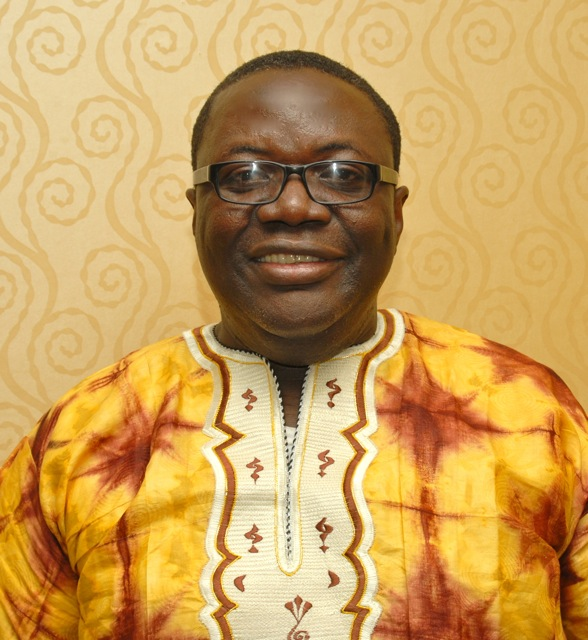


The progressives are here: debunking the cowards behind Koijee's calumnies

By Rufus D. Neufville


I have known Jefferson Koijee for more than a decade. We fought many intellectual battles together against the forces of backwardness. While serving as president of the National Students Intellectual Council, the young politician demonstrated uncompromising independence in thoughts and actions.

This was the advocate I knew until he became the Chief of Auxiliaries of the Congress for Democratic Change (CDC), and established close ties with certain political elements on the national stage. Few days ago, I read a composition on major news websites where Koijee questioned the existence of the progressives in the wake of Robert Sirleaf’s “rising influence and wealth.”

He mentioned the names of Sam Jackson, Samuel Kofi Woods, Dr. Amos Sawyer, Dr. Togba Nah Tipoteh and the writer of this rebuttal. That article is the best example of how counter-productive an argument can be when it is dangerously soaked with unimaginable misinformation. The invincible hands acting through Mr. Koijee spewed the highest volume of lies and misguided propaganda with the sole intent of destroying the hard-earned characters of good Liberians.

This composition will undoubtedly succeed by the use of logical reasoning, in deconstructing the wall of aspersion promulgated by my good friend. I will endeavor to do this not as a public relation officer for the oil company of Liberia, but because my name was mentioned as one of the progressives in the state of silence while “nepotism” and “corruption” engulf the oil sector and the country.

First, let us consider the functional description of the word nepotism. A public official can only be considered nepotistic in cases where kinship is the prevailing standard of evaluation for the awarding of jobs or other official favors. Simply put, if Mr. Robert Sirleaf had been a mediocre person and sits on the board of the oil company only because he is the son of the president, then all the progressives would have sounded the trumpet against the vices of nepotism and political corruption. Job opportunities for family members on the basis of qualification and competence can never be considered nepotism.

Additionally, the 1986 constitution of the Republic of Liberia deals with the issues of employment. Article (8) of the constitution states: “The Republic shall direct its policy towards ensuring for all its citizens, without discrimination, opportunities for employment and livelihood under just and humane conditions, and toward promoting safety, health and welfare facilities in employment. The use of the phrase “for all citizens” is self explanatory.

The Sirleafs have the right to work just like the Ngafuans, the Konnehs, the Nagbes. Hence, the president will be in violation of the organic law if she stops all the qualify Sirleafs in Liberia from working.

Also in your desperation to subject Mr. Robert Sirleaf to public ridicule, you claimed that we the progressives are watching while Mr. Sirleaf is on his way to becoming Liberia’s first billionaire by 2013. Why should you allow a gang of cowards who have decided not to take on Mr. Sirleaf directly put you down in flames? Have you asked them how many thousands make a million and how many millions make a billion?

The last budget I remembered passing into law as a member of the 52nd legislature was about half a billion. Or, are we suppose to believe that Robert Sirleaf will soon be richer than the whole country including his mother? This is outrageous and only an alien creature would believe this mischievous distortion.

Needless to mention, this is why we the progressives have not spoken against Mr. Robert Sirleaf becoming a billionaire. A Liberian billionaire by 2013 is mathematically impossible and your assertion can only hold as a Nostradamus prediction.

More to that, the calculation of the amount of money the country could get from the sale of oil without the applicability of time creates more questions than answers. Her Excellency Madam Ellen Johnson Sirleaf could be concluding her second term when the actual drilling of oil begins. The discovery of oil by the Sirleaf’s administration is in the best interest of the generation after her. Most of the oil money for Liberia will come over a period of time and Madam Sirleaf has no dynasty in Liberia. We will all benefit from her labor regardless of our political identity.

Again, I’m not the spokesman for the Sirleafs but I disagree with the analogy in your article. Comparing the Sirleafs of Liberia to the Abachas of Nigeria, the Nguemas of Equatorial Guinea and the Gaddafis of the old Libya, suggest the biggest historical folly of our time. This unpatriotic attempt to place the Liberian president and Nobel Peace Prize winner in the same group with some of Africa’s most corrupt and sadistic rulers must be resisted. And all students of history will reject Koijee’s categorization without the burden of long research.

On 6 September 1994, Abacha declared that his regime had absolute power, placing his government above the jurisdiction of the courts. His government violated the rights of Nigerians, especially after the hanging of Ogoni activist Ken Saro-Wiwa by the Oputa Commission. Moshood Olawale Abiola and Olusegun Obasanjo were jailed for treason, and Wole Soyinka charged in absentia with treason.

Gen. Abacha and his son Mohammed Abacha siphoned more than £5 billion out of the country’s coffers. Gen Sani Abacha went down in history, as a bloody dictator while Madam Ellen Johnson Sirleaf remains one of the world’s best reformers and the pride of our mothers in Africa. That analogy was inappropriate.

Obiang Nguema took over Equatorial Guinea by means of a coup against his own uncle Macias Nguema. The Nguemas have been in power for more than thirty years and have benefited from that country’s oil wealth since 1990. The level of corruption by the Nguemas is reflected in the son of the president residing in America: The Justice Department of the United States filed forfeiture complaints in Los Angels and Washington for a $38.5 million Gulfstream V Jet, a $30 million home in Malibu, a 2011 Ferrari worth more than $530,000.00 and the Michael Jackson memorabilia worth almost $2 million.

As for Madam Sirleaf, she rose to power through democratic means and is ending a second term provided under Article (50) of the constitution. May I hasten to mention that while the international financial institutions and the Obama administration condemn the Nguemas for extreme greed, they commended the Sirleaf administration for good fiscal management. How can a reasonable man compare the two?

The last comparison made was the Gaddafis and the Sirleafs. You brought your understanding of government into question when you compare the son of a democratic leader to the son of a despotic ruler who dictated every thing in his country for more than forty years.

The Associated Press (AP) reported before the end of the Gaddafi dictatorship that his children were increasingly engaged in covering up scandals fit for a “Libyan Soap Opera,” including negative publicity from extravagant displays of wealth, such as million-dollar private concert by pop diva Beyonce, according to a batch of secret diplomatic cables.

The real difference between the Sirleafs and the Gaddafis is that you walk free in Monrovia after an open political attack against the Sirleafs. In the Gaddafis Libya, politicians were executed the same day they oppose the dictator. It is indeed a sick irrationality to draw a line of similarity between the philanthropist Robert Sirleaf and any of the sons of the dethroned dictator Muammar Muhammad Abu Minyar al-Gaddafi.

Now it can safely be said that you have committed an intellectual offence and must muster the courage to repent. You proffered the laziest historical examples in modern argument. The distance between the Sirleafs administration and the tyrants you cited is like the distance between the earth and the sun.

Jefferson Koijee continues: “As this wealth will be gathered one after another and not instantly, Mr. Robert Sirleaf is now using shell companies, proxies and pseudonyms to amass his first billion before the end of 2013 …” It is very important to educate the writer at this point because there will be no drilling of oil by the end next year, 2013.

But gave me a break, there are many members of the Congress for Democratic Change (CDC) in this government. In fact, the embattled Chairman, the Secretary General and several partisans of the CDC are members of the Legislature. What are they saying? Don’t you know that they are in possession of the Act that created the National Oil Company of Liberia (NOCAL), and are aware that it is not possible for one man to get a billion dollar out of the company by 2013?

Are they not informing their partisans, including the National Head on Auxiliaries, that they have oversight on the functions of this institution and that the NOCAL is subject to forensic financial examination by the General Auditing Commission (GAC)? Or is your article in the local dailies and the Internet based on some of Shakespeare’s most famous tales?

Let us call a spade a spade! Mr. Robert Sirleaf must not remain under unnecessary attack by politicians only because he is the son of the President. Divinity determines our mothers and fathers far beyond our control. Like all Liberians, Mr. Sirleaf should be judged by the content of his character and claims against him should be free of prejudice.

Finally, you may have other means to locate the progressives you asked for in your widely distributed article. As for me, I am here and will remain ever committed to the struggle for the upliftment of our country. But as you will learn when you become a progressive, it is unwise to attack when things are improving for the good of the people.

Now I drop my pen with a sense of relief that I have dwarfed your argument by debunking the political falsehood and rampant economic inaccuracies contained in your unpatriotic writing.

Rufus D. Neufville was a member of the House of Representatives, Republic of Liberia. He can be reached at [email protected]

Cell#: +231-5-888777.


The progressives are here: debunking the cowards behind Koijee’s calumnies

By Rufus D. Neufville


I have known Jefferson Koijee for more than a decade. We fought many intellectual battles together against the forces of backwardness. While serving as president of the National Students Intellectual Council, the young politician demonstrated uncompromising independence in thoughts and actions.

This was the advocate I knew until he became the Chief of Auxiliaries of the Congress for Democratic Change (CDC), and established close ties with certain political elements on the national stage. Few days ago, I read a composition on major news websites where Koijee questioned the existence of the progressives in the wake of Robert Sirleaf’s “rising influence and wealth.”

He mentioned the names of Sam Jackson, Samuel Kofi Woods, Dr. Amos Sawyer, Dr. Togba Nah Tipoteh and the writer of this rebuttal. That article is the best example of how counter-productive an argument can be when it is dangerously soaked with unimaginable misinformation. The invincible hands acting through Mr. Koijee spewed the highest volume of lies and misguided propaganda with the sole intent of destroying the hard-earned characters of good Liberians.

This composition will undoubtedly succeed by the use of logical reasoning, in deconstructing the wall of aspersion promulgated by my good friend. I will endeavor to do this not as a public relation officer for the oil company of Liberia, but because my name was mentioned as one of the progressives in the state of silence while “nepotism” and “corruption” engulf the oil sector and the country.

First, let us consider the functional description of the word nepotism. A public official can only be considered nepotistic in cases where kinship is the prevailing standard of evaluation for the awarding of jobs or other official favors. Simply put, if Mr. Robert Sirleaf had been a mediocre person and sits on the board of the oil company only because he is the son of the president, then all the progressives would have sounded the trumpet against the vices of nepotism and political corruption. Job opportunities for family members on the basis of qualification and competence can never be considered nepotism.

Additionally, the 1986 constitution of the Republic of Liberia deals with the issues of employment. Article (8) of the constitution states: “The Republic shall direct its policy towards ensuring for all its citizens, without discrimination, opportunities for employment and livelihood under just and humane conditions, and toward promoting safety, health and welfare facilities in employment. The use of the phrase “for all citizens” is self explanatory.

The Sirleafs have the right to work just like the Ngafuans, the Konnehs, the Nagbes. Hence, the president will be in violation of the organic law if she stops all the qualify Sirleafs in Liberia from working.

Also in your desperation to subject Mr. Robert Sirleaf to public ridicule, you claimed that we the progressives are watching while Mr. Sirleaf is on his way to becoming Liberia’s first billionaire by 2013. Why should you allow a gang of cowards who have decided not to take on Mr. Sirleaf directly put you down in flames? Have you asked them how many thousands make a million and how many millions make a billion?

The last budget I remembered passing into law as a member of the 52nd legislature was about half a billion. Or, are we suppose to believe that Robert Sirleaf will soon be richer than the whole country including his mother? This is outrageous and only an alien creature would believe this mischievous distortion.

Needless to mention, this is why we the progressives have not spoken against Mr. Robert Sirleaf becoming a billionaire. A Liberian billionaire by 2013 is mathematically impossible and your assertion can only hold as a Nostradamus prediction.

More to that, the calculation of the amount of money the country could get from the sale of oil without the applicability of time creates more questions than answers. Her Excellency Madam Ellen Johnson Sirleaf could be concluding her second term when the actual drilling of oil begins. The discovery of oil by the Sirleaf’s administration is in the best interest of the generation after her. Most of the oil money for Liberia will come over a period of time and Madam Sirleaf has no dynasty in Liberia. We will all benefit from her labor regardless of our political identity.

Again, I’m not the spokesman for the Sirleafs but I disagree with the analogy in your article. Comparing the Sirleafs of Liberia to the Abachas of Nigeria, the Nguemas of Equatorial Guinea and the Gaddafis of the old Libya, suggest the biggest historical folly of our time. This unpatriotic attempt to place the Liberian president and Nobel Peace Prize winner in the same group with some of Africa’s most corrupt and sadistic rulers must be resisted. And all students of history will reject Koijee’s categorization without the burden of long research.

On 6 September 1994, Abacha declared that his regime had absolute power, placing his government above the jurisdiction of the courts. His government violated the rights of Nigerians, especially after the hanging of Ogoni activist Ken Saro-Wiwa by the Oputa Commission. Moshood Olawale Abiola and Olusegun Obasanjo were jailed for treason, and Wole Soyinka charged in absentia with treason.

Gen. Abacha and his son Mohammed Abacha siphoned more than £5 billion out of the country’s coffers. Gen Sani Abacha went down in history, as a bloody dictator while Madam Ellen Johnson Sirleaf remains one of the world’s best reformers and the pride of our mothers in Africa. That analogy was inappropriate.

Obiang Nguema took over Equatorial Guinea by means of a coup against his own uncle Macias Nguema. The Nguemas have been in power for more than thirty years and have benefited from that country’s oil wealth since 1990. The level of corruption by the Nguemas is reflected in the son of the president residing in America: The Justice Department of the United States filed forfeiture complaints in Los Angels and Washington for a $38.5 million Gulfstream V Jet, a $30 million home in Malibu, a 2011 Ferrari worth more than $530,000.00 and the Michael Jackson memorabilia worth almost $2 million.

As for Madam Sirleaf, she rose to power through democratic means and is ending a second term provided under Article (50) of the constitution. May I hasten to mention that while the international financial institutions and the Obama administration condemn the Nguemas for extreme greed, they commended the Sirleaf administration for good fiscal management. How can a reasonable man compare the two?

The last comparison made was the Gaddafis and the Sirleafs. You brought your understanding of government into question when you compare the son of a democratic leader to the son of a despotic ruler who dictated every thing in his country for more than forty years.

The Associated Press (AP) reported before the end of the Gaddafi dictatorship that his children were increasingly engaged in covering up scandals fit for a “Libyan Soap Opera,” including negative publicity from extravagant displays of wealth, such as million-dollar private concert by pop diva Beyonce, according to a batch of secret diplomatic cables.

The real difference between the Sirleafs and the Gaddafis is that you walk free in Monrovia after an open political attack against the Sirleafs. In the Gaddafis Libya, politicians were executed the same day they oppose the dictator. It is indeed a sick irrationality to draw a line of similarity between the philanthropist Robert Sirleaf and any of the sons of the dethroned dictator Muammar Muhammad Abu Minyar al-Gaddafi.

Now it can safely be said that you have committed an intellectual offence and must muster the courage to repent. You proffered the laziest historical examples in modern argument. The distance between the Sirleafs administration and the tyrants you cited is like the distance between the earth and the sun.

Jefferson Koijee continues: “As this wealth will be gathered one after another and not instantly, Mr. Robert Sirleaf is now using shell companies, proxies and pseudonyms to amass his first billion before the end of 2013 …” It is very important to educate the writer at this point because there will be no drilling of oil by the end next year, 2013.

But gave me a break, there are many members of the Congress for Democratic Change (CDC) in this government. In fact, the embattled Chairman, the Secretary General and several partisans of the CDC are members of the Legislature. What are they saying? Don’t you know that they are in possession of the Act that created the National Oil Company of Liberia (NOCAL), and are aware that it is not possible for one man to get a billion dollar out of the company by 2013?

Are they not informing their partisans, including the National Head on Auxiliaries, that they have oversight on the functions of this institution and that the NOCAL is subject to forensic financial examination by the General Auditing Commission (GAC)? Or is your article in the local dailies and the Internet based on some of Shakespeare’s most famous tales?

Let us call a spade a spade! Mr. Robert Sirleaf must not remain under unnecessary attack by politicians only because he is the son of the President. Divinity determines our mothers and fathers far beyond our control. Like all Liberians, Mr. Sirleaf should be judged by the content of his character and claims against him should be free of prejudice.

Finally, you may have other means to locate the progressives you asked for in your widely distributed article. As for me, I am here and will remain ever committed to the struggle for the upliftment of our country. But as you will learn when you become a progressive, it is unwise to attack when things are improving for the good of the people.

Now I drop my pen with a sense of relief that I have dwarfed your argument by debunking the political falsehood and rampant economic inaccuracies contained in your unpatriotic writing.

Rufus D. Neufville was a member of the House of Representatives, Republic of Liberia. He can be reached at [email protected]

Cell#: +231-5-888777.


"Monrovia Clean-Up Day?" Who's Making The Call, and Where Are They Dumping the Garbage?

By Tewroh-Wehtoe Sungbeh


I love Monrovia. I grew up admiring that old and rugged city as a child. It is a city on the hill surrounded by lakes, swamps, rocks and the Atlantic Ocean. Monrovia is where I was born many years ago.

As the nation’s capital, Monrovia is the undisputed power among the 15 political sub-divisions or counties trusted with a centralized political structure enshrined in the Constitution, and envied by residents of the other counties.

“Christopolis,” as she was once referred to by the settlers in the dark and early days, was renamed Monrovia after an American president, James Monroe, and later became a multi-cultural metropolis known for its thriving nightlife, engaging personalities, and a heated sports rivalry often romanticized as a place to visit, live, and do business.

However, Monrovia, the seaside city in 2012 is an overcrowded death trap waiting to bury its inhabitants who descended on that city from the countryside, villages, and far-away places after the civil war looking for jobs and opportunities in a country with little or no opportunities for its people.

The photos of President Sirleaf with gloves on, and holding a shovel in both hands months ago working the garbage during “Monrovia Clean-Up Day” are enough reasons to believe the nation’s capital needs not only a presidential proclamation to effect a clean up campaign the first Saturday of every month (with government and private businesses closed from 6 p.m., to 10 a.m., excluding hospitals), but a facelift that will bring Monrovia up to par at least minimally with other major cities around the world.

With an estimated population of 1.5 million inhabitants sandwiched in Monrovia, (half of the population in the entire country), Monrovia resembled a polluted shantytown infested with crimes, crippling and fatal diseases, dilapidated and unpainted buildings, crumbling infrastructure, human and animal feces, no modern sewer system, piles of eye-catching garbage, and no incinerator or sanitary landfills to dispose of the garbage collected.

Francis Nyepon of Ducor Wastes writing for The Liberian Dialogue in 2007, echoed these sentiments about the sanitation problem this way: “Since its founding, Liberia has never had an incinerator or sanitary landfill. Rotten garbage and dangerous wastes contaminates, ground and surface water pollutes the environment; and causes severe public health risk, with negative impact on hygiene, dignity and labor.”

Morris Koffa of the African Environmental Watch, writing in The Liberian Dialogue in 2008 also echoed these sentiments: “The lack of sanitary landfills capable of receiving about 600 – 800 metric tons of garbage collected each day in Liberia; particularly in the city of Monrovia where half the country’s population resides is the underlining problem of the solid waste crisis.”

“The dumpsite located in the Fiamah Community, according to the EPA, has been decommissioned. Where is the garbage been dumped now? There are no incinerators to handle medical wastes from hospitals/clinics – the syringes, blood-filled bandages among others are randomly thrown in wetlands, major tributary and beaches, where most Liberians often gathered not knowing whether a syringe stepped on is contaminated,” Koffa noted.

Environmental activists Francis Nyepon and Morris Koffa are right indeed. Monrovia and all of Liberia lacked the landfills and incinerators needed to handle industrial and domestic wastes. The obvious lack of adequate public and private restrooms has led citizens to run to the beach, backyards and unfinished/vacant homes to dump feces that often will run into the sea, rivers and the nation’s drinking water.

While it is true that a major drive of this kind to clean the city of Monrovia is a good idea, however, Monrovia, the nation’s capital like other cities all across Liberia deserves to be self-governed, cleaned and maintained; with elected Mayors and City Councilmen and women at the helm overseeing such clean-up campaigns in their own cities.

So what’s next? Is President Sirleaf, as president of all of Liberia – not only Monrovia, ready to also go to Nimba, Sinoe, and the other counties to clean up those areas? Where did the president and her cleaning crew dump the garbage that was cleaned in Monrovia?

The idea that such a local task that should have been undertaken by elected officials of the City of Monrovia and the various cities is being controlled and micromanaged by a national political leader, the President of Liberia, is exactly what’s wrong with Liberia.

What is needed is not a short-term photo-op showing President Sirleaf wearing gloves and holding a shovel to clean the City of Monrovia, but a long-term commitment and a genuine national environmental policy that addresses the critical environmental crisis affecting modern day Liberia.


“Monrovia Clean-Up Day?” Who’s Making The Call, and Where Are They Dumping the Garbage?

By Tewroh-Wehtoe Sungbeh


I love Monrovia. I grew up admiring that old and rugged city as a child. It is a city on the hill surrounded by lakes, swamps, rocks and the Atlantic Ocean. Monrovia is where I was born many years ago.

As the nation’s capital, Monrovia is the undisputed power among the 15 political sub-divisions or counties trusted with a centralized political structure enshrined in the Constitution, and envied by residents of the other counties.

“Christopolis,” as she was once referred to by the settlers in the dark and early days, was renamed Monrovia after an American president, James Monroe, and later became a multi-cultural metropolis known for its thriving nightlife, engaging personalities, and a heated sports rivalry often romanticized as a place to visit, live, and do business.

However, Monrovia, the seaside city in 2012 is an overcrowded death trap waiting to bury its inhabitants who descended on that city from the countryside, villages, and far-away places after the civil war looking for jobs and opportunities in a country with little or no opportunities for its people.

The photos of President Sirleaf with gloves on, and holding a shovel in both hands months ago working the garbage during “Monrovia Clean-Up Day” are enough reasons to believe the nation’s capital needs not only a presidential proclamation to effect a clean up campaign the first Saturday of every month (with government and private businesses closed from 6 p.m., to 10 a.m., excluding hospitals), but a facelift that will bring Monrovia up to par at least minimally with other major cities around the world.

With an estimated population of 1.5 million inhabitants sandwiched in Monrovia, (half of the population in the entire country), Monrovia resembled a polluted shantytown infested with crimes, crippling and fatal diseases, dilapidated and unpainted buildings, crumbling infrastructure, human and animal feces, no modern sewer system, piles of eye-catching garbage, and no incinerator or sanitary landfills to dispose of the garbage collected.

Francis Nyepon of Ducor Wastes writing for The Liberian Dialogue in 2007, echoed these sentiments about the sanitation problem this way: “Since its founding, Liberia has never had an incinerator or sanitary landfill. Rotten garbage and dangerous wastes contaminates, ground and surface water pollutes the environment; and causes severe public health risk, with negative impact on hygiene, dignity and labor.”

Morris Koffa of the African Environmental Watch, writing in The Liberian Dialogue in 2008 also echoed these sentiments: “The lack of sanitary landfills capable of receiving about 600 – 800 metric tons of garbage collected each day in Liberia; particularly in the city of Monrovia where half the country’s population resides is the underlining problem of the solid waste crisis.”

“The dumpsite located in the Fiamah Community, according to the EPA, has been decommissioned. Where is the garbage been dumped now? There are no incinerators to handle medical wastes from hospitals/clinics – the syringes, blood-filled bandages among others are randomly thrown in wetlands, major tributary and beaches, where most Liberians often gathered not knowing whether a syringe stepped on is contaminated,” Koffa noted.

Environmental activists Francis Nyepon and Morris Koffa are right indeed. Monrovia and all of Liberia lacked the landfills and incinerators needed to handle industrial and domestic wastes. The obvious lack of adequate public and private restrooms has led citizens to run to the beach, backyards and unfinished/vacant homes to dump feces that often will run into the sea, rivers and the nation’s drinking water.

While it is true that a major drive of this kind to clean the city of Monrovia is a good idea, however, Monrovia, the nation’s capital like other cities all across Liberia deserves to be self-governed, cleaned and maintained; with elected Mayors and City Councilmen and women at the helm overseeing such clean-up campaigns in their own cities.

So what’s next? Is President Sirleaf, as president of all of Liberia – not only Monrovia, ready to also go to Nimba, Sinoe, and the other counties to clean up those areas? Where did the president and her cleaning crew dump the garbage that was cleaned in Monrovia?

The idea that such a local task that should have been undertaken by elected officials of the City of Monrovia and the various cities is being controlled and micromanaged by a national political leader, the President of Liberia, is exactly what’s wrong with Liberia.

What is needed is not a short-term photo-op showing President Sirleaf wearing gloves and holding a shovel to clean the City of Monrovia, but a long-term commitment and a genuine national environmental policy that addresses the critical environmental crisis affecting modern day Liberia.


Education and Poverty Reduction Strategy

By Francis W. Nyepon

Poverty is injustice and an abuse of human rights, especially for children. Liberia has had seven years of peace; yet educational policies have had no meaningful impact on learning, or on reducing poverty for the average Liberian, most especially the children.

This author believes that education is pivotal in breaking the vicious cycle of poverty in Liberia, and especially the social exclusion that is the reality for many children. The author is convinced that the role of education in our society must be one of achieving universal primary education and adult literacy.

These twin areas of human development must become central to the Sirleaf administration’s Poverty Reduction Strategy (PRS), because it is at these levels of education through which most poor children and poor adults pass to break the cycle of poverty. Children’s education and adult literacy are critical to long-lasting peace, stability and modernization of our country. Over two-thirds of the population lives in poverty on less than US$1 a day, with life expectancy still standing at just 45.

In most regions of Liberia, thousands of children do not attend school. With one of the largest budgetary outlays in government, the Ministry of Education (MOE) has had little or no impact on the daily lives of children and their families over the past 5 years.

Furthermore, the MOE national policies haven’t provided an environment for productive learning and career building. Instead, policies have penalized innocent children as a result of the lack of leadership and clear-cut direction at the MOE. With the Sirleaf administration aim of reaching universal primary education by 2015 – one of the Millennium Development Goals (MGGs), it’s roadmap to national recovery and sustainable development through the PRS, is in serious jeopardy of collapse especially in areas like education, health, sanitation, nutrition, and water where children are impacted most.

National Education Policies have yet to provide children and their families with opportunities to improve living conditions and livelihood. Families and educators says the national educational system face a number of challenges, which includes severe impediments to construction and rehabilitation of schools, even though the MOE claims it has build and renovated several thousand school buildings around the country, which no one can see.

Many public schools are overcrowded, and in equally poor condition without adequate equipment, supplies and educational materials. Village and district leaders says their areas lack sufficient classroom space to cope with population growth and density, which many acknowledge forces students to sit on the ground or on pieces of lumber, with teachers rarely having desks, chairs or instructional materials.

The MOE must now initiate and provide a more proactive and aggressive education agenda to improve infrastructure, instructions, training and programs for children, and provide adequate equipment, and supplies to schools across the country. Also, the MOE must provide professional development training for teachers’ national wide, because the ministry’s teacher training program is not effective.

Over half of the teachers in Liberia are not qualified to teach the specific subject matter they now teach. Yet the MOE offers no testing of teachers, and has no yardstick by which to measure performance across the country. This author believes that one of the biggest challenges that teachers and career educators at the MOE have with the current education plan is mitigating the negative impact that current learning conditions superimposes on students and their families.

The Sirleaf administration is yet to establish an office for planning and monitoring poverty reduction policies and programs, which appear to be the reason why there are so many gaps in orientation, implementation, and follow-up of the PRS, thereby lack the kind of breakthroughs made by the administration, which the average person can comprehend.

This author wishes to suggest that the Sirleaf administration should align the country’s social sector development with macro-economic policies and strategies; thereby, linking debt-relief and human development to the PRS.

What the author is suggesting here is that the Sirleaf administration should broaden the utilization of its debt relief policies and channel much needed resources to the education and health sectors. In the context of macroeconomic programs, special attention needs to be paid to breaking the poverty cycle of children. The MOE should adopt systemic changes to enhance and ensure good quality education for children and robust learning for adults.

Throughout Liberia, poverty is both a cause and effect of insufficient access to or completion of education. All over the country, children are less likely to enroll in and complete school due to associated costs of attending school, even when school is so-called ‘Free’.

The cost of uniform, fees, supplies, lunch, distance to school, and transportation are in many cases beyond the means of many families especially those at the bottom of the social strata. This means that choices have to be made, and the choice that is often made is to take a child or several children out of school. This is the harsh reality on the ground especially amongst families stranded and stuck with this dilemma on a daily basis.

Also, rampant poverty is forcing thousands of rural and peri-urban families to send their children to the city to beg or sell on the streets, wash cars, push wheelbarrow transport or toil in markets at the expense of their education. Nearly half of children in rural areas of Liberia have no access to basic education, according to UNICEF.

Additionally, as children who are enrolled in school grow older, the opportunity cost (their labor and the foregone income it may entail) becomes greater, thus increasing the likelihood of families forcing their children to abandon school.

This author’s visit to both urban and rural schools throughout the country presented an immediate overview and evidence of children dropping out of school to support themselves or to supplement strained family income. In most cases, children simply moved out of their homes to make life by any means necessary.

This is usually the norm for many children in rural and peri-urban communities. In rural areas for instance, many young men simply forget about school altogether and take on a wife or two to sustain life. In almost all cases, the lack of basic education virtually guarantees perpetuation of the poverty cycle.

It further traps many well-intentioned families to the bottom of the social ladder because their income-earning potential is reduced, not to mention the potential productivity level of the country, or the receptivity to change or transformation of the country, and the burning desire of many to improve the quality of their lives.

This author therefore concludes that the lack of education perpetuates poverty throughout Liberian society, and poverty constrains access to schooling, thereby suffocating painstaking progress and gains made by the Sirleaf administration’s Poverty Reduction Strategy. Notwithstanding, in order for the PRS to work successfully and bring meaning to the lives of ordinary people, poverty must be greatly reduced to touch the lives of children and their families.

But, this would require strengthening and improving the livelihood of families through employment, training and the provision of basic services, productive skill sets, and not necessarily through academic education. For example, a 25-year old does not need to sit in a fifth grade classroom with 9-year old kids to learn verb conjugations or introduction to basic algebra. He or she could make better use of his or her time by gaining productive life-saving skill sets and vocations to improve the quality of his or her life.

This author is attempting to draw a distinction between the complex and often very necessary role education plays in the upward mobility of improving one’s life, vis-à-vis poverty reduction and social development. For instance, for many school-age children in Liberia, education and learning can become a tool for preparing them to take their rightful place in the society.

Therefore, if the PRS is to become successful, then the Sirleaf administration must first work towards eradicating poverty through education. This means improving basic skill sets, through apprenticeship training, vocational education, and targeted career development programs. This also means teaching social skills and etiquettes, promoting proper hygiene practices and improving sanitation, and teaching environmental health as a requirement to entering the workplace, employment, and school.

This author believes that this view of education would empower both school-age children and school-going adults by opening avenues in communication that would otherwise be closed. These avenues would include expanding personal choices and control over one’s environment, and provide the basis for acquiring many other life skills like obtaining access to information through print as well as electronic media; equipping themselves with work and family responsibilities; and changing the image they have about themselves.

Through this kind of innovation, this author see education strengthening the self-confidence of both school-age children and school-going adults to actively and objectively participate in their respective communities, and maybe participate in national affairs in order to ‘constructively’ influence social, political, economic and environmental issues in those communities.

Francis Nyepon is Country Director of the West African Children Support Network (WACSN), and managing partner of DUCOR Waste Management in Liberia. He is a policy analyst and Vice Chair of the Center for Security and Development Studies, and serves on several boards of humanitarian, environmental and human rights organizations in the United States and Liberia.

He can be reached at [email protected].