Subscribe via RSS Feed

Archive for June, 2012

Presidential friendship emboldens Mary Broh’s uncultured leadership style

By Tewroh-Wehtoe Sungbeh


There was a popular joke in Liberia during the Tolbert administration about his erratic brother, Frank Tolbert. As Senator and a family member of the president, Frank Tolbert, who was believed to claim ownership of the public sidewalk in front of his house, was quick to prevent the public from walking on that sidewalk.

And when they did, he would first use force to stop them, and then subsequently announce his kinship to the president to legitimize his crazy claims of the public walkway.

“Do you know who I am? I am Frank Emmanuel Tolbert, senior brother of the President of the Republic of Liberia, and President Pro-tempro of the Liberian Senate,” it is believed he would ask or tell a person walking on the sidewalk in front of his house.

Even though Frank Tolbert did not coin the phrase, ‘do you know who I am?’ it became popular in Liberia during the heyday of the one-party dynastic rule of the Americo-Liberians freed black slaves from the United States, some of whom used their family connections and positions in government to intimidate, harass, jail or physically assault Liberians they believed crossed their paths the wrong way.

While it is so true that those Americo-Liberians in and outside of government were known to commit these illegal acts that were close to being treasonous, some indigenous Liberians who occupied powerful government positions at the time were also quick to intimidate, harass and remind Liberians of their place in government and society, when they think those Liberians also crossed their paths the wrong way.

Just as it was then when previous administrations did not implement or enforce existing laws to combat intimidation, harassment and physical abuse of civilians, journalists and police officers by powerful government officials, the current administration of Ellen Johnson Sirleaf, has been unable to implement or enforce existing laws to prevent those illegal acts.

As a result, there has been an increase in physical abuse, intimidation and harassment of civilians, journalists and police officers by members of the House of Representatives and Senate, the current Chief Justice of the Supreme Court of Liberia, Johnnie Lewis, and now the acting Mayor of Monrovia, Mary Broh.

Just recently, it was widely reported that Acting Mayor Mary Broh allegedly slapped Senate staffer Nancy Gaye, for “provoking her.” According to reports, the incident happened when the acting Mayor was spearheading street-cleaning projects in the city of Monrovia.

For a government official or anybody to lay his or her hand on another person is unacceptable no matter what the situation. And for this to happen continually in Liberia in 2012 shows an obvious lack of leadership, lawlessness, dysfunction and a low level of dialogue and tolerance in Liberia.

And for a sitting president to watch and do nothing after her staffer physically assaults a citizen underscores Ellen Johnson Sirleaf’s style of leadership, which favors her friends, family members, cronies and government officials over ordinary Liberian citizens.

President Sirleaf’s unconditional support of this lady is a classic example, which emboldens Mary Broh to do whatever she wants to do to anyone whom she believes is in her way, without facing the consequence of her action.

Interestingly, Mary Broh, who hasn’t been confirmed by the Senate as Mayor in the many years she has held that position, was subpoena by that body to appear before them to answer charges that she physically assaulted Ms. Gaye.

While it is so true that the anger coming from the Legislative Branch is in the right direction, this case shouldn’t be tried in the legislative chambers, but in the court of law where cases are litigated.

What these members of the House of Representatives and Senate should do right now is not to pander to their emotions and public sentiments. They ought to enact sensible legislations, or enforce existing ones to prevent future abuse by powerful government officials, including those same members of the legislative branch who are now making noise about this incident.

However, where were these Representatives and Senators years ago when their own members where found to intimidate, harass and physically assaulted journalists, police officers and ordinary Liberians?

If the Liberian court systems are too weak that they favor government officials over ordinary citizens during litigation (even when those government officials are guilty), then enforcement mechanisms must be put in place to correct the problem, to instill confidence in the judicial system.

To her credit, however, Mary Broh is not alone in her disdain for ordinary citizens, journalists and police officers. With a history of aggression towards those she sees as lesser than humans, the unrudely Mary Broh, who does not have any ounce of leadership in her DNA to lead anything, let alone a city, is a manifestation of what’s wrong in Ellen’s Liberia.

As a presidential friend Mary Broh can do no wrong in the eyes of Ellen Johnson Sirleaf, who showed her unwavering support for the embattled acting Mayor in the wake of this latest controversy that rocked her administration.

I have always argued that nation building, or the talk of nation building (as is the case in Liberia right now) should not only be about building infrastructure, but also about attitude change, having a civilized environment that respects others and encourages constructive dialogue, and enforcing existing laws on the books.

As it’s now, Ellen Johnson Sirleaf’s Liberia has yet to show leadership on these issues and other issues on her watch that continues to plague the country.

A Tribute to Thomas “Tom” Saah Kamara: Comrade in the Liberian People’s Struggle for Rice & Rights

By Siahyonkron Nyanseor
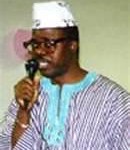
 

Andrew Jackson said once, “One man with courage can make a majority.” Mike Murdock went on to say, “You will be remembered for two things: the problem you solve or the ones you create.” Both statements remind me of my comrade and patriotic son, the late Thomas Tom Saah Kamara, to whom this tribute is devoted.

We first worked as members of the Union of Liberian Associations in the Americas (ULAA). And when I relocated to Liberia, March 1981, we continued our commitment to the Liberian people’s struggle for RICE and RIGHTS.

At the time, Tom was employed as editor of the New Liberia; the official newspaper of the ruling People’s Redemption Council (PRC), and I was employed as an Urban Rural Planner at the Ministry of Planning and Economic Affairs. On weekends, we would meet at Taylor Major estate in Cardwell, a suburb of Monrovia, where Nyudueh Monorkomana (then-Assistant Minister of Labor) and Blamoh Nelson, former deputy director, General Services Agency had their homes, to socialize, drink palm wine and eat fufu with goat soup.

Besides being a devoted journalist, Tom was a creative fictional writer. I could not wait to read his fictional episodes: “The Trial of Charles Ghankay Taylor,” which was started in the 1990’s. Many of the predictions in the episodes became reality; Taylor was found guilty and was sentenced to fifty years in prison.

During the INFPL villainous attack on central Monrovia in 1990, Tom was shot in the leg while he was transporting media equipment on Bushrod Island. He had to go to Holland for treatment.

Tom’s aggressive style of “Investigative Reporting” made him to butt heads with the likes of Charles Ghankay Taylor, George S. Boley, Alhaji G.V. Kromah and anyone who was in his way. Due to Tom’s probing and sometimes, provoking style of going after the story, he created enemies in many high places. In 1996, his New Democrat office was looted and burned; the newspaper was shut down and his life was threatened. As a result, he went into exile in The Netherlands.

When my colleagues, Abraham M. Williams, George H. Nubo and I started ThePerspective.org newsmagazine in June 1996, we received e-mail from Tom, who was residing in exile in The Netherlands at the time to congratulate us, and expressed interest in contributing to the magazine. We gladly accepted his offer; and the rest is history.

Tom and a hosts of dedicated Liberians and friends such as J. Kpanneh Doe, Tarty Teh, Geepoh Nah Tiepoh, H. Boima Fahnbulleh, Jr., William E. Allen, Gbe Shen, Theodore T. Hodge, James D. Smith, Tewroh-Wehtoe Sungbeh, Sumowuoi pewu, J. Yanqui Zaza, Charles Kwalonue Sunwabe Jr., John S. Morlu, II., F. Wafula Okumu, James W. Harris, Mohamedu F. Jones, Nat galarea Gbessagee, Josephs Moses Gray, Abdoulaye W. Dukule, Ray Martin, Ruth Nabakwe, Massa A. Washington, Emmanuel Dolo, Winsley S. Nanka, Moses Geply, Decontee Jackson, Musue N. haddad, Tarnue Johnson, Wollor E. Topor, Abraham James (partial list of contributors who are credited with the early success of ThePerspective.org newsmagazine.

Tom believe African leaders and Liberians for that matter, are not above the law. According to him, Liberians need leaders who are servants of the people, and answerable to them. While some may have good intentions, the hypocritical practice of praise and worship singing often turned them into dictators. As a result, the leaders are not about the people’s business, but are only concerned about themselves, their families and those who will blindly follow them.

In the case of Liberia, former President Doe sought the help a Kekura B. Kpoto, a political chameleon, who once boasted openly that he possessed “99 strategies of winning elections.”

Based on Tom’s observation:

Kpoto, former chair of the junta’s party who switched sides and began recruiting for Taylor’s rebel NPFL in 1990, told the audience the dangers of Liberia’s current isolation. He said although the violent war had stopped, the war of the “pen” was hurting the country. He said Liberians were killing Liberians through the pen because, he added, “When some people put things down, people are bound to believe.” Kpoto noted unity was important in fighting the current isolation making outside assistance impossible. Asked what he has done for the country since he is a perpetual servant of all governments dating from the Tubman till now, Kpoto recounted scholarships, which he has given Liberians and his agricultural projects. He said since he joined Taylor, he has not seen his check. It goes to the needy, he said, although he did not say from which sources he was getting his money.(“Messengers Carrying the Burdens of Bad News”, published in the September 18, 2000 edition of ThePerspective.org)

The question now is why are African leaders unable to tolerate political opposition? One would think that by encouraging such activities, these leaders would be able to get feedbacks and inputs that would enable them to become better leaders.

Also, to their credit would be the development of rapid progressive economic activities, and a workable healthy political environment that promotes the interest of all, instead of a select few.

In retrospect, I am reminded that Tom was barely in his teens when he had his first brush with the authority at William V.S. Tubman high school in Monrovia, where he was the first editor of the school’s newspaper, The Mirror. From there on, he used his writings to speak truth to power.

“The most important political office is that of the private citizen. If we shirk our responsibilities in preserving our freedoms, they will be lost. No one is above the law, and there can never be peace without freedom, equality, and justice,” Tom once wrote. The excerpt below show the resolve with which Tom would go to confront those whom he regarded as not speaking the truth about his beloved country and continent.

He expressed this sentiment in a previous article titled, “Harbingers of Truth & Reluctant Converts,” published in the March 19, 2001 edition of ThePerspective.org:

…In a much refreshing way of shelving hypocrisy to embrace honesty in today’s politics of personal convenience, Feingold said: “We have all read the appalling accounts of atrocities committed in the region. I believe that some of the responsibility for these terrible abuses upon Charles Taylor’s shoulders. In fact, I believe that Liberian President Charles Taylor is a war criminal.

Then came the repentance from Congressman Donald M. Payne, once one of Taylor’s ardent backers on the House Sub-Committee who opened the Hearing. In a much welcomed afterthought about a man he came to admire as a fellow black who knows the “both worlds” - America and Africa, Congressman Payne said Taylor-backed rebels in Sierra Leone, ”have already exacerbated problems in countries such as Guinea and Côte d’Ivoire which already have illegitimate regimes (and) weak institutions coupled with mounting refugee problems.”

To appreciate Payne’s metamorphosis, we must look at what his mind was when Taylor was proclaimed winner after the laughable 1997 elections conducted under the guidance of late Nigerian dictator Sani Abacha:

“I always felt Liberia was like a symbolic motherland to African-Americans,” he beamed, unabashed about his fantasies for Taylor “because he’s intelligent; he knows what sells here, and he’s from over there. He has the knowledge of both worlds,” Jon Lee Anderson quoted him as proclaiming. This mindset was nevertheless not unique to Payne. Amazingly, African-Americans and Democrats saw light in a man many Liberians saw as a Prince of Darkness. The Rev. Jesse Jackson, who could not address Liberians during the heydays of their nightmare without a fee of $10,000, told them after the elections that it was “sunshine time in Liberia.” Jackson, a man who makes his living from protests, warned Liberians demanding substantive changes after such a horrible war waged in the name of democracy to “get off the Internet.” On one of his frequent visits to the country, he blamed Liberia’s horrors on the execution of the “few good people”, 13 Americo-Liberian (descendents of ex-slaves who settled in the country in 1822 and monopolized politics and economy) during a military coup 1980, a coup which Taylor in fact helped to consolidate. Such a verdict from a religious and Civil Rights leader, after a war that butchered 250,000 (mostly African-Liberians and their political leaders), was far from soothing considering the ethnic acrimony prevailing as all signs indicate the re-emergence of Americo-Liberian rule of the privileged.

During Tom’s career, he made it his business never to spare neither his friends nor foe. For this reason, he made more enemies than friends. Many people who knew Tom would agree that some of the problems he encountered were due to his style of seeking and reporting stories. That style got him into troubles with Doe, Taylor, and even Sirleaf, who wrote such eloquent tribute about the man she once threatened to sue. Yet, another patriot, Tarty Teh, who died few months before Tom, was not so lucky to have received similar tribute from the President. Many of us know the reason!

All in all, what set Tom apart from other journalists is the fact that he went after both – those who considered themselves his enemies and his trusted friends. This style got him in into many palavers and often times into heated written exchanges:

Find below in his own words how he escaped death:

In fairness however, Taylor is simply building upon the pillars of lawlessness erected for decades. The coup of 1980 heightened the level of lawlessness since the soldiers lacked the finesse of their predecessors in pretenses of leading a democratic society when the truth was that it was a concealed tyranny. In 1984, this writer was arrested and thrown in prison on an infamous charge of “Security Risk” for Samuel Doe’s Government. The “Security Risk” encompassed critical journalism, for Doe, unlike Taylor, had little idea what constituted “espionage.” Without a formal charge, I was thrown in prison, but not before the head of, National Security Agency, (the secret police) Sylvester Moses, now in US exile, gave me a complete dress down for my alleged masterminding of underground leaflets produced by University of Liberia students against the regime. Since the NSA concluded I was the only one capable of producing such scathing leaflets in the absence of press freedom, Doe decided that the high security prison in the jungles of Belle Yalla was the best place to dump me and thus remove the risk. So the soldiers bundled me up from prison at my NSA cell and escorted me to the tiny city airport to be flown to Belle Yalla, possibly to be killed en route. But the officer in charge of the tiny plane saved my life by refusing to fly the plane and demanded legal papers on my case, including formal charges. Without the papers, he insisted, he would not risk his reputation in participating in an illegal imprisonment. As I was shoved in the car under heavily armed escort back to my cell, he yelled, “Tom you’re lucky!” That was the last time I heard his voice. He was killed latter. This little event indicated some forms of “law” still existed in Doe’s Liberia. Had this even occurred in Taylor’s Liberia, I would not have lived to tell the story! (“Ordeals & Pretenses,” published in the April 3, 2001 edition of ThePerspective.org)

In remembrance of Thomas (Tom) Saah Kamara, I say, we will continue the STRUGGLE. So farewell my friend and brother, you fought a good fight; therefore, death need not be proud; for there was nothing it could have done to STOP the course of our history toward which you contributed to immensely. May your travel be smooth and safe, and give our best regards to our brothers and sisters in the struggle who went ahead of you.

Also, to Tom’s wife and family, I say take solace in the fact that he left his mark on African history, and for that matter, Liberian History. He has gone from labor to rest where there will be NO STRUGGLE. Therefore, you and your family should celebrate — knowing that Tom made invaluable contributions to humanity.

Finally, I beg to leave with you Tom’s profound and prophetic words that read:

…Every society deserves the type of leadership it has, for people determined to rid themselves of stupid tyranny can muster the strength and will to achieve their objective. If they refuse to act, then indeed they deserve what they have. So it is with Liberia as with many African states. (“Woes of the African Journalist,” published in the March 12, 2001 edition of ThePerspective.org)

Oh, how true these words are!

I bade you PEACE my friend, until we meet!

Gwe feh Kpeh!

Our eyes are opened; the time of the people has come!

In the Cause of the People, the Struggle Continues!

Check out the partial list of his articles on ThePerspective.org Website:

“Shifting Alliances in Liberia’s Theft and Plunder,” July 1996

  • “Liberia: The Emergence of a Criminal State,” July 2000
  • “Messengers Carrying the Burdens of Bad News”, September 18, 2000
  • “Liberian Officials Bicker Over Genesis of Horrors”, October 2, 2000
  • “Praying and Celebrating Against Going Home,” October 9, 2000
  • “Blames & Blunders: Combing Kromah’s Claims”, November 8, 2000
  • “Elections and Erosion of Stability in Africa,” November 16, 2000
  • “The Liberian Senate’s Feuding ‘Criminals,’” November 20, 2000
  • “Selling Deception”, December 5, 2000
  • “Where Jesse Jackson Sees Best,” December 15, 2000
  • “A Demon or Demonized?” February 5, 2001
  • “Misinformation, Sanctions & Bedfellows,” February 6, 2001
  • “The Senate’s Inquisition,” February 26, 2001
  • “Woes of the African Journalist,” March 12, 2001
  • “Harbingers of Truth & Reluctant Converts,” March 19, 2001
  • “Ordeals & Pretenses,” April 3, 2001
  • “Disappearances, Denials & Doubletalk,” April 12, 2001
  • “Are Taylor’s ‘Hands Clean’ in Liberia’s State-Sponsored Terrorism?” October 2001
  • “Liberian Citizenship and Passport Up for Sale!” August 2001
  • “Piracy and Anarchy in West Africa: The Ivory Coast’s Turn,” September 2001

Mr. Siahyonkron Nyanseor is publisher of both ThePerspective.org and ThePanAfricanAgenda.org, Internet web magazines. His research and writing interests fall largely within Africa, with particular emphasis on the history, economics, politics, sociology, ethics, and theology of people of African-origin living in Africa and its Diaspora. He is a poet, journalist, and cultural and political activist. He can be reached at: [email protected].


A Tribute to Thomas “Tom” Saah Kamara: Comrade in the Liberian People’s Struggle for Rice & Rights

By Siahyonkron Nyanseor


Andrew Jackson said once, “One man with courage can make a majority.” Mike Murdock went on to say, “You will be remembered for two things: the problem you solve or the ones you create.” Both statements remind me of my comrade and patriotic son, the late Thomas Tom Saah Kamara, to whom this tribute is devoted.

We first worked as members of the Union of Liberian Associations in the Americas (ULAA). And when I relocated to Liberia, March 1981, we continued our commitment to the Liberian people’s struggle for RICE and RIGHTS.

At the time, Tom was employed as editor of the New Liberia; the official newspaper of the ruling People’s Redemption Council (PRC), and I was employed as an Urban Rural Planner at the Ministry of Planning and Economic Affairs. On weekends, we would meet at Taylor Major estate in Cardwell, a suburb of Monrovia, where Nyudueh Monorkomana (then-Assistant Minister of Labor) and Blamoh Nelson, former deputy director, General Services Agency had their homes, to socialize, drink palm wine and eat fufu with goat soup.

Besides being a devoted journalist, Tom was a creative fictional writer. I could not wait to read his fictional episodes: “The Trial of Charles Ghankay Taylor,” which was started in the 1990’s. Many of the predictions in the episodes became reality; Taylor was found guilty and was sentenced to fifty years in prison.

During the INFPL villainous attack on central Monrovia in 1990, Tom was shot in the leg while he was transporting media equipment on Bushrod Island. He had to go to Holland for treatment.

Tom’s aggressive style of “Investigative Reporting” made him to butt heads with the likes of Charles Ghankay Taylor, George S. Boley, Alhaji G.V. Kromah and anyone who was in his way. Due to Tom’s probing and sometimes, provoking style of going after the story, he created enemies in many high places. In 1996, his New Democrat office was looted and burned; the newspaper was shut down and his life was threatened. As a result, he went into exile in The Netherlands.

When my colleagues, Abraham M. Williams, George H. Nubo and I started ThePerspective.org newsmagazine in June 1996, we received e-mail from Tom, who was residing in exile in The Netherlands at the time to congratulate us, and expressed interest in contributing to the magazine. We gladly accepted his offer; and the rest is history.

Tom and a hosts of dedicated Liberians and friends such as J. Kpanneh Doe, Tarty Teh, Geepoh Nah Tiepoh, H. Boima Fahnbulleh, Jr., William E. Allen, Gbe Shen, Theodore T. Hodge, James D. Smith, Tewroh-Wehtoe Sungbeh, Sumowuoi pewu, J. Yanqui Zaza, Charles Kwalonue Sunwabe Jr., John S. Morlu, II., F. Wafula Okumu, James W. Harris, Mohamedu F. Jones, Nat galarea Gbessagee, Josephs Moses Gray, Abdoulaye W. Dukule, Ray Martin, Ruth Nabakwe, Massa A. Washington, Emmanuel Dolo, Winsley S. Nanka, Moses Geply, Decontee Jackson, Musue N. haddad, Tarnue Johnson, Wollor E. Topor, Abraham James (partial list of contributors who are credited with the early success of ThePerspective.org newsmagazine.

Tom believe African leaders and Liberians for that matter, are not above the law. According to him, Liberians need leaders who are servants of the people, and answerable to them. While some may have good intentions, the hypocritical practice of praise and worship singing often turned them into dictators. As a result, the leaders are not about the people’s business, but are only concerned about themselves, their families and those who will blindly follow them.

In the case of Liberia, former President Doe sought the help a Kekura B. Kpoto, a political chameleon, who once boasted openly that he possessed “99 strategies of winning elections.”

Based on Tom’s observation:

Kpoto, former chair of the junta’s party who switched sides and began recruiting for Taylor’s rebel NPFL in 1990, told the audience the dangers of Liberia’s current isolation. He said although the violent war had stopped, the war of the “pen” was hurting the country. He said Liberians were killing Liberians through the pen because, he added, “When some people put things down, people are bound to believe.” Kpoto noted unity was important in fighting the current isolation making outside assistance impossible. Asked what he has done for the country since he is a perpetual servant of all governments dating from the Tubman till now, Kpoto recounted scholarships, which he has given Liberians and his agricultural projects. He said since he joined Taylor, he has not seen his check. It goes to the needy, he said, although he did not say from which sources he was getting his money.(“Messengers Carrying the Burdens of Bad News”, published in the September 18, 2000 edition of ThePerspective.org)

The question now is why are African leaders unable to tolerate political opposition? One would think that by encouraging such activities, these leaders would be able to get feedbacks and inputs that would enable them to become better leaders.

Also, to their credit would be the development of rapid progressive economic activities, and a workable healthy political environment that promotes the interest of all, instead of a select few.

In retrospect, I am reminded that Tom was barely in his teens when he had his first brush with the authority at William V.S. Tubman high school in Monrovia, where he was the first editor of the school’s newspaper, The Mirror. From there on, he used his writings to speak truth to power.

“The most important political office is that of the private citizen. If we shirk our responsibilities in preserving our freedoms, they will be lost. No one is above the law, and there can never be peace without freedom, equality, and justice,” Tom once wrote. The excerpt below show the resolve with which Tom would go to confront those whom he regarded as not speaking the truth about his beloved country and continent.

He expressed this sentiment in a previous article titled, “Harbingers of Truth & Reluctant Converts,” published in the March 19, 2001 edition of ThePerspective.org:

…In a much refreshing way of shelving hypocrisy to embrace honesty in today’s politics of personal convenience, Feingold said: “We have all read the appalling accounts of atrocities committed in the region. I believe that some of the responsibility for these terrible abuses upon Charles Taylor’s shoulders. In fact, I believe that Liberian President Charles Taylor is a war criminal.

Then came the repentance from Congressman Donald M. Payne, once one of Taylor’s ardent backers on the House Sub-Committee who opened the Hearing. In a much welcomed afterthought about a man he came to admire as a fellow black who knows the “both worlds” - America and Africa, Congressman Payne said Taylor-backed rebels in Sierra Leone, ”have already exacerbated problems in countries such as Guinea and Côte d’Ivoire which already have illegitimate regimes (and) weak institutions coupled with mounting refugee problems.”

To appreciate Payne’s metamorphosis, we must look at what his mind was when Taylor was proclaimed winner after the laughable 1997 elections conducted under the guidance of late Nigerian dictator Sani Abacha:

“I always felt Liberia was like a symbolic motherland to African-Americans,” he beamed, unabashed about his fantasies for Taylor “because he’s intelligent; he knows what sells here, and he’s from over there. He has the knowledge of both worlds,” Jon Lee Anderson quoted him as proclaiming. This mindset was nevertheless not unique to Payne. Amazingly, African-Americans and Democrats saw light in a man many Liberians saw as a Prince of Darkness. The Rev. Jesse Jackson, who could not address Liberians during the heydays of their nightmare without a fee of $10,000, told them after the elections that it was “sunshine time in Liberia.” Jackson, a man who makes his living from protests, warned Liberians demanding substantive changes after such a horrible war waged in the name of democracy to “get off the Internet.” On one of his frequent visits to the country, he blamed Liberia’s horrors on the execution of the “few good people”, 13 Americo-Liberian (descendents of ex-slaves who settled in the country in 1822 and monopolized politics and economy) during a military coup 1980, a coup which Taylor in fact helped to consolidate. Such a verdict from a religious and Civil Rights leader, after a war that butchered 250,000 (mostly African-Liberians and their political leaders), was far from soothing considering the ethnic acrimony prevailing as all signs indicate the re-emergence of Americo-Liberian rule of the privileged.

During Tom’s career, he made it his business never to spare neither his friends nor foe. For this reason, he made more enemies than friends. Many people who knew Tom would agree that some of the problems he encountered were due to his style of seeking and reporting stories. That style got him into troubles with Doe, Taylor, and even Sirleaf, who wrote such eloquent tribute about the man she once threatened to sue. Yet, another patriot, Tarty Teh, who died few months before Tom, was not so lucky to have received similar tribute from the President. Many of us know the reason!

All in all, what set Tom apart from other journalists is the fact that he went after both – those who considered themselves his enemies and his trusted friends. This style got him in into many palavers and often times into heated written exchanges:

Find below in his own words how he escaped death:

In fairness however, Taylor is simply building upon the pillars of lawlessness erected for decades. The coup of 1980 heightened the level of lawlessness since the soldiers lacked the finesse of their predecessors in pretenses of leading a democratic society when the truth was that it was a concealed tyranny. In 1984, this writer was arrested and thrown in prison on an infamous charge of “Security Risk” for Samuel Doe’s Government. The “Security Risk” encompassed critical journalism, for Doe, unlike Taylor, had little idea what constituted “espionage.” Without a formal charge, I was thrown in prison, but not before the head of, National Security Agency, (the secret police) Sylvester Moses, now in US exile, gave me a complete dress down for my alleged masterminding of underground leaflets produced by University of Liberia students against the regime. Since the NSA concluded I was the only one capable of producing such scathing leaflets in the absence of press freedom, Doe decided that the high security prison in the jungles of Belle Yalla was the best place to dump me and thus remove the risk. So the soldiers bundled me up from prison at my NSA cell and escorted me to the tiny city airport to be flown to Belle Yalla, possibly to be killed en route. But the officer in charge of the tiny plane saved my life by refusing to fly the plane and demanded legal papers on my case, including formal charges. Without the papers, he insisted, he would not risk his reputation in participating in an illegal imprisonment. As I was shoved in the car under heavily armed escort back to my cell, he yelled, “Tom you’re lucky!” That was the last time I heard his voice. He was killed latter. This little event indicated some forms of “law” still existed in Doe’s Liberia. Had this even occurred in Taylor’s Liberia, I would not have lived to tell the story! (“Ordeals & Pretenses,” published in the April 3, 2001 edition of ThePerspective.org)

In remembrance of Thomas (Tom) Saah Kamara, I say, we will continue the STRUGGLE. So farewell my friend and brother, you fought a good fight; therefore, death need not be proud; for there was nothing it could have done to STOP the course of our history toward which you contributed to immensely. May your travel be smooth and safe, and give our best regards to our brothers and sisters in the struggle who went ahead of you.

Also, to Tom’s wife and family, I say take solace in the fact that he left his mark on African history, and for that matter, Liberian History. He has gone from labor to rest where there will be NO STRUGGLE. Therefore, you and your family should celebrate — knowing that Tom made invaluable contributions to humanity.

Finally, I beg to leave with you Tom’s profound and prophetic words that read:

…Every society deserves the type of leadership it has, for people determined to rid themselves of stupid tyranny can muster the strength and will to achieve their objective. If they refuse to act, then indeed they deserve what they have. So it is with Liberia as with many African states. (“Woes of the African Journalist,” published in the March 12, 2001 edition of ThePerspective.org)

Oh, how true these words are!

I bade you PEACE my friend, until we meet!

Gwe feh Kpeh!

Our eyes are opened; the time of the people has come!

In the Cause of the People, the Struggle Continues!

Check out the partial list of his articles on ThePerspective.org Website:

“Shifting Alliances in Liberia’s Theft and Plunder,” July 1996

  • “Liberia: The Emergence of a Criminal State,” July 2000
  • “Messengers Carrying the Burdens of Bad News”, September 18, 2000
  • “Liberian Officials Bicker Over Genesis of Horrors”, October 2, 2000
  • “Praying and Celebrating Against Going Home,” October 9, 2000
  • “Blames & Blunders: Combing Kromah’s Claims”, November 8, 2000
  • “Elections and Erosion of Stability in Africa,” November 16, 2000
  • “The Liberian Senate’s Feuding ‘Criminals,’” November 20, 2000
  • “Selling Deception”, December 5, 2000
  • “Where Jesse Jackson Sees Best,” December 15, 2000
  • “A Demon or Demonized?” February 5, 2001
  • “Misinformation, Sanctions & Bedfellows,” February 6, 2001
  • “The Senate’s Inquisition,” February 26, 2001
  • “Woes of the African Journalist,” March 12, 2001
  • “Harbingers of Truth & Reluctant Converts,” March 19, 2001
  • “Ordeals & Pretenses,” April 3, 2001
  • “Disappearances, Denials & Doubletalk,” April 12, 2001
  • “Are Taylor’s ‘Hands Clean’ in Liberia’s State-Sponsored Terrorism?” October 2001
  • “Liberian Citizenship and Passport Up for Sale!” August 2001
  • “Piracy and Anarchy in West Africa: The Ivory Coast’s Turn,” September 2001

Mr. Siahyonkron Nyanseor is publisher of both ThePerspective.org and ThePanAfricanAgenda.org, Internet web magazines. His research and writing interests fall largely within Africa, with particular emphasis on the history, economics, politics, sociology, ethics, and theology of people of African-origin living in Africa and its Diaspora. He is a poet, journalist, and cultural and political activist. He can be reached at: [email protected].


Kramer vs. Kramer: Destroyed from within

By Clemente Ferrer


Legal guardians may file for divorce on behalf of the disabled person they represent. This was declared by the Civil Chamber of the Supreme Court in a judgment which states that the guardian may invade the legal rights of the disabled.

The sentence gives reason to the parents of a woman who, following a serious car accident remained quadriplegic and in a vegetative state. The husband just visited her at the hospital.

Marriage is not simply a private union of affection. It is a social good, but not for everyone. However, in healthy marriages, children, women and men are happier than those who are divorced.

This is because marriage promotes good relations between parents and children. As adults, the children of a couple can better enjoy the unity with their parents than those children whose parents are divorced.

In the U.S., 30% of young people from divorced families have poor relationships with their mother, compared to 16% of children whose parents are still married. Concerning the relationship with the father, 65% have bad relationships if he is divorced, but if he remains married, the proportion drops to 29%.

Children of divorced parents see each one of their parents less often and thus their relationships are less cordial than those that exist between children and their parents that maintain a marriage.

Finally, marriage is also an insurance against poverty for mothers and children. Divorce causes them to be economically more vulnerable. Changes in family structure are the cause of people falling into poverty. What increases child poverty the most is the increase of single parent families.

When a marriage breaks, it is more likely that children will suffer serious and persistent poverty. Between one fifth and one third of women who divorce fall into poverty after the separation.

Fray Luis de León once said that the state of the married state is holy, noble and cherished by God. (Translated by Gianna A. Sanchez-Moretti).

Author and journalist Clemente Ferrer has led a distinguished career in Spain in the fields of publicity and press relations. He is currently President of the European Institute of Marketing.

[email protected]


A covenant betrayed: Partisanship within ULAA and its chapters — Part II

By Siahyonkron Nyanseor


Dear Readers,

I beg your indulgence to lend me your ears. Through this medium, I will set the record straight. This matter really catches my heart.

Part I of this series ended with ULAA returning to the vision created by the founding fathers and mothers when they met in Philadelphia in 1974 to organize what would become one of Liberia’s oldest civic and democratic organizations in our country’s history.

Part II will attempt to answer the questions: “Have such vision and mission changed or remained unchanged? If unchanged, to what extent have the vision and mission remained unchanged? If the vision and mission have changed, (a) When did the change occur? (b) Why did the change occur?”

FREQUENT CHANGES, REVISIONS & AMENDMENTS TO ULAA’S CONSTITUTION

There is a Zulu proverb that says, Kushayw’edonsayo; meaning, when farmers plough the fields, they will use four or six oxen, with one as the lead cow. The lead cow makes sure that the rest follow in order to maintain focus so that the job is done correctly. The farmers will watch the lead cow the most, and if anything goes wrong, it is the lead cow, and not the others that get the whipping.

Among many traditional African societies the ideals of mutuality and reciprocity are important aspects that shaped the daily social relations among them. However, since with all human societies it is rare not to have social tensions, there were occasions when mistrust among members of a group or society emerged. The Zulu Proverb - Kushayw’edonsayo is intended to underscore the relations among people under circumstances of mistrust that later creates social tensions.

This proverb is used to capture the early symptoms of a potential conflict when all norms regulating social behaviors are thrown out of the window, and the ideals of mutuality and the RESPECT FOR YOUR PREDECESSORS is ignored. This is how the problem originated in ULAA – the continuous re-writing of ULAA’s Constitution, and the adding of new structures to an organization that does not have a physical space called an office, or a full-time staff that is charged with the day-to-day operations of the organization.

Instead, it operates with what I prefer to call the “Tele-Conference Operations” that is heavily bureaucratized. Everyone in the organization has acquired the title of “HONORABLE.” This is the point of departure from the simple structure and action-orientated ULAA, established by the founders.

Thus, the Zulu proverb serves to show how adversaries create disharmony and tensions among individuals seeking to achieve the same ultimate results for their people.

It is not uncommon in modern African political culture to blame all sorts of social, economic, political, and societal ills on the way a country’s constitution is written. It is the general expectation for the constitution to be precise to cover every social, economic or political loophole imaginable, or the constitution is deemed to be ambiguous and must therefore be changed or re-written. This is true in most African and developing countries. The drafting of a new constitution for Liberia in 1983 rather than amending the country’s 1847 constitution is an excellent example of this practice.

Personally, I feel that the Liberian Constitution of 1847 should have been amended insofar as to the preamble and other controversial articles that were seen to be inimical to the new realities of the country. Regrettably, the useless exercise of rewriting an entire constitution from scratch rather than amending its obsolete provisions has somehow become the acceptable norm in many Liberian civil, social, and political organizations, including ULAA.

Moreover, due to ULAA’s strategic position as a vanguard organization of all Liberian associations in North America, and the enormous role it has played in uniting and promoting the welfare of Liberians in the Diaspora, the precedent set by African governments is the example followed by almost all Liberian and African organizations in the Diaspora. ULAA is no exception. The organization has made it the practice to allow almost every administration to re-write its constitution, which is not in the best interest of the organization.

However, let’s for a moment go back in time when there was no written constitution, yet, there were people in those societies who were charged with the responsibilities of interpreting the RULES that governed these societies. Although, these RULES were not written, but by practice and observation, they became RULES by which these societies were governed. What is important to remember is that those RULES later became the laws from which modern constitution is derived.

The question we must ask is, were these rules precise or comprehensive? The answer is NO. A constitution is subject to interpretation, however, because no constitution is precise or comprehensive, it must be interpreted. Therefore, there are those in society who are charged with the responsibilities of interpreting constitutions by looking at the original intent of their framers and the period in which they were written. In the United States, these individuals are called constitutional scholars. In ULAA, such individuals are the founders, many of whom are still alive.

In short, constitutions are written to address pressing issues of the period for which they were written. Yet, provisions are made to address future problems through amendments. The framers of the U.S. Constitution knew that the government they were creating would have to meet the changing needs of the growing nation. They could not possibly foresee all the changes the United States would undergo; therefore, provisions such as Amendment, Interpretation, and Custom became the means by which these issues were to be resolved.

To further clarify this point, let’s take a look at the U.S. Constitution for a moment. The U.S. Constitution is a document that has withstood the test of time. It is a document that serves as “…a pattern for all future constitutions and will receive the admiration of all future ages,” says one admirer. Has it been changed or re-written? The answer is No. One may ask, what makes the U.S. Constitution so unique and durable?

First, the U.S. Constitution serves as a departure from the English system of government, which has an unwritten constitution. At that time, the unwritten English Constitution gave the king or queen supreme power over the English people.

  • Second, the U.S. Constitution introduced the idea of a government by consent of the governed and not by birthright.
  • Third, the U.S. Constitution established goals (Preamble), i.e.:

1. To form a more perfect union

2. To establish justice

3. To insure domestic tranquility

4. To provide for the common defense

5. To promote the general welfare, and

6. To secure the blessings of liberty

These goals were then transformed into a representative form of democracy, and a republic that is based on the consent of the people.

The framers of the U.S. Constitution believed that a government must receive all its powers from the people it governs, and that the government must not use any powers that the people did not grant it. Moreover, the framers believed that the people must give their consent before the government is considered legitimate.

They did so to prevent abuse like the one they broke away from in the English system. As a result, the framers created three separate, but equal branches of government: Legislative (Congress) – makes laws; Executive (President) – carries out and enforces the laws, and the Judicial (Courts) - interprets the laws and punishes lawbreakers. This is called checks and balances in the system.

In addition, the U.S. Constitution has allowed for the co-equal nature of these institutions with clearly defined roles and responsibilities. These three branches have also become the cornerstone and the foundation of Western democracy.

Since a constitution is an organic document—a living organism, an embodiment of the wishes and aspirations of a nation and its people, it is subject to change based on evolving new realities. These changes take effect through the amendment provision provided in the constitution. Prior to amending any constitution, the people must first address what is referred to as the original intent of the framers or founders.

THE ORIGINAL INTENT

First and foremost, those who do not know anything about how a constitution is written should allow those who know to do the work. And those who do not know how a constitution works, should however, be allowed to participate as a means of learning, and not as experts. Second, it is impossible for any constitution to address all problems. Some people will always find fault with a constitution no matter how well it is written.

Since the framers of the ULAA Constitution were mostly students, and a few were professors at the time in the United States, they borrowed heavily from the U.S. Constitution and wrote about “promoting and encouraging national reconciliation, integration and unification; while preserving and protecting Liberian culture, history and traditions; and upholding and defending fundamental rights, including the human rights and civil liberties of Liberians everywhere; cultivating and harnessing the energies and resources of Liberia to improve the quality of life of all Liberians abroad; and advocating and advancing the cause of constitutional democracy and sustainable national development in the Republic of Liberia.”

This brings us to the discussion of original intent. The concept of original intent is not something new. It came to play during the confirmation hearing of Judge Robert Bork for the U.S. Supreme Court. Both Judge Robert Bork and Justice Antonin Scalia have not only subscribed to the theory of original intent, but they have also written about it. Also, a Pulitzer Prize winner of history, Leonard Williams Levy has written about the original intent in the book entitled: Original Intent and the Framers’ Constitution.

Judicial Reinterpretation

As you shall see, the constitution of the United States comprises the nation’s fundamental laws. It provides the framework for governance and principles under which the nation must operate. Judicial reinterpretation has given the constitution the flexibility to accommodate changes in the specific laws subject to its authority. Early in the 19th century, Chief Justice John Marshall pointed out that the Constitution will:

…Endure for ages to come, and, consequently, to be adapted to the various crises of human affairs. To have prescribed the means by which government should, in all future times, execute its powers, would have been to change entirely, the character of the instrument, and give it the properties of a legal code.

The distinction Marshall made between the constitution and other laws is in keeping with the framers’ provision for the supremacy of the constitution in Article VI, which states:

This Constitution, and the Laws of the United States which shall be made in pursuance thereof; and all Treaties made, or which shall be made, under the Authority of the United States, shall be the supreme Law of the Land.

In keeping with the statement above, the right thing for the new leaders of ULAA to do is to probe the minds of those who founded the organization prior to amending the constitution – AND NOT CHANGE IT. This exercise is to find out what were the founders thinking when they decided to form ULAA? What then was their original Intent?

Permit me to restate few of the reasons the founders took into consideration to establish the Union:

We felt that from the inception of the Republic of Liberia, 152 years (1822 - 1974, when ULAA was founded) of its existence, political, social and economic powers were held by a few who believed in the politics and philosophy of, “So Say One, So Say All.” This approach and system of government, limited the participation of the majority of the Liberian people in the affairs of their government. As a result, the country failed miserably in making any significant progress and development.

This experience served as a point of departure for the founders of ULAA in charting a new direction for their country and people. Due to this reality, we the founders/framers of the organization and its constitution founded ULAA on the principle of “Representative Democracy” in which everyone takes part. In this regard, we came up with three principal institutions, separate but equal, which are:

1) The Annual General Conference

2) Council of the Union (National Board of Directors), and

3) The Administration or Executive

Of the three branches, the General Annual Conference was made the Supreme Authority. The question most often asked is: Why was the Annual General Conference made the Supreme Authority?

The answer is the Annual General Conference was made the Supreme Authority because ULAA, as a “Representative Democracy” had to assure the full participation of the membership in the general affairs of the organization. Secondly, it was setup in this way to discourage the abuse of power and authority by a select few, which is a hallmark of past and present Liberian government officials.

Based on the interpretation of the original intent of the founders/framers of ULAA and its constitution, I was accused by August E. Majors, chairman of the Board of Directors (1997-2002) of not knowing what I was saying.

He wrote:

Your assertions that ‘As a matter of fact, the framers of the Constitution of ULAA intended for such matters to be handled by the General Assembly.” Again, I am disappointed by such a statement coming from you who always claim to be politically correct and matured. Anyone can make such a determination about any portion of the Constitution. However, do you expect any reasonable person to accept what is not written over what is written? Or should we accept it because you said it? I don’t think so.(Chairman Majors’ Letter to me, dated June 20, 1999, p. 2)

When I explained to him that in the absence of written rules—people resort to custom, tradition or precedence to resolve constitutional issues. Constitutional scholars will then take into consideration the original intent of the framers regarding the particular issue that is in question.

Again, I was criticized by Chairman Majors when I addressed similar issue. This is what he said:

…Forgive me, but I think that you either misread the applicable articles or the wrong constitution. I would like to assume to assume (sic) that you are deliberately attempting to manipulate the facts in compliance with your modus operandi of continuous attempt to disrupt, undermine and discredit the present leadership of the Union. This process is something that you have unsuccessfully carried out since 1996. I hope that I am wrong, because you could still be an honorable person and will not attempt such cowardly acts of factual distortion.

You, the readers should be the judge regarding what I wrote about the framers that caused the Honorable Chairman to resort to such a malicious criticism of me. This reaction is typical of those who thread into territories they know very little about. If you, the readers had to believe anyone regarding the original intent of the framers of the 1972 constitution, who will you believe? The person who was not only present at the deliberations but participated as well as wrote the history of ULAA, or the individual who came after a decade or so after the birth of the organization?

The attitude displayed by Chairman Majors is the same modus operandi most leaders in developing countries exhibit, especially African leaders regarding constitutional matters. “Let monkey see, monkey do” has become the practice by African civic organizations as well. Somehow, this behavior regarding constitution has become a common practice in ULAA.

Therefore, whenever a new leadership assumes the responsibility of the organization, it turns into a contest as to how to upstage the previous leadership. The incoming leadership usually abandons the programs their predecessor started or did not complete. The new leadership comes up with a complete new set of programs with no regards to the programs started by the outgoing administration.

I guess this is intended for the new leadership to get credit. What the new leadership failed to realize is, a two-year tenure is not enough time to complete one’s program or achieve one’s goals; herein lies some of the problems that have plagued the Union for years.

A classic example of this practice was in 1994, when a Constitution Committee was set up to review and amend ULAA Constitution. The committee was chaired by J. Nicholas Reffell, former president of the Liberian Community Association of Georgia (1991-1992).

The Committee had intended to change the Logo of ULAA because the leadership had no idea what the symbols in the logo stood for. Instead of finding out, they decided to do away with the logo. Someone brought it to our attention. I intervened at the very last moment and provided the interpretation for the symbols. Yet, in the end, the logo was not only minimized, but it was also desecrated in the revision process. Today, most members of ULAA do not know the meanings of the symbols on the organization’s logo. The meaning of the logo is in Part I of this series.

These are some of the contributing factors that led ULAA to find itself in this condition today; because as someone said, “These Johnnie come lately” think they know it all. Therefore, they do NOT want to respect and adhere to the organizing principles upon which ULAA was founded in 1974. ULAA as we know it today — is entirely a new organization that is not concerned with advocacy for LIBERIA and the 99 percent of the Liberian people.

Some of the changes in ULAA will be addressed in Part III.

Stay tuned for Part III!

Mr. Siahyonkron Nyanseor is publisher of both ThePerspective.org and ThePanAfricanAgenda.org, Internet web magazines. His research and writing interests fall largely within Africa, with particular emphasis on the history, economics, politics, sociology, ethics, and theology of people of African-origin living in Africa and its Diaspora. He is a poet, journalist, and cultural and political activist. He can be reached at: [email protected].


Tom Kamara’s death is a reason to fund, staff and have confidence in nation’s hospitals

By Tewroh-Wehtoe Sungbeh


I never met Tom Kamara in person, but I read his incredibly prolific writings over the years. One of the nation’s best in terms of writing about and disseminating news events out of Liberia, as he sees it from his politically and socially conscious mind.

Before I founded this website in 2002, Tom Kamara always urged me to contribute articles to his online New Democrat website, which he operated from the Netherlands at the time.

It was a relationship built out of mutual respect for each other, and also built out of a collective desire to see Liberians live freely in a prosperous and democratic nation.

As a fighter (with his pen, of course) for justice and democracy in Liberia, Tom was consistent in the succinctly breathtaking way in which he laid out his argument for equality and human rights in Liberia.

That fearless writing style got him in trouble with authorities many times, and made his name a household name in Liberia. Even as he constantly got in trouble with authorities in Liberia, Tom was always Tom, always writing fearlessly for his beliefs that the Liberian people will one day be free and prosperous.

Tom Kamara’s sudden death at age 63, on June 8 reportedly at Brussels International Airport as he arrived there for medical care caught us all by surprise, even as we shockingly mourned his passing. It is an unforgettable loss for the nation, and certainly a loss for his family.

Over the years, I’ve written on this page and other pages the need for good, accessible and affordable healthcare in Liberia. It is one of those rights that shouldn’t be deprived a person no matter how rich or poor, or which social status the individual found themselves to come from at birth.

My desire to have good, accessible and affordable healthcare in Liberia led me to always question why Liberians political leaders often traveled overseas for their routine annual medical checkups, when they could have funded and staffed the local facilities to be treated right there in Liberia.

I wrote extensively about funding and training more doctors, building more hospitals and clinics throughout the country, making prescription drugs affordable and accessible, and funding and staffing those facilities with qualified personnel to oversee them.

I have also written extensively about the need for Liberian presidents and other politically powerful and connected individuals to have confidence in the nation’s hospitals, clinics, doctors and healthcare workers.

When these individuals have confidence in the healthcare system, then they indeed will have the pride and courage to visit those institutions for their own healthcare needs.

Because when those healthcare facilities are staffed with qualified and experienced personnel who are paid well to do their job, then confidence in the healthcare system will rise to a level that Liberians of all socio-economic and political backgrounds will trust the healthcare system, will visit them when they get sick, and will not have to go overseas for medical care.

Had those healthcare facilities been properly staffed and funded, and the politically powerful and connected and those with money have faith in them, Tom Kamara, perhaps would have been alive today.

And if those doctors and other healthcare workers found him to be too sick, they probably would have stabilized him for his eventual visit abroad for advance medical consultation and treatment.

However, the Liberia I know is a place where the politically connected and economically powerful can fly out to visit the United States, Europe or elsewhere for medical care, and also get their annual checkups at a moment’s notice.

President William V. S. Tubman died at a London clinic in 1971. G. Baccus Matthews died in Ghana in 2007, and now Tom Kamara in the Netherlands in 2012.

In the wake of these high-profile deaths in foreign countries, journalists and some members of the national legislature are dying at home at a record level as well from illnesses.

Like her predecessors, President Sirleaf continues to travel abroad annually for her own routine medical checkup, which is often broadcast on the nation’s airwaves as news Liberians need to hear.

The question now is what message are these political leaders sending to the Liberian people regarding the healthcare mess in the country? Are these leaders saying that Liberian doctors and healthcare providers are incapable of caring for them when they get sick?

Well, if these Liberian leaders don’t have any confidence in their own local doctors and hospital system, then why not buy state of the art equipment for the hospitals, fund the training of more doctors, physician assistants, registered nurses, and other healthcare workers for those institutions to be fully functional?

Why not enact legislation or enforce existing laws (if there are any) that forbids the stealing and selling of prescription drugs and equipment from hospitals and clinics?

Other than funding and staffing the healthcare facilities in the country, President Ellen Johnson Sirleaf can also show leadership by setting a precedent and becoming the first Liberian president to ever get medical treatment or annual physical in Liberia.

That presidential action alone could boost confidence in the nation’s hospital system, and make Tom Kamara proud.

A Covenant Betrayed: Partisanship within ULAA and its Chapters — Part I

By Siahyonkron Nyanseor

“A Covenant Betrayed: Partisanship within ULAA and its Chapters,” is a 5-part series in response to some of the questions posed by one of Liberia’s literary scholars, Professor K-Moses Nagbe about the Union of Liberian Associations in the Americas (ULAA), Inc. The title of the book is: My Compatriot Your Compatriot: Surveying Forces and Voices That Inspired the Union of Liberian Association in the Americas. Some of the questions asked are provided below:

1. How did you come to take interest in ULAA?

2. When did ULAA come about?

3. Why did it come about?

4. What was its original vision and mission?

5. Have such vision and mission changed or remained unchanged?

6. If unchanged, to what extent have the vision and mission remained unchanged?

7. If the vision and mission have changed, (a) When did the change occur? (b) Why did the change occur?

8. What has been the impact of the change?

9. How will this change affect the future of ULAA? (pp. 107-108}

Secondly, Professor Nagbe is the first person to take the time and interest to write a book about ULAA in its thirty-six years of existence (36 years at the time the book was written). In addition, he wrote:

Indeed, story after story of ULAA of old has told of more camaraderie, more civil discussion, if not more camaraderie, than the pervasive present day, sordid language sprawling on the Internet. Why? In the early days, reasons for ingrained hatred seemed few. The number of Liberians abroad was small. As well, those Liberians’ goals were few–e.g. to get an education and return to serve the country of origin. Today, after the military coup and after the civil war, the situation has changed. Many more Liberians have entered America with multiple goals, and while some of those goals are decent and promotive of Liberia, many of them are far more sordid (a) to scrape money from whatever source in whatever way and live large at the expense of other Liberians; (b) to careless about what goes on in Liberia as long as America continues to sustain the culture of work, buy, drink/eat and sleep; (c) to don the most flashy of dress forms and spread grinning photos on many Internet sites and thereby strengthen the mythology of Paradise America; (d) to perpetuate the generational thinking that uses someone travels to and lives in developed countries, America being at the top of the list for Liberians, such a person should never count or believe he/she has accomplished anything valuable; (e) to indulge in impressionism by traveling back and forth to Liberia, boasting of accomplishments in America without any concrete work and credentials to show.

It is the foregoing context that has helped define and aggravate the turbulent times in which ULAA operates today. (p. 50)

“A Covenant Betrayed: Partisanship within ULAA and its Chapters,” is written to show how present day ULAA has violated CHAPTER IV - Article 26 of its Constitution. This Article deals with Membership of the Union. It reads:

Member-organization status of the Union shall not be extended or open to groups categorized as Liberian political parties as some of their activities may be in violation of Liberian Elections Law such as operating outside of Liberia.

In addition, Article 25 extended Membership status to Liberian county associations that the founders debated and excluded; the reasons I will explain later in this article including other troubling issues that I considered betrayal and “partisanship” within our once advocacy Union.

This article cannot address the issues at hand in only one part; therefore, it will be divided into five parts. Part I will attempt to answer the first four questions posed by Professor Nagbe; Parts II and III will address how ULAA has moved away from its original covenant, and Parts IV and V will conclude the series by pointing out some of the consequences the so-called “Restructuring” has caused, and recommend how ULAA will regain its relevance once more.

In order to fully comprehend what has happened and continues to happen to ULAA, the reader will have to read the entire series. Furthermore, I encourage you to purchase a copy of Professor K-Moses Nagbe’s book: My Compatriot Your Compatriot: Surveying Forces and Voices That Inspired the Union of Liberian Association in the Americas. It can be obtained from the Pentina Publishers, Inc. or contact: [email protected].

At this juncture, let me answer the following questions: How did you (meaning, ULAA of yesterday) come to take interest in ULAA? When did ULAA come about? Why did it come about? What was its original vision and mission? Let me begin with the history.

HISTORY
According to an historian, “The people and only the people alone are the motive (force) in the making of history.” The Liberian people, be it at home or abroad, were not exempt from this historical process. For several decades, a small ruling class comprised of Liberians from various ethnic groups, repressed, suppressed, and exploited their fellow countrymen and women. Those who dared to oppose the ruling class were imprisoned, harassed, and killed. Similarly, the ruling class closed all of the doors leading to the chambers of peaceful constitutional change.

Such infringements on peaceful and constitutional change in most developing countries and the African Diaspora, particularly in the United States gave birth to the Black Consciousness revolution in the 1960s. During this period, African Americans looked for answers to their continuing oppression and exclusion from America society. Encouraged by several favorable Supreme Court decisions on education and segregation in the 1950s, African Americans were prompted to demand for their civil and human rights. Due to the slow pace of the Civil Rights Movement in the 1960s, many African Americans took an alternate approach to liberation; notables, such as Malcolm X a.k.a. El-Haji Malik El-Shabazz Omowale (1925–1965) became impatient. Spurred on by a sense of urgency and a new militancy, many young African Americans took to the streets across the United States. Places like Watts, Harlem and Detroit became areas of popular rebellions. This new militancy became known as “Black Power.” The Black Power Movement rejected the old term “Negro,” which was equated with being passive and subservient, and instead called themselves Blacks and African-Americans.

The Black Power Movement influenced other movements in the Black World, specifically, South Africa. Steve Bantu Biko (1946–1977), a Black South African militant, used this ideology to “conscientize” his people about apartheid. Biko and members of the Black Consciousness Movement (BCM) focused their activities on reviving self-dignity and confidence among Black South Africans, who had been victimized by racist apartheid policies.

TOTAL INVOLVEMENT ERA

The wind of change that was sweeping the rest of the globe slowly made it into Liberia immediately after the death of President William V.S. Tubman in 1971. This period, 1971-1980, became known as the “Total Involvement Era.” Some commentators argued Tolbert’s liberal policies, in contrast to his predecessor were due to the fact that he wanted to distance himself from the policies of the Tubman Administration under which he served as Vice President for 19 years. Others argued that Tolbert had no other choice but to deviate from the old conservative True Whig Party policies because the actors on the scene were different compared to their parents. Moreover, the historical period in which Tolbert found himself demanded a different approach. For example, these new actors were the “baby boomers.” They were not prepared to accept the same treatment that their parents and grandparents tolerated. Secondly, they were better exposed, had studied abroad, were idealistic, and had higher goals in life. Thus, they were not going to accept things as usual and things that did not include their full participation. These were the realities with which Tolbert was faced.

These new expectations and realities led to the formation of organizations like the Movement for Justice in Africa (MOJA), SUSU KUU, the Student Unification Party (SUP), the Liberian Market Women Association, the “progressive” labor organization, the Progressive Alliance of Liberia (PAL) and various other organizations. Also, in the United States, Liberian students formed a Task Force of Liberian Students Association (1972), that later became the Union of Liberian Associations in the Americas and Canada (1974).

During this period, another organization in the U.S. that played significant role in the struggle was AWINA National Association in the Americas (AWINA), a Klao (Kru) organization. AWINA was the first to lead a mass demonstration against the Liberian government in Washington, D.C. (1974). This move started the tradition of protest; presentation of resolutions to the Liberian government through its embassy in Washington, D.C. and the Liberian Consulate in New York. On numerous occasions, the local community leadership would engage in peaceful dialogue with Liberian authorities visiting the U.S.

Realizing the seriousness of the Liberian people’s plight, the leadership of ULAA took the advice of the Spanish-American philosopher, George Santayana (December 16, 1863 - September 26, 1952, which reads, “He who cannot remember the past will be condemned to repeat it.” In addition, the activities of the Civil Rights Movement, Black Power and Black Consciousness Movements were the engines that propelled the Liberian people’s struggle. These activities influenced and motivated Liberians in the Diaspora to respond to the urgent needs of the Liberian people at home. This clarion call brought together Liberian students in the U.S. and Canada to form an organization, which had as its goal to influence the decisions in our beloved country. The group thought it necessary to challenge the authorities to face the changing realities, and to encourage them to promote freedom of speech, civil and human rights of every Liberian, regardless of their gender, ethnicity, religious beliefs, political orientation and station in life.

These meetings produced the Liberian Students Association (LSA) in the United States. From this endeavor, the leadership of LSA appointed a Task Force to study and develop the principal and objectives for association. On April 21, 1974, the Task Force submitted its final report and recommendations at a conference held at Drexel University’s Hopkinson Hall, 34th and Chestnut Streets. It was at this conference, the Union of Liberian Associations in the Americas and Canada (ULAA) was born. The organizations represented at this conference were: the Liberian Students Association of New York - consisting of New York, New Jersey, Connecticut; the Liberian Students Association of Pennsylvania - including Delaware, and the Liberian Students Association of Metropolitan Washington, D. C. - including Maryland and Virginia.

Cognizant of the conditions Liberian people at home were faced with, ULAA agitated along with Liberian based organizations, especially, the University of Liberia Student Union (LINSU). Supported by other local organizations at home, both ULAA and LINSU pressured the Liberian authorities to make fundamental changes in the Liberian social, political and economic system. But the Liberian authorities misread the handwriting on the wall. Instead of instituting genuine changes in the Liberian society, they decided to make only cosmetic changes and concentrated their efforts in co-opting some members and leaders of the various progressive movements. The government was able to succeed in co-opting few individuals. But the vast majority remained dedicated to the struggle. As the result, on April 21, 1974, a Task Force that had been empowered submitted in the form of a Declaration the Principle and objectives, which also is known as The VISION of the organization known today as the Union of Liberian Associations in the Americas (ULAA). The Declaration included the organizational structures. The Declaration reads:

We, the citizens and descendents of the Republic of Liberia, residing in the Americas, cognizant of the need to promote unity amongst us, provide for our common good, and advocate for political, social, and economic development in our country, do hereby ordain and establish this Constitution for the Union of Liberian Associations in the Americas, our umbrella organization.

The Principle and objectives shall be:

a) To establish a system of meaningful communication among all Liberians;

b) To stimulate and encourage exemplary scholarship among Liberians at home and abroad;

c) To create a framework for the consideration of problems related to the welfare of Liberian people at home and the articulation of responsible collective viewpoints among Liberians abroad, and

d) To Provide and/or coordinate various services to Liberians and their local organizations abroad.

Whereas the July 4-5, 1975 Constitution from which ALL other ULAA Constitutions were derived, Preamble reads:

In recognition of the repeated manifest need

TO ESTABLISH a system of meaningful communication among Liberians in the Americas through unification and integration;

TO STIMULATE and encourage scholarly endeavors among Liberians in both the Americas and Liberia;

TO CREATE a frame work for the intelligent examination and discussion of issues relating to the welfare of our people as well as the presentation of responsible collective views and opinions;

TO PARTICIPATE actively in Pan-African and related movements aimed at promoting the welfare of Africa and its peoples; and

TO PROVIDE and/or coordinate services to Liberians and their local organizations in the Americas as may be determined by a common organization,

WE the Liberians organizations and citizens from the Republic of Liberia temporarily resident in the Americas have organized into an overall, common organization in pursuit of these objectives and the other benefits traditionally derived from unity and solidarity, and hereby ordain the present Constitution:

ARTICLE IV– INSTITUTIONS OF THE UNION

Section 1: The principal institutions of the central apparatus of the Union shall be: (a) General Conference of the Union, (b) Council of the Union (later became the Board of Directors), (c) Executive Establishment–consisting of President of the Union, Executive President, Administrative Vice President, Regional Vice Presidents, Executive Secretary, Treasures, and other appointive officials, (d) Judicial Commission, and (e) Caucus of Presidents.

Section 2: GENERAL CONFERENCE OF THE UNION. The General Conference of the Union shall be a forum for communication and dialogue among all members and between them and their organizational leaders. It may take up any matter involving or relating to the external as well as internal interest of the Union for review and discussion or debate, and issue policy guidelines or recommendations to any of the other principal institutions of the Union through resolutions.

a) The General Conference shall be composed of all members of the Union who are willing and able to attend the meeting, irrespective of local organization affiliation (b, c, and d are contained in the constitution).

Section 3: COUNCIL OF THE UNION (Now Board of Directors). The Council of the Union shall be vested with the legislative power in all matters within the purview of the Union.

a) The Council shall be composed of one or more through not exceeding five representative of each of the local Liberian organizations recognized and admitted as constituent Chapter of the Union (b, c, d, e, f, g, h and i are contained in the constitution).

Section 4: PRESIDENT OF THE UNION. The President of the Union shall be vested with the supreme executive power in all matters within the purview of the Union as well as be regarded as head of the entire organizational system.

a) The President shall have the power to supervise, coordinate and direct the activities of the other executive and administrative officers of the Union; and, in so doing, may require oral or periodic written reports on the responsibilities entrusted to them Union (b, c, d, e, f, g, h, j, k, l and m are contained in the constitution).

Section 12: JUDICIAL COMMISSION OF THE UNION. There shall be a Judicial Commission of the Union in which shall be vested the Judicial powers under the constitution.

a) The Judicial Commission shall be composed of one Presiding Commissioner and four Commissioners, who shall be appointed by the President of the Union, with the advice and consent of the Council of the Union. Each commissioner shall have an indefinite tenure of office during good behavior; but may be removed by impeachment and conviction by two-thirds majority vote of the Council of the Union for reasons incompetence, negligence of duties, bribery, and other irregularities (b, c, d, e, and f) are contained in the constitution).

Section 13: CAUCUS OF PRESIDENTS. The Caucus of the Presidents shall be composed of the Presidents of all constituent Chapters and the President of the Union who shall be the presiding officer. Observer privileges on the Caucus shall be accorded to all the Vice Presidents of the Union and the Chapters.

a) The Caucus of Presidents shall function as a mechanism and forum for: (1) consultation and advice in the conduct of Union business; (2) the exchange of information of solutions to similar problems; and (3) the harmonization of policy among the Chapters as well as between the Chapters and the Union as a whole (b is contained in the constitution, etc.).

Electronic copy of the July 4-5, 1975 Constitution can be obtained from me upon request.

MOTTO

“Together We Struggle For A Better Liberia”

THE LOGO

The logo of the Union has the following symbols:

The RISING SUN - represents the dawn of a new day; it also indicates a new beginning for new ideas and progress

The THREE HUTS - depict our African Heritage/Culture. They also represent the coming together of the Settlers, Indigenous and later, the Emigrants with the focus on Community and Unity

The PALM TREES - represent Diversity and Wealth

The TWO CUTLASSES - signified Bravery and Strength in defense of our Country and Beliefs

The letters ULAA - is the acronym for the UNION OF LIBERIAN ASSOCIATIONS IN THE AMERICAS

ULAA AND THE PRC ERA

Starting from April 14, 1980, ULAA was faced with a new reality. The People’s Redemption Council (PRC) led by Master Sergeant Samuel K. Doe overthrew the True Whig Party (TWP) government. With this change came a new set of realities and problems. For the first time in the history of the organization, there was a serious disagreement among its leaders and members regarding how to approach or deal with the PRC government. The disagreement was based on ethnicity. The majority of those who advocated for the “Laissez-faire Approach” (give them, meaning the PRC a chance) were of indigenous background. This group interpreted the change that took place in Liberia to mean that the “Country People” had finally come to power; therefore, they should be given a chance since they were new at it. This approach ruined the credibility of the organization to a certain extent. Rightly so, critics of ULAA accused the organization of being tribalistic in its approach in addressing national issues (at the time).

The progressive element on the other hand (consisting both of mixed backgrounds, indigenous as well as Settlers); viewed injustice as injustice, no matter who committed it; an approach that served as the catalyst of ULAA’s principle and objectives. Therefore, the progressive element felt that the same rules should be applied in addressing the present contradictions of the PRC regime. They could not understand why the PRC should be an exception. To make matters worse, former officials of ULAA who had taken up assignments as advisors, ministers and junior ministers in the government began to engage in practices that they spoke and demonstrated against when they were in the United States.

The laissez-faire approach adopted by the members and leadership of ULAA in the U.S. coupled with the behavior of its former members in Liberia led to the formation of various “self-help” organizations. These organizations included county, alumni, and humanitarian, civil and social organizations. For the first time in the history of the organization ULAA had to compete with these organizations for membership as well as leadership. However, the limited agenda and the pool from which these organizations recruited prevented them from having broad appeal and lack of broad appeal enabled ULAA to survive throughout the Doe and Taylor presidencies.

VISION: PAST AND PRESENT

No Liberian or any Liberian organization can afford the luxury of being a passive onlooker on existing problems in Liberia. Given ULAA’s longstanding role as one of the major players who helped shape political developments in Liberia for the last two and half decades, ULAA was expected to provide sound leadership in helping to influence the NPP government to promote genuine democracy, civil and human rights in the country. ULAA’s policy of “Positive Neutralism” in the political activities in Liberia puts her in the position of pointing the political way forward to engage the government to treat the Liberian people with respect and dignity.

It was a known fact that during the periods under discussion, there was no other organization in the U.S. with such broad-based and inclusive appeal, in which Liberians could relate and feel an integral part of, than the Union of Liberian Associations in the Americas. Today, that appeal is lacking. There is the need for the existence of such an organization. However, if ULAA is to play that role, it must remain:

1. Non-partisan

2. Address national issues like it did prior to 1980 — based on objectivity

3. The membership’s desire for unity must be greater than their differences of opinion and,

4. Moreover, the leadership must have the courage and strength to speak truth to power, no matter the consequence

It was based on these salient points that ULAA entered into the original covenant with the Liberian people at home, with the purpose of serving as their voice abroad. In this covenant, ULAA promised the Liberian people that whenever the opportunity was made available to any of them who espoused these views, they would promote and safeguard the Liberian people’s rights to free speech, choice, press, civil and human rights.

In life, one should never advocate for something he/she is not willing to live up to. And as fate would have it, some individuals from ULAA’s rank that worked in the Doe and Taylor administrations, betrayed ULAA’s original covenant. After those many years of advocating for genuine change to come to our people, many of our former compatriots failed, but that did not stop those of us who remained true to the April 21, 1974 Covenant that reads:

To create a framework for the intelligent examination and discussion of issues, relating to the welfare of our people as well as the presentation of responsible collective views and opinions.

These words are still our bond today! The majority of ULAA’s leadership in the past adhered to these basic principles and objectives. They refused to compromise because they felt it were these brilliant and noble ideas that enabled the organization to make a crystal clear distinction as to how to address the effects government policies had on the Liberia people. This tradition was upheld during the Tolbert, Doe, Sawyer, Kpormakpor, Sankanwulo and Perry administrations and the organization did not change.

It has been ULAA’s unequivocal constitutional obligation to inform the public about its government and how the Liberian people should expect it to function. The Liberian Constitution makes it clear that by no means should their rights be limited. And ULAA of yesteryear held the government responsible for violating any of the Liberian people’s rights.

However, in this new millennium, ULAA lost its GROOVE. Our institution’s viability is at stake! If it is to regain its leadership role in the Diaspora, it will have to shake off the excess baggage and become the dynamic organization, which was rooted in the people once again. ULAA must place national interests first and individual interests last. ULAA has no choice but to return to the vision lay down by the Founding fathers and mothers when they met in Philadelphia in 1974 to organize what would become one of Liberia’s oldest civic and democratic organizations in its contemporary history. This is the ONLY way forward!

Stay tuned for Part II! Part II will attempt to answer the following questions: Have such vision and mission changed or remained unchanged? If unchanged, to what extent have the vision and mission remained unchanged? If the vision and mission have changed, (a) When did the change occur? (b) Why did the change occur?

About the Author: Mr. Siahyonkron Nyanseor is a poet, journalist, cultural and political activist. He is a retired Mental Health/Developmental Disability Specialist and a recently ordained Minister of the Gospel. He is a founding member of the Union of Liberian Associations in the Americas (ULAA), Inc. as well as the organization’s eleventh President and its historian. He is a founding member of ULAA’s Eminent Persons, and its current Secretary/Vice Chair. Also, Mr. Nyanseor is co-founder and treasurer of the Liberian History, Education, and Development (LIHEDE), Inc., an organization dedicated to promoting indigenous Liberian history and the advancement of human and civil rights of Liberians. He has thirty-one years of professional experience in the public and private sector providing administrative/management services in the areas of healthcare, human service delivery, and staff development.

Mr. Nyanseor is publisher of both ThePerspective.org, and ThePanAfricanAgenda.org Internet web magazines. His research and writing interests fall largely within Africa, with particular emphasis in the history, economics, politics, sociology, ethics, and theology of people of African-origin living in Africa and its Diaspora. He can be reached at: [email protected].


“Vision 2030” a gimmick: Replace it with a practical ‘Vision 2012’

By Tewroh-Wehtoe Sungbeh

Pick up a phone and call a Liberian – any Liberian living in the country. Ask the individual how things are in Liberia? The person will tell you this: “Life in the country is a living hell; things are hard, the country is lawless, and the government is corrupt.” I am not making it up.

Do me a favor again. Ask the same question to a Liberian who just moved to Liberia to escape from America’s own hardship (which, of course is survivable than Liberia’s) to find a job there. The response from the Liberian who moved to Liberia for the easy ride will be like this: “Liberia is sweet, and the “Old ma is trying her best.”

Those Liberians from the United States who ran to Liberia for jobs and their brand of “comfort” will not boldly endorse the perceived leadership Ellen Johnson Sirlfeaf has provided since she became president in 2005, (because the woman has shown zero leadership) but will often romanticize Ellen Johnson Sirleaf ‘s gender as the continent’s first elected female president, as if that historical distinction will or has created jobs and put food on the table for over a million Liberians.

Anyway, those are two painfully contrasting answers from two different lenses, coming from Liberians who sees the Ellen Johnson Sirleaf’s administration as incapable of improving the living conditions of the Liberian people. The other from opportunistic sympathizers and parasites, whose tepid endorsement of the Sirleaf administration is as cold as the water in a pond.

The questions now are, how sweet can the country be when 85% of the population is unemployed, when Liberians cannot afford to go to school because they lack school fees or bus fares; when Liberians are starving and dying daily from curable illnesses, when Liberians are denied admissions to hospitals or clinics because they have no U.S., dollars; when there are no drugs in those healthcare facilities, when President Sirleaf’s children are hired by her to head the National Oil Company, and the other as deputy governor in the country’s National Bank?

Or when the Acting Mayor of the city of Monrovia, Mary Broh, reportedly slaps Nancy Gaye, a female Liberian Senate employee in the face for “provoking her.” Mary Broh is not fired and put in prison yet for violating Nancy Gaye’s civil rights?

How best is this ‘Old ma’ trying?

The truth is, President Sirleaf is not trying, and the Liberian people are suffering. And the other truth is, the Ellen Johnson Sirleaf administration – in 7 years has failed miserably to solve the nation’s chronic unemployment problem, which currently stands at 85 percent.

Instead, the Liberian people are introduced annually to gimmicks and outlandish lies and pie in the sky theories and solutions that exacerbates the problem, rather than solving those myriads of problems that plagued the country.

And instead of staying at home to solve the country’s chronic problem, Ms. Sirleaf and her entourage (with no accountability) continue to travel around the world in chartered commercial airliners like a celebrity.

Ellen Johnson Sirleaf’s “Vision 2030” is a gimmick – so outlandish I will refer to it as “Gimmick 2030,” which needs to be immediately set ablaze and replaced with a practical and achievable Vision 2012 policy, whose practical benefits Liberians can touch, hold, feel and use right now.

It is so true that there has to be long-term goals that prepare a nation for the next generation. However, the Liberian people craves a short-term goal right now that gave them hope, at a time when some go to bed hungry, are homeless, and are beggars in their own country.

As the Liberian people suffering increases and becomes visible, spineless, and sycophantic government officials and members of the national Legislature sleeps in bed conveniently with the Executive branch to enhance their own selfish financial and political interests.

However, something has to be done right now, not 2030; and the Sirleaf administration must put food on the table for Liberians, must create jobs in both the public and private sector, and must make healthcare accessible and affordable, before history repeats itself.

The Sirleaf administration must also make education accessible and affordable, must make pilot’s training/airline schools and aircrafts available also to train pilots(the nation needs its own airline); must coordinate or solve the existing commercial transportation mess in the country, must work hard to solve Liberia’s chronic sanitation/landfill/garbage problem, must address and find solutions to the chronic problem of rural dwellers migrating to the capital, and must also address the erosion problem that continues to destroy the coastal parts of the country.

How about revamping the tax system to make it efficient? Did I forget to add that the Ellen Johnson Sirleaf administration is still importing rice into the country in 2012? Another failure of her government to make Liberia self-sufficient.

The Commissioners at the National Elections Commission who supposed to supervise and coordinate national elections are partisan members of the president, who are also appointed by her. Conflict of interest at the highest level, isn’t it?

Remember the controversy that occured during the last presidential elections, when Elections Chairman James Fromoyan reportedly undermined the electoral process by favoring the incumbent, Ellen Johnson Sirleaf? Are Liberians waiting for the last minute when another corrupt electoral practice takes place before demanding change?

Wake up, Liberians, you are too compliant!

As it is now, Liberians in the Diaspora cannot vote in their country’s elections. This violation allows corrupt and spineless politicians to go unchecked and unscrutinized by those who knows their voting rights, and takes voting seriously.

This also allows corrupt and spineless politicians in Liberia to be in the president’s handbag, always rubberstamping everything coming out of the Executive Mansion, which does not bode well for democracy.

There is a leadership failure in Liberia right now. Ellen Johnson Sirleaf is not a leader, but a spectator. This president is not only a colossal failure, but also an embarrassment to the people of Liberia and the country.

Monrovia City Corporation (MCC) at work: What's wrong with these pictures?

By Tewroh-Wehtoe Sungbeh

What’s wrong with these recent pictures from Monrovia? Any health or safety concerns for these Liberian government sanitation workers?

These Liberian government sanitation workers are not wearing uniforms or gloves, no boots or working shoes; (some) are even wearing flipflops (slippers), and some are also carrying their hand bags with them as they work.

The wheelbarrows are old and tired, and instead of wearing work pants and shirts, some of the ladies are wearing Lappas. Are these sanitation workers safe? Are they healthy? Is this part of Ellen Johnson Sirleaf’s ‘vision 2030″? Is this Mary Broh’s way of being efficient as Acting City Mayor of Monrovia? -

Pictures: Moses Owen Browne, Jr., Monrovia, Liberia, 2012.

Monrovia City Corporation (MCC) at work: What’s wrong with these pictures?

By Tewroh-Wehtoe Sungbeh

What’s wrong with these recent pictures from Monrovia? Any health or safety concerns for these Liberian government sanitation workers?

These Liberian government sanitation workers are not wearing uniforms or gloves, no boots or working shoes; (some) are even wearing flipflops (slippers), and some are also carrying their hand bags with them as they work.

The wheelbarrows are old and tired, and instead of wearing work pants and shirts, some of the ladies are wearing Lappas. Are these sanitation workers safe? Are they healthy? Is this part of Ellen Johnson Sirleaf’s ‘vision 2030″? Is this Mary Broh’s way of being efficient as Acting City Mayor of Monrovia? -

Pictures: Moses Owen Browne, Jr., Monrovia, Liberia, 2012.