Subscribe via RSS Feed

Archive for March, 2014

History is being repeated in Liberia: Fomba Sirleaf's following in the footsteps of Chuckie Taylor

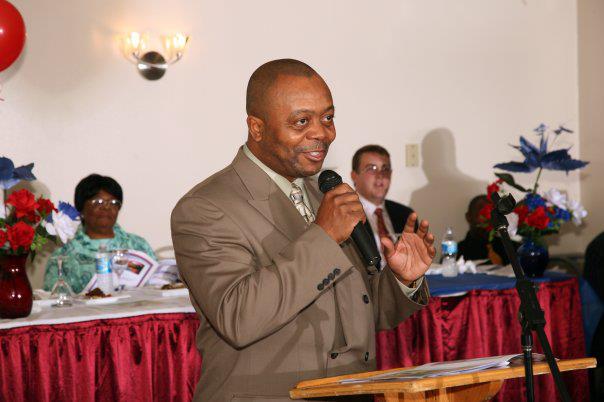
By Siahyonkron Nyanseor Radio personality Henry Costa


According to a FrontPageAfrica online article pulished March 21, 2014, plain clothes officers from the National Security Agency (NSA) headed by Fomba Sirleaf, son of President Sirleaf showed up at Hott FM 107.9 radio host Henry Costa’s office on Ashmun Street to issue him a Writ of Arrest on charges of “Terroristic Threats, Menacing and Criminal Coercion.”

The writ cited below reads:

“You are hereby commanded to arrest the living body(ies) of Henry Costa, to be identified defendant(s) and forthwith bring him before the Monrovia City Court, Temple of Justice Building, Montserrado County to answer the charge of TERRORISTIC THREATS, MENACING & CRIMINAL COERCION, based upon the oath and complaint of the Republic of Liberia by and thru Fomba Sirleaf, private prosecutor(trix) in which it is substantially alleged as follows to with: That on the 26th day of February 2014 the defendant with a wicked inten-tion rendered threat to harm and kill private prosecutor Fomba Sirleaf, the Director of the National Security Agency and son of President Ellen Johnson Sirleaf.”

“The alleged act of the defendant was unlawful wicked and violated section 11.11 of the new penal law” states the writ. That on the 26th of February, A.D. 2014, in the City of Monrovia, Montserrado County, Republic of Liberia, the within named defendant being there and then with malice and wicked intent, purposely did threaten the life of the said private prosecutor using against him death threats, to harm and kill him, and that in the same vain the said defendant on the Costa Show on Radio Hott FM did make a statement challenging the private prosecutor to engage him in a public fight wherein he defendant threatened to fight the private prosecutor to death with the intent to terrorize the said private prosecutor and subject to fear and public ridicule. The alleged act by the defendant being unlawful, wicked and intentional is in violation of section 11.116 of the new act amending section 14.24 of the New Penal Law, 14.25 & 14.27 of the New Penal Law of Liberia there and then crimes herein the defendant did and commit. Hence, this Writ of Arrest. Contrary to the form force and effect to the statutory laws of Liberia in such cases made and proven against the peace and dignity for this republic and for so doing. This shall constitute your legal and sufficient authority and have you have there this writ of arrest.

On behalf of Progressive Liberians (some of us whom are still around), express with deep concern the continued harassment and closure of media houses and radio stations under the Unity Party’s watch. These practices are in direct violation of the rule of law under Article 21(b) of the Liberian Constitution that reads:

“No person shall be subject to search or seizure of his person or property, whether on a criminal charge or for any other purpose, unless upon warrant lawfully issued upon probable cause sup-ported by a solemn oath or affirmation, specifically identifying the person or place to be searched and stating the object of the search; provided, however, that a search or seizure shall be per-missible without a search warrant where the arresting authori-ties act during the commission of a crime or in hot pursuit of a person who has committed a crime.”

And Article 15(a) states:

“Every person shall have the right to freedom of expression, being fully responsible for the abuse thereof. This right shall not be curtailed, restricted or enjoined by government save during an emergency declared in accordance with this Constitution.”

The arrest and imprisonment of Henry Costa on the afternoon of Friday, March 21, 2014 as reported by FrontPageAfrica online’s website, violates the oaths of elected officials who swore to protect and defend the Constitution. But I am not surprised; this is nothing new for Liberian elected officials!

African governments and their leaders keep repeating the same old mistakes that led to the disgrace and downfall of many of their predecessors; yet, they failed to learn from those mistakes. The illegal arrest and incarceration of Henry Costa, the popular talk show host of Hott 107.9 FM Radio, on insubstantial charges is a classic example of history being repeated in Liberia by another presidential son. Fomba Sirleaf, the son of President Sirleaf is following in the footsteps of Chuckie Taylor, the son of former President Charles Taylor, who was convicted of leading a campaign of torture against people opposed to his father’s rule for which he is now serving 97 years jail sentence in the United States.

Costa admitted making the challenge on the air to the NSA boss in order to afford Fomba the opportunity to make good on several threats he made against him (Costa) through intermediaries. The challenge reads:

” … I challenged him (Fomba) to a duel on Broad Street on Friday 4PM in order to afford him the opportunity to make good his threat. This was when we got cut off the air while we were talking unbeknownst to us by directive of the station manager.”

How does a challenge made in public constitute “Terroristic Threats, Menacing and Criminal Coercion?” Where is the freedom of the press and speech that the Unity Party (UP) government, officials and their supporters speak of in Liberia? Where is the “remarkable” human rights record in Liberia under the Sirleaf’s administration, that the President continues to boast of to the international community?

This only suggests that nothing has really changed in Liberia. The arrest of Costa on these flimsy charges confirmed that the Liberian government is in the practice of harassing, abusing, imprisoning journalists and opposition politicians on false charges.

Of all persons, President Sirleaf should be the last one to engage in this practice, because it was not too long ago that she was a victim. She served a significant amount of time at the notorious Monrovia Central Prison during the administration of the late President Samuel K. Doe, for speaking against the undemocratic practices of his administration. Finally, she had to go into exile due to the harassment and threats to her life.

Recently, while discussing African leaders with a cousin of mine, he made this comment: “Siah, the reason African leaders engage in undemocratic behaviors is due to the fact that most of them attended and graduated with honors from the same African University of Dictatorship (AUD), where they majored in violating their country’s Constitution, Free Speech, Freedom of the Press, with the specialization of committing rampant corruption with impunity.” As comical it may sound, there seems to be some merits in his statement!

Former President Charles Taylor, President Sirleaf’s former associate, once engaged in similar practice. Taylor sent a good number of political activists and politicians into forced exile. Sirleaf who also was a victim is engaged in the same practice today. Yet, every chance she gets, she boasts of her administration’s “remarkable” human rights record.

In 2007, Charles Julu, Andrew Dobor and George Koukou were arrested and prosecuted on charges that they were conspiring to seize state power. Dobor was arrested in the Ivory Coast and was the Government’s star witness to testify against Charles Julu. However, on the witness stand, Dobor confessed that he had been coerced by authorities to lie on Julu. Based on his confession, the Government declared its star witness a hostile witness and dropped the immunity of state witness protection.

Another time, the Sirleaf administration falsely imprisoned Acarous Gray for expressing how he felt about the Sirleaf administration, and what was going on in the country. Gray however noted that “Ellen’s regime can use the student payment to bribe others; but he will not succumb to bribe in order to continue the struggle for the people.”

“I want to tell our friends in the USA and those here in Liberia, that CDC will serve as an imposition to apartheid. … They instituted lot of Jacobos who served as traitors within the ANC. They went on the side of the white men but the ANC did not crumble. ‘So, the CDC fight today is a fight against apathy. We see semblance of apartheidism in our country. … Apathy in a context where political leaders would be bought from one political party (to an-other). Parties would be disintegrated to destroy competitive democratiza-tion process,’” Gray said.

How soon this President forgets?

Not too long ago when her freedom of speech and movement were violated, Liberians in the Diaspora and at home protested in her defense until she was set free. Little did we know then that she was going to do the same to others.

The President must be made aware that in most democratic societies, the free press serves as the conscience of the people — to make government accountable to them. As a result, the free press is committed in bridging this gap; by providing the public with relevant and useful information. In many cases, such information centers on issues regarding healthcare, education, the economy, civil and constitutional rights, and the environment. The availability of the public to this information affords the people the opportunity to better understand their government, its direction, role and impact on their daily lives.

This commitment by the “patriotic” media is based on ethics and morals, upon which it is obliged to be honest, sincere, critical, and to give laurels where and when expedient. This is the role Henry Costa has been playing. Therefore, we demand that the harassment of the Hott Radio 107.9 FM Host, Henry Costa and his colleagues cease immediately.

On February 12, 2014, the Committee to Protect Journalists (CPJ) in New York issued a press release titled, “Africa: CPJ Risk List - Where Press Freedom Suffered.” Find below what the CPJ said about Liberia:

President Ellen Johnson Sirleaf’s administration promised more open and democratic rule in Liberia after years of civil war and dictatorship. The past year, however, a climate of self-censorship has taken hold. Worrisome developments include the jailing of journalists in civil libel cases, and the imposition of exorbitant legal fees to bankrupt their news organizations.

More than a year after signing the Declaration of Table Mountain-a call for the repeal of criminal defamation and “insult” laws across Africa-Sirleaf’s administration has done little to advance the cause of decriminalizing defamation.

In addition, civil cases brought on by government officials have resulted in excessive financial damage awards. In August, a ruling imposing a US$1.5 million fine forced the closure of the leading independent newspaper, FrontPageAfrica, and the imprisonment of its managing editor and publisher, Rodney Sieh, in a case tainted with political undertones.

Sieh was jailed indefinitely pending payment, then released on temporary “compassionate leave.” In November, a court formally closed the proceedings against Sieh and FrontPageAfrica, after the libel claims were dropped amid international outcry. FrontPageAfrica has repeatedly reported on corruption, official misconduct, and human rights abuses, and local journalists told CPJ that the heavy fine was a clear ploy to shut down the critical newspaper.

No newspaper has won a libel case since Sirleaf’s election in 2005, according to the Press Union of Liberia. “When officials of government are so keen to run to the courts with issues like these that are in the public interest, it makes it more difficult for the press to work freely,” said Peter Quaqua, president of the union.

Adding to the tense environment for journalists, a key Sirleaf aide set off a firestorm with an inflammatory speech on World Press Freedom Day. Othello Daniel Warrick, President Sirleaf’s chief security aide, referred to journalists as “terrorists,” and said he would “go after” any journalist who publishes articles critical of the presidency.”

The CPJ’s observation about Liberia is an indication that the government and its officials have made the media their number one enemy, and will “go after” any journalist who publishes articles critical of the presidency.

In short, all democratic-minded people in Liberia and across the globe are troubled by the mixed messages, double standards, deceit and hypocrisy of the Unity Party government on issues regarding freedom of speech and press freedom in Liberia.

The government must stop the harassment of Henry Costa and journalists in the country in order for them to continue writing and speaking the truth in a society infested with all sorts of misconducts. Costa did not commit any crime. In fact, he should be rewarded for his committment and dedication to the people of Liberia.

“…If the people get angry at some point and their cup runs over and they want to take some actions, it is not my responsibility. My responsibility is to speak the truth,” Costa added.

If the government does not spend money on basic things like electricity, social services, building schools and clinics, the people will remain unhappy.

Siahyonkron Nyanseor is the Chair of the ULAA Council of Eminent Persons (UCEP), Inc. He is a poet, Griot, journalist, and a cultural and political activist. He is an ordained Minister of the Gospel. He is Chairman of the Liberian Democratic Future (LDF), publisher of theperspective.org online newsmagazine and Senior Advisor to the Voice of Liberia newsmagazine. In 2012, he Co-authored Djogbachiachuwa: The Liberian Literature Anthology; his book of poems: TIPOSAH: Message from the Palava Hut will be on the market soon. He can be contacted at: [email protected].
History is being repeated in Liberia: Fomba Sirleaf’s following in the footsteps of Chuckie Taylor

By Siahyonkron Nyanseor Radio personality Henry Costa


According to a FrontPageAfrica online article pulished March 21, 2014, plain clothes officers from the National Security Agency (NSA) headed by Fomba Sirleaf, son of President Sirleaf showed up at Hott FM 107.9 radio host Henry Costa’s office on Ashmun Street to issue him a Writ of Arrest on charges of “Terroristic Threats, Menacing and Criminal Coercion.”

The writ cited below reads:

“You are hereby commanded to arrest the living body(ies) of Henry Costa, to be identified defendant(s) and forthwith bring him before the Monrovia City Court, Temple of Justice Building, Montserrado County to answer the charge of TERRORISTIC THREATS, MENACING & CRIMINAL COERCION, based upon the oath and complaint of the Republic of Liberia by and thru Fomba Sirleaf, private prosecutor(trix) in which it is substantially alleged as follows to with: That on the 26th day of February 2014 the defendant with a wicked inten-tion rendered threat to harm and kill private prosecutor Fomba Sirleaf, the Director of the National Security Agency and son of President Ellen Johnson Sirleaf.”

“The alleged act of the defendant was unlawful wicked and violated section 11.11 of the new penal law” states the writ. That on the 26th of February, A.D. 2014, in the City of Monrovia, Montserrado County, Republic of Liberia, the within named defendant being there and then with malice and wicked intent, purposely did threaten the life of the said private prosecutor using against him death threats, to harm and kill him, and that in the same vain the said defendant on the Costa Show on Radio Hott FM did make a statement challenging the private prosecutor to engage him in a public fight wherein he defendant threatened to fight the private prosecutor to death with the intent to terrorize the said private prosecutor and subject to fear and public ridicule. The alleged act by the defendant being unlawful, wicked and intentional is in violation of section 11.116 of the new act amending section 14.24 of the New Penal Law, 14.25 & 14.27 of the New Penal Law of Liberia there and then crimes herein the defendant did and commit. Hence, this Writ of Arrest. Contrary to the form force and effect to the statutory laws of Liberia in such cases made and proven against the peace and dignity for this republic and for so doing. This shall constitute your legal and sufficient authority and have you have there this writ of arrest.

On behalf of Progressive Liberians (some of us whom are still around), express with deep concern the continued harassment and closure of media houses and radio stations under the Unity Party’s watch. These practices are in direct violation of the rule of law under Article 21(b) of the Liberian Constitution that reads:

“No person shall be subject to search or seizure of his person or property, whether on a criminal charge or for any other purpose, unless upon warrant lawfully issued upon probable cause sup-ported by a solemn oath or affirmation, specifically identifying the person or place to be searched and stating the object of the search; provided, however, that a search or seizure shall be per-missible without a search warrant where the arresting authori-ties act during the commission of a crime or in hot pursuit of a person who has committed a crime.”

And Article 15(a) states:

“Every person shall have the right to freedom of expression, being fully responsible for the abuse thereof. This right shall not be curtailed, restricted or enjoined by government save during an emergency declared in accordance with this Constitution.”

The arrest and imprisonment of Henry Costa on the afternoon of Friday, March 21, 2014 as reported by FrontPageAfrica online’s website, violates the oaths of elected officials who swore to protect and defend the Constitution. But I am not surprised; this is nothing new for Liberian elected officials!

African governments and their leaders keep repeating the same old mistakes that led to the disgrace and downfall of many of their predecessors; yet, they failed to learn from those mistakes. The illegal arrest and incarceration of Henry Costa, the popular talk show host of Hott 107.9 FM Radio, on insubstantial charges is a classic example of history being repeated in Liberia by another presidential son. Fomba Sirleaf, the son of President Sirleaf is following in the footsteps of Chuckie Taylor, the son of former President Charles Taylor, who was convicted of leading a campaign of torture against people opposed to his father’s rule for which he is now serving 97 years jail sentence in the United States.

Costa admitted making the challenge on the air to the NSA boss in order to afford Fomba the opportunity to make good on several threats he made against him (Costa) through intermediaries. The challenge reads:

” … I challenged him (Fomba) to a duel on Broad Street on Friday 4PM in order to afford him the opportunity to make good his threat. This was when we got cut off the air while we were talking unbeknownst to us by directive of the station manager.”

How does a challenge made in public constitute “Terroristic Threats, Menacing and Criminal Coercion?” Where is the freedom of the press and speech that the Unity Party (UP) government, officials and their supporters speak of in Liberia? Where is the “remarkable” human rights record in Liberia under the Sirleaf’s administration, that the President continues to boast of to the international community?

This only suggests that nothing has really changed in Liberia. The arrest of Costa on these flimsy charges confirmed that the Liberian government is in the practice of harassing, abusing, imprisoning journalists and opposition politicians on false charges.

Of all persons, President Sirleaf should be the last one to engage in this practice, because it was not too long ago that she was a victim. She served a significant amount of time at the notorious Monrovia Central Prison during the administration of the late President Samuel K. Doe, for speaking against the undemocratic practices of his administration. Finally, she had to go into exile due to the harassment and threats to her life.

Recently, while discussing African leaders with a cousin of mine, he made this comment: “Siah, the reason African leaders engage in undemocratic behaviors is due to the fact that most of them attended and graduated with honors from the same African University of Dictatorship (AUD), where they majored in violating their country’s Constitution, Free Speech, Freedom of the Press, with the specialization of committing rampant corruption with impunity.” As comical it may sound, there seems to be some merits in his statement!

Former President Charles Taylor, President Sirleaf’s former associate, once engaged in similar practice. Taylor sent a good number of political activists and politicians into forced exile. Sirleaf who also was a victim is engaged in the same practice today. Yet, every chance she gets, she boasts of her administration’s “remarkable” human rights record.

In 2007, Charles Julu, Andrew Dobor and George Koukou were arrested and prosecuted on charges that they were conspiring to seize state power. Dobor was arrested in the Ivory Coast and was the Government’s star witness to testify against Charles Julu. However, on the witness stand, Dobor confessed that he had been coerced by authorities to lie on Julu. Based on his confession, the Government declared its star witness a hostile witness and dropped the immunity of state witness protection.

Another time, the Sirleaf administration falsely imprisoned Acarous Gray for expressing how he felt about the Sirleaf administration, and what was going on in the country. Gray however noted that “Ellen’s regime can use the student payment to bribe others; but he will not succumb to bribe in order to continue the struggle for the people.”

“I want to tell our friends in the USA and those here in Liberia, that CDC will serve as an imposition to apartheid. … They instituted lot of Jacobos who served as traitors within the ANC. They went on the side of the white men but the ANC did not crumble. ‘So, the CDC fight today is a fight against apathy. We see semblance of apartheidism in our country. … Apathy in a context where political leaders would be bought from one political party (to an-other). Parties would be disintegrated to destroy competitive democratiza-tion process,’” Gray said.

How soon this President forgets?

Not too long ago when her freedom of speech and movement were violated, Liberians in the Diaspora and at home protested in her defense until she was set free. Little did we know then that she was going to do the same to others.

The President must be made aware that in most democratic societies, the free press serves as the conscience of the people — to make government accountable to them. As a result, the free press is committed in bridging this gap; by providing the public with relevant and useful information. In many cases, such information centers on issues regarding healthcare, education, the economy, civil and constitutional rights, and the environment. The availability of the public to this information affords the people the opportunity to better understand their government, its direction, role and impact on their daily lives.

This commitment by the “patriotic” media is based on ethics and morals, upon which it is obliged to be honest, sincere, critical, and to give laurels where and when expedient. This is the role Henry Costa has been playing. Therefore, we demand that the harassment of the Hott Radio 107.9 FM Host, Henry Costa and his colleagues cease immediately.

On February 12, 2014, the Committee to Protect Journalists (CPJ) in New York issued a press release titled, “Africa: CPJ Risk List - Where Press Freedom Suffered.” Find below what the CPJ said about Liberia:

President Ellen Johnson Sirleaf’s administration promised more open and democratic rule in Liberia after years of civil war and dictatorship. The past year, however, a climate of self-censorship has taken hold. Worrisome developments include the jailing of journalists in civil libel cases, and the imposition of exorbitant legal fees to bankrupt their news organizations.

More than a year after signing the Declaration of Table Mountain-a call for the repeal of criminal defamation and “insult” laws across Africa-Sirleaf’s administration has done little to advance the cause of decriminalizing defamation.

In addition, civil cases brought on by government officials have resulted in excessive financial damage awards. In August, a ruling imposing a US$1.5 million fine forced the closure of the leading independent newspaper, FrontPageAfrica, and the imprisonment of its managing editor and publisher, Rodney Sieh, in a case tainted with political undertones.

Sieh was jailed indefinitely pending payment, then released on temporary “compassionate leave.” In November, a court formally closed the proceedings against Sieh and FrontPageAfrica, after the libel claims were dropped amid international outcry. FrontPageAfrica has repeatedly reported on corruption, official misconduct, and human rights abuses, and local journalists told CPJ that the heavy fine was a clear ploy to shut down the critical newspaper.

No newspaper has won a libel case since Sirleaf’s election in 2005, according to the Press Union of Liberia. “When officials of government are so keen to run to the courts with issues like these that are in the public interest, it makes it more difficult for the press to work freely,” said Peter Quaqua, president of the union.

Adding to the tense environment for journalists, a key Sirleaf aide set off a firestorm with an inflammatory speech on World Press Freedom Day. Othello Daniel Warrick, President Sirleaf’s chief security aide, referred to journalists as “terrorists,” and said he would “go after” any journalist who publishes articles critical of the presidency.”

The CPJ’s observation about Liberia is an indication that the government and its officials have made the media their number one enemy, and will “go after” any journalist who publishes articles critical of the presidency.

In short, all democratic-minded people in Liberia and across the globe are troubled by the mixed messages, double standards, deceit and hypocrisy of the Unity Party government on issues regarding freedom of speech and press freedom in Liberia.

The government must stop the harassment of Henry Costa and journalists in the country in order for them to continue writing and speaking the truth in a society infested with all sorts of misconducts. Costa did not commit any crime. In fact, he should be rewarded for his committment and dedication to the people of Liberia.

“…If the people get angry at some point and their cup runs over and they want to take some actions, it is not my responsibility. My responsibility is to speak the truth,” Costa added.

If the government does not spend money on basic things like electricity, social services, building schools and clinics, the people will remain unhappy.

Siahyonkron Nyanseor is the Chair of the ULAA Council of Eminent Persons (UCEP), Inc. He is a poet, Griot, journalist, and a cultural and political activist. He is an ordained Minister of the Gospel. He is Chairman of the Liberian Democratic Future (LDF), publisher of theperspective.org online newsmagazine and Senior Advisor to the Voice of Liberia newsmagazine. In 2012, he Co-authored Djogbachiachuwa: The Liberian Literature Anthology; his book of poems: TIPOSAH: Message from the Palava Hut will be on the market soon. He can be contacted at: [email protected].

Progressivism in Liberia, abandoned not declining

By Patrick Nimely-Sie Tuon

Patrick Nimely Sie Tuon

In order to accurately describe the state of affairs of progressivism in Liberia, one must still be part of it, whether as an individual advocating for progressive change, or part of an institution embracing and implementing progressive ideas.

The activities of the Liberian progressive movement cannot or should not be measured based on the involvement of certain individuals. No one or individuals own the Liberian progressive movement. The Liberian progressive movement, like any other progressive movement can be on automatic pilot or be under the control of real pilots.

As long there is corruption, abuse of power, nepotism, cronyism, embezzlement, no rule of law, impunity and other kinds of inequities, including supporting and condoning destructive behaviors and perpetrators, the Liberian progressive movement will never decline.

As long Liberians are speaking and pointing to the various ills that have blanketed the entire Liberian society, and there is a government whose officials and supporters are insensitive to the plight of the people, progressivism will continue to thrive. Progressivism is driven by its desire to combat the ills of society; and is in no way based on the idea that certain persons must always be involved to determine its viability.

The fact that certain individuals once considered the vanguards of a movement or its set of ideas in the past are no longer active is by no means prove that those ideas or the movement have declined

According to an article in the News Pinnacle Newspaper, in its March 2, 2014 edition, under the headline, “The Decline of Liberian Progressive Activism”, seems to suggest that the Liberian progressive movement has declined because those who once advanced the progressive ideas are no longer active.

The newspaper article which, in its entirety, is based on an interview with Hon. Conmany Wesseh, current member of the ruling Unity Party, and also cabinet member in the current Liberian government, a government many Liberians describes as anti-progressive, said that the Liberian progressive movement is no longer active, and that progressivism has declined seriously which he blames on Liberia’s recent violent past.

Mr. Wesseh’s analysis seems to be based on the fact that some of the Monrovia-based progressive activists who were once the vanguards of progressive ideas in the past and are no longer active in any progressive activities, has declined.

Progressivism by nature is always strengthened during chaotic periods, whether violent or not. Progressive movements around the world are known for standing up against violence. History is replete with how various progressive movements have thrived during violent struggles and succeeded in their quests. In fact, in most cases, it is violence or threats of violence that gives rise to progressive movements. So to say progressivism has declined because of violence has given rise to a hidden thought held by many Liberians as to whether Liberia ever had a real progressive movement.

Many successful progressive movements always undergo metamorphisms to adjust to prevailing conditions or circumstances throughout history. The notion that the Liberian progressivism has declined because of past violent episodes like the 1980 coup, and the Liberian conflict seems to contradict the universal premise upon which progressive movements are built; which is to protect and defend the people from tyranny. While the main objective of a progressive movement is to achieve its goals through peaceful means.

The true characterization of the current state of affairs of the Liberian progressive movement is not that it has declined, but rather being abandoned by some of those who were once the vanguards for progressive ideas in Liberia.

From the Tolbert administration to present, some of those who were seen as conduits for progressive ideas failed to distinguish themselves from those who falsely continued to promote themselves as our redeemers, patriots and democrats. The abandoning of the Liberian progressive movement and its ideas by its former comrades should in no way be construed as it being on the decline.

Such analysis perpetuates an emerging trend of thought that there are certain people, for example, who are capable of taking arms; so prosecuting them for war crimes is not an option for fear that there will cause for more violence. And also there are certain individuals who are the only ones capable of opposing governments, now that these individuals are in the government, opposition to government is no longer necessary. As such, we should live by the consequences of their actions.

Now we are being told that there are certain individuals, those who are capable of advocating progressive ideas, whose presence are needed to accentuate any progressive positions and activities. And without their presence, the progressive movement has declined.

The thought of progressivism declining in Liberia is not only to discredit the ongoing progressive activities among Liberians, but has the propensity of injecting a sense of defeatism in the movement. That line of thinking also strengthens the notion that certain individuals own the Liberian progressive movement and can shut it down at will.

Those who are currently following Liberian issues on social media will realize that most of the ongoing debates and ideas being expressed are progressively driven. Many of the positions currently taken by Liberians, old and young, who are pointing out flaws in this current Liberian government are doing it through progressive lenses.

Progressive ideas in Liberia now, unlike the past are reaching more Liberians, and are enjoying wider audience; thanks to the ongoing explosion of technology worldwide.

To measure the viability of the Liberian progressive movement based on past characteristics, behaviors and players will do injustice to ongoing progressive activities and those who have remained steadfast to progressive ideas, especially when the same ugly and selfish ideas once opposed by past progressives continue to raise its ugly heads worst than before.

The only difference now is that some of our past progressives are remarkably adjusting and tolerating these crooked ideas that seem to be strengthening the stagnation of progress in the Liberian society.

Many independent followers of unfolding events in Liberia who are old enough to remember some of the past progressive activities will also dismiss this idea that Liberian progressivism has declined. These individuals will rather see credibility problems and contradictions of what those progressives were opposed to in the past, and what are now being tolerated today by some of the same progressives.

Liberian progressives in 1979 had their profile raised when they challenged the-then ruling True Whig Party’s monopoly on the electoratal system; a system that allowed anyone nominated by the TWP as the automatic winner of local and national elections.

To end the TWP monopoly, the progressives put up a candidate for the Monrovia mayoral race. Among the driving issues in the mayoral race were property clause and the right for Monrovia residents to have a choice between more than one candidate. That campaign was in sharp contrast to what is happening now in Liberia, as some of our past progressives continued to remain conspicuously silent.

Right after the 2006 general and presidential elections, the Liberian Supreme Court under Johnny Lewis, sided with the Sirleaf government not to hold municipal elections because of the lack of money. Since then, President Sirleaf has been appointing city mayors around the country. In fact, the president has been appointing mayors who are supposed to be elected, in sharp contradiction of the Liberian constitution.

Many of our past progressives, some of whom are even serving in the Sirleaf government have yet to express concern regarding this issue, which they once championed in the past during the Tolbert administration.

Another example that speaks to the abandonment of the progressivism is the final report of the Liberian Truth and Reconciliation Commission.

Despite the fact that the law or act that established the TRC and its recommendations were progressively driven, the opposition against implementing the TRC report is led by some former Liberian progressives. It is former Liberian progressives who have been enlisted to serve as frontline commanders by the Sirleaf regime to destroy the TRC report, in order to deny the people of Liberia genuine reconciliation. The TRC report was so progressively driven that a conspiracy theory was hatched that accused the progressives as the “invisible” hands behind the report. The TRC report can simply be described as the Liberian progressive “manifesto.”

The two examples are among litany of contradictions that point to overwhelming evidence that debunks the notion that progressivism is not in decline, but rather abandoned by some of its original supporters.

Mr. Wesseh, to his credit, was quoted in the article as saying that the Liberian people saw the evils, so criminal and various destructed behaviors that came with the violent periods during Liberia’s recent past were part of the progressive movement.

Despite how deeply flawed Mr. Wesseh’s idea is, it is very difficult to dispel it due to the roles many former progressives are playing today or in the past by collaborating with the various corrupt, violent and undemocratic regimes.

Progressivism in Liberia is well and alive, but only going through a period of recalibration. As long there are corruption, nepotism, cronyism, impunity, the lack of rule of law, the lack of genuine reconciliation and real peace, progressivism will always be around.

Patrick Nimely-Sie Tuon is a lifelong political activist and fiery progressive. He lives in Philadelphia, Pennsylvania (USA), and can be reached at 215- 276-2408 or at [email protected].


TV series manipulate addict viewers

By Clemente Ferrer TV

According to a study of ” Neuromarketing Labs” for Fox and Vodafone, the usual viewing of ‘ Breaking Bad ‘, ‘ The Walking Dead , “” Game of Thrones “and” The Big Bang Theory ‘, among others, are addictive in the audience.

The report studied the brain activity of 74 people aged between 18 and 47 , which simultaneously exposed fragments of several television series. While watching the movies, their brain activity, heart rate, blood flow, hormone levels, breathing rate, and eye movement were analyzed.

Álvaro de la Torre, director of OnCeu says that ” even the unreal fiction, such as ‘ The Walking Dead ‘ provokes in the viewer a desire to be like some of the protagonists . But above all , these reactions are triggered by the influence on the emotions by a script with scenes of high voltage”.

De la Torre agrees with the findings of brain analysis to people in the study : Viewers want to feel when they see the series.

De la Torre notes that “beyond the scripts, production, editing, and visual and audio effects, ‘ Breaking Bad ‘ or Game of Thrones does not follow the traditional narrative and choose to tell several stories, which converge. From the aesthetic point of view , the edition of sequences has another time, much faster, which involves correctly the soundtrack and sound effects, and the visual appearance.”

The key is to offer a compelling product that shrinks the heart of the viewer. The surprise effect is also critical, and the characters have to awake the audience from lethargy. The study cites as the most addictive three characters: Sheldon Cooper (“The Big Bang Theory”), Daryl (“The Walking Dead”) and Ted Mosby (“How I Met Your Mother”).

Interestingly, they are not harmful. The first is an irritating nerd with Asperger syndrome, the second, a man stigmatized and emotionally damaged by his brother’s past, and the third, an immature and impressionable adult looking for love and who just gets dislikes (Source: La Razón).

[email protected] Author and journalist Clemente Ferrer has led a distinguished career in Spain in the fields of advertising and public relations. He is currently President of the European Institute of Marketing.

STATE OF THE PEOPLE - Togba-Nah Tipoteh

By Togba-Nah Tipoteh Togba-Nah Tipoteh
STATE OF THE PEOPLE
AN ANNUAL MESSAGE
BY
TOGBA-NAH TIPOTEH
FOUNDING LEADER OF MOJA
PRESIDENTIAL CANDIDATE 2011 ELECTIONS
**•
MONROVIA, LIBERIA
February 3, 2014
PEOPLE OF UBERIA AND FRIENDS OF UBERIA
Let me thank the offlicers and membersof the Flamah Future Intellectual
Discourse Center for making It possible to have this Annual Message on the
^te of the People delivered here today.
This Annual Message Is dedicated to the World Leader Madlba Nelson
Rolihiahia Mandela and Liberian Leader Michael Kpakala Francis.
May I begin this Annual Message by extending New Year Greetings to the
people of Liberia:
Rivercess County - Ah po Glaypor Zuo Zeh diaye jaye
River Gee County - Jolojah jloh eh-chuhn
Grand Kru - Sohn day- day ah Sankan
Gbarpolu County - Ahlaseh gola nelhn - na mahn-nee-mahn; kunaneenehn
BomI County - Seh dwakeh yor
Grand Cape Mount County - Kamba ehyeryee sanama mayun
Maryland County - Jolo jah jloh eh-chuhn
SInoe County Sohnday-day ah sankan; ah po Nyihnswa troh daysuh-
day kpahnnn
Marglbl County - Ahlaseh gola nelhn na mahn-nee- mahn; Ah po Glaypor
zuo zohn diaye jaye
Grand Gedeh County - Ah po Nylhuswa troh day-suhn-day kpahnnn
Grand Bassa County - Ah po Qaypor Zou zohn diaye jaye
Bong County - Ahlaseh gola nelhn-na mahn-nee-mahn
Lofa County - Kunaneenehn; fowonee - nalhn wohelhnnelhn
Yaye-Jor wor-^lo sen-neih yor
Nimba County - Kwa kweh dor yo-o; kwa keh deh guelor; sankula
kaila Allah dee ahma
Montserrado County - Happy New Year
1
We are here today to talk about the most important problem that the
people of Liberia continue to face. We are here today to help more and
more Liberians to understand better where their main problem comes from
and how we as a people can work together to end the problem in the
shortest possible time in a way that the problem will not come back. This
main problem facing the people of Liberia is mass poverty. Nearly all
Liberians continue to be poor.
In the 2014 Annual Message of the President of Liberia, it is declared
conclusively that “our Republic of Liberia Is stronger, safer, securer and
steadier than it has been in many years”. The government of Liberia’s own
facts show that the Republic is not stronger, safer, securer and steadier
than in the past. The Republic is the people and it is not possible for the
Republic to be making progress when the people are not making progress.
Let us use the government’s own facts, some of which are in the
President’s Annual Message to make this point convincing.
The Annual Progress Report of the Lift Liberia Poverty Reduction Strategy
says that 64 percent or nearly two out of every three Liberians were very
poor in 2006. The President’s 2014 Annual Message says that 77.9 percent
or almost eight out of every ten Liberians in need of income -earning work
cannot find work and they cannot manage to live under the present
economic conditions In Liberia. It is this very high vulnerable
unemployment situation that made United Nations Secretary General to say
that
2
the very high unemployment in Liberia means that national security in
Liberia is fragile or shaky or not stable or weak or nothing to depend on.
The World Bank, the main international economic partner of the
government, says that nearly 9 out of 10 Liberians in need of incomeearning
work cannot find work to do and this is what makes them
unemployed. According to the World Bank, Liberians living on less than
USD 2 a day are 95 percent of Liberia’s population, while Liberians living on
less than USD1.25 a day are 83 percent of the population and Liberians
living on less than a lUS dollar a day are 63.8 percent of the population.
But the government of Liberia and the World Bank with its twin, the
International Monetary Fund (IMF) continue to make a big mistake by
saying that there is progress In the Liberian economy because of the high
growth of the economy. The President’s 2014 Annual Message reports that
the average economic growth rate a year for 2006 to 2013 is 8 percent.
The government, The World Bank and the IMF are still making the gross
mistake by saying that Liberia is experiencing progress because the
economic growth rate per capita or per person is rising. Let us consider a
situation where there are 10 persons in a group but only one of them is
employed, with an income of 10,000 dollars a year. Although the average
income of the group of 10 persons is 1,000 dollars a year, only one person
earns any money while 9 persons remain unemployed. Therefore, it is
absolutely wrong to use the income per person amount to say anything
about the economic condition of the 9 unemployed persons in the group.
In the 2014 Annual Message, the President says that although there is
progress, “we must collectively do more, as the public fight against
corruption, abuses of power and the misuse of government resources is
being emboldened and intensified”. In this public fight, the government has
its agents, the Governance Commission, the Anti-Corruption Commission
and the General Auditing Commission. With the government showing a lack
of commitment to establishing good governance and ending corruption,
there is most urgent need for the emergence of good leadership to
establish good governance and end corruption for Liberia to be a better
place for all Liberians.
Good leadership in Liberia calls for a leader to take peaceful action with as
many persons as possible to prevent the suffering of at least most
Liberians. When the suffering already exists, good leadership calls for a
leader to take peaceful action with as many persons as possible to end the
suffering in a way that it will not happen again. When we speak about the
suffering of the people of Liberia, we are speaking about the poverty of the
people of Liberia. When we speak about poverty, we are speaking about
the people of Liberia who have less than 80 Liberian dollars or 1 United
States dollar a day to use for one person.
There was too much poverty in Liberia to the point that some Liberians and
their foreign friends who wanted to take over the government used violent
ways to overthrow the government, telling the Liberian people and the rest
of the world that the new government was necessary to end the suffering
of the people of Liberia. The overthrow of the government by the civil war
used poverty as the main excuse for the overthrow. Therefore, good
leadership calls for talking peaceful action with as many persons as possible
to end the poverty of the people of Liberia and to prevent it from
happening again.
Progress in any country means that change is taking place that brings
down the level of poverty in the country. It Is not possible for any person
or government to talk credibly about progress In any country when the
person or government does not tell the truth that shows the level of
poverty going down. When a baby is dying from malaria, no one can say
credibly that the baby is doing well by showing new clothes for the baby.
To say credibly that the baby is doing well, the truth about the ending of
the malaria in the baby has to be presented. For over fifty years,
governments of Liberia, including the present government of Liberia, say
that there is progress in Liberia when the facts showing the truth tell us
that the main way in which government takes action for the production and
distribution of goods and services is what brings suffering, poverty to the
people of Liberia. The truth about this relationship between the main way
of production and distribution and the poverty in Liberia has been openly
known to the government of Liberia since 1960, based on the examination
of the facts of the economy of Liberia throughout 1950s.
Despite all this talk about Liberia being founded on a religious foundation,
the truth is that the government of Liberia does not value highly what God
has given to Liberia. For example, the government of Liberia continues to
preside over an economy owned by foreigners because the government
continues to allow foreigners to take Liberia’s natural resources like iron
ore, rubber and logs into their foreign countries without having factories in
Liberia to create liundreds of tliousands of jobs and ownersliip for
Liberians by producing steel rods, rubber products and furniture in Liberia.
The Liberian economy could be growing with more revenue coming in but
most Liberians would not benefit because the rights of the people continue
to be given to foreigners. As we are now assembled here, there are
thousands of foreigners in jobs and doing business that Liberians,
especially the youth, can do and should be doing according to the
Constitution of Liberia. Liberia continues to produce what Liberians do not
consume and continues to consume what foreigners produce. The main
reason why the Liberian dollar loses value is that the government places
much more value on what is foreign than what is Liberian. This
longstanding bad situation dominates the economy of Liberia and It is
called “economic growth without economic development” or “growth
without development”for short. •*>”
No country in this world has experienced progress, the sustained
Improvement in the living conditions of its citizens, by using the way to
manage the economy that the government of Liberia continues to use. This
reality should be easy to understand because if any country were to allow
another country to do what the country can do for itself, then the other
country would benefit from what is done at the expense of the country that
gives away Its rights to other countries.
The people of Liberia know this reality. But the government of Liberia is
not promoting the addition of value to Liberia’s natural resources. Over
6
hundreds of years, villages in the geographical space called Liberia have
been using iron ore to make their farm tools. This is why every village has
a blacksmith facility that produces farm tools. During the 1990s, former
LAMCO machine shop workers, with former combatants and displaced
Liberians used scrap metal to produce internationally marketable farm tools
under the sponsorship of Susukuu, the 43 years old Liberian poverty
reduction organization. Susukuu, an NGO, also organized and supported
former combatants to use logs thrown away to produce furniture for the
Liberian market, while the government of Liberia continues to spend
hundreds of millions of dollars buying foreign furniture.
The government of Liberia continues to show its lack of commitment to
end mass poverty and corruption. From the remonopolization of the rice
market in early 2006 to the legislative buying of votes in the speakership
elections, to the Acelor-Mittal donation of 100 vehicles to the National
Legislature through the sponsorship of the Presidency, to the
mismanagement of the county development fund, the Poverty Reduction
Strategy and the National Vision 2030, to the attempt to reintroduce the
hut tax, the most inhumane poverty increasing government practice in the
history of Liberia, to the malaise on the Truth and Reconciliation
Commission Report, to the closure of the Price Commission Report, to the
second place status of the Independent Human Rights Commission, to the
lack of prosecution powers for the Anti-Corruption Commission and to the
flow of the People’s money into the hands of government officials who
mismanage the people’s money, the present government of Liberia has
provided sufficient evidence pointing to its lack of preparation and its lack
7
of commitment to end mass poverty and corruption and work for justice
that brings peace.
This lack of preparedness and commitment on the part of the present
government of Liberia to take action for “growth with development” and
for justice and peace means that It is the people of Liberia who must take
action to make Liberia a better place for all Liberians. From the action of
January 10, 1997 on disarmament that registered the most democratic
event in the history of Liberia when over one million Liberians in Monrovia
voted for disarmament by staying home for one day, to the prevention of
war over the past 10 years, to the stopping of the government’s attempt to
reintroduce the hut tax in 2011, to the peaceful people’s action on
government entering into concession agreements, taking away farm land
for food production while trampling upon cultural rights without the
participation of the people and to the removal of nearly all members of the
52″^ legislature seeking reelection through the 2011 elections, the people
of Liberia are demonstrating their preparedness and commitment for
working together to end mass poverty and corruption.
All of the Annual Messages, including the one delivered one week ago, by
the present President of Liberia, keep Liberia within the “growth without
development” syndrome or nightmare. The way to get out of this
nightmare and prevent violence. Instability and insecurity in Liberia is for
8
the people of Liberia to push peacefully for a fair electoral process that can
produce a national leadership with a publicly known commitment to the
“growth with development” strategy that can end the mass poverty in
Liberia within one Presidential term of office; and that is possible.
In terms of the electoral process, as senatorial elections are due this year.
It is most important to reorganize immediately the National Elections
Commission (NEC) to enable it to conduct fair elections. Civil society and
religious community Involvement In this reorganization is necessary. NEC
has exhibited its inability to conduct fair elections when in 2011 it placed
deliberately the wrong last name of a presidential candidate on the ballot
paper and refused to correct it when informed about the mistake which
could have caused considerable unrest and instability. The recent media
revelation about the presence in the Commission, as a Commissioner, of a
citizen of the United States of America must be investigated immediately
prior to the full commencement of the present civil education drive.
The present way of running Liberia, as in the past, benefits mainly a few
persons at the expense of the people of Liberia. There is a way through fair
elections to get a better way of running Liberia, a way that benefits at least
most Liberians and Liberia’s foreign friends who have the people of Liberia
at heart. It is only the people of Liberia who can change the running of
Liberia for the better by not putting money first during elections and giving
first place to record or performance by electing persons who are honest
with a publicly known record of being on the side of the poor people of
Liberia. If the people of Liberia do not come together to end the suffering
and save Liberia, then the people have only themselves to blame for their
continuous suffering.
5
The people of Liberia remain united more than ever before on the choice of
peace over war. This is why the people of Liberia are still saying clearly and
loudly: WE WANT PEACE, NO MORE WAR! For hundreds of years, the
people of Liberia have known that It is only justice that brings peace and
this is why the people of Liberia support the struggle for justice when they
say Gweh Feh Kpei, Kpelle for “The Struggle continues”.
The fact that the government of Liberia continues to ignore the mandate of
the people of Liberia for justice as the way to peace by insisting that there
is peace without justice means that the government is not prepared to
build democratic institutions and that the government is not ready to work
for peace. Instead of celebrating 10 years of peace which does not exist,
the government should be celebrating 10 years of the absence of war.
Peace comes not from the absence of war but from the presence of justice.
So, the people of Liberia are still saying “Gweh Feh Kpei,” the struggle
continues.
This insensivity of the government to the mandate of the people of Liberia
for justice to get peace is clearly seen in the government’s disregard for
the mandate of the people on value addition, as reflected in the cry of the
17 years old child from Crozerville, Montserrado County, who said: God has
given Liberia iron ore, why don’t we make steel rods?
When the people of Liberia have personal health problems, they get a
medical doctor or some health worker to help them get better health. Now,
as the health of Liberia is terrible, with poverty and corruption, let us
10
express the hope that the people of Liberia will find a people’s doctor or a
health worker who is honest and has a good record of working with the
people to provide leadership to end Liberia’s health problems of mass
poverty and corruption.
Let me bring this Annual Message to a closure by expressing confidence in
the people of Liberia that the people working together will take action
urgently now to empower the Youth of Liberia. This action is urgent
because the Unity Party Youth demonstrated their frustration a year ago
with the Unity Party led government by calling upon its Political Leader to
step down from the Presidency on account of the Party’s failure to keep
promises made to the Youth. >
Let us all commit ourselves to telling the truth in ways that bring peaceful
change to end mass poverty by improving the living conditions of at least
most Liberians. We must always remember that failure to tell the truth
about Liberia Is bad for Liberia, because it prevents the taking of action to
end the suffering in Liberia. It is this failure to tell the truth that prevented
action to stop the Civil War from taking place. Now, let the people elect the
kind of leadership that will appreciate truth telling to end mass poverty and
corruption , the evil in the Liberian society that can bring another Civil War.
Let us be confident that the people of Liberia will not make the same
mistakes over as the government does, let the people of Liberia begin now
to elect good leaders, leaders who can unite Liberians to work to end mass
poverty and corruption to bring justice for peace that makes Liberia a
better country for all of the people of Liberia.
11
Baika - way
La balika yor
Emama
Eseh emama
Ezuo
Mayzuo
Enaykay, kobaleka
Aa troh
Ah-troh -wa
Eh kon bislaye
Ta-to-o
My people, thank you plenty for listening.
12

Where’s the bill to save D-Twe High School, and Liberia’s eroded coastlines?

By Tewroh-Wehtoe Sungbeh D-Twe High School New Kru Town Liberia


House Speaker Alex Tyler and Senate Pro-Temp Gbehzohngar Findley were tag team partners recently when the two powerful legislators jumped on the same bandwagon to pass a new law that prohibits Board of Governors of the Central Bank of Liberia from contesting political office, three years after a member leaves office.

The unpopular bill played into the narrative that current Governor of the Central Bank, J. Mills Jones, whom some believe is heir apparent to the presidency when the tenure of the current president expires in 2017, is campaigning quietly by giving out micro loans to struggling businesses.

True enough, Tyler and Findley were united in their message that demonized Jones as trying to influence his unannounced candidacy by loaning out money to businesses. With the assistance and cooperation of other like-minded legislators, the duo were able to successfully make their case that the oft-reluctant Madam Sirleaf was able to sign it into law.

The aggressive tactics and unified efforts of the two legislators pushed their bill into the national public sphere. However, no matter how polarizing the bill was their effort was a laudable one that shouldn’t be ignored by their colleagues and the public.

Now that the CBL bill is out of the way, I wish Tyler and Findley could also garner the same courage and passion they had with that bill to aggressively unite and introduce other equally important bills that will make Liberia safe, prosperous, progressive and a law-abiding place to live and raise a family.

In coastal Liberia right now, beaches, homes, streets and a high school are sinking, or are about to go under water due to sea erosion.

I have written constantly about the erosion crisis facing coastal Liberian counties. However, it seems the Liberian government and lawmakers are not listening or willing to introduce bills that could possibly put money into repairing and restoring beaches in those communities.

In 2013, 2000 residents in the New Kru Town and Porpor Beach communities were left homeless when their homes were overtaken by sea erosion.

D-Twe High School could be next if nothing is done to ease or solve the sea erosion crisis.

A recent news story brought the issue close to home when it was reported that D. Twe High School in New Kru Town is on the brink of going under water due to sea erosion.

According to reports, the sea is no longer near the concrete fence surrounding the building, but is near the entrance of the high school.

If the sea finally destroys D-Twe High School, the next facility in line to eventually go under water could be nearby Redemption Hospital, the nation’s second leading referral hospital situated right behind or in front of D-Twe High, depending on one’s direction of travel.

These are two outstanding public institutions – D-Twe High School and Redemption Hospital that serve a cross section of the population. Those two institutions deserve to be protected from the Atlantic Ocean. And the beach needs to be restored and protected as well.

Is it fair for our nation’s lawmakers, who were once unified in passing a CBL bill because of the CBL’s Governor’s unannounced presidential bid, sit back and ignored the eventual destruction of a high school that serves the communities of New Kru Town, Porpor Beach/Point 4, and surrounding communities in the region?

So why not Speaker Tyler and Senate President Pro Temp Findley and the area’s Representative Edward Forh, do the right thing by finding the money; and getting with others as they once did with the CBL bill, to pass a Beach Restoration bill/Act to save D. Twe High School?

It will be disastrous for the entire region if D-Twe High School finally goes under water. However, I don’t want to believe the Liberian government and those lawmakers are waiting for D-Twe High School to go under water before they react to what they should have done, or could have done to save D-Twe High.

The sea erosion crisis is a problem for the area. The area is also struggling and needs economic development. Something has to be done to end the cycle of poverty and neglect.

As a result of poverty and the obvious lack of jobs, beachfront communities such as New Kru Town and Porpor Beach/Point 4 that are capable of generating their own revenues from tourism are sadly seeing their areas shrink, as young people and some adults continued to leave in record numbers.

Once upon a time, New Kru Town and the nearby areas were once great areas to live i.e., great ocean view, thriving (entertainment) nightlife, rival football teams, great neighborhoods, dedicated teachers and schools/churches, and decent beaches to swim with friends.

Those of us who grew up in the area or once lived there (before D-Twe High School and the struggling Plaza Cinema were ever built), can say without hesitation that the Atlantic Ocean was once miles and miles away from the mainland.

Today, the Atlantic Ocean is up close and has taken away almost half of the Borough of New Kru Town. Truth is, New Kru Town has shrunk tremendously.

Before the erosion crisis ever hit the area, we (residents of the area) cherished every bit of it. We were also happy to see those foreign visitors pass through New Kru Town, Porpor Beach and Point 4 in the 1960s and 1970s.

During those days, the Germans, the Filipinos and the Americans would gather on the beach to engage in water sports, and would also ride their water mobiles as we (kids and adults) watched in amazement, or find ourselves swimming on the other side of the beach.

That was New Kru Town, Porpor Beach and Point 4, then. Today, the area is a run down shantytown with one of the highest rates of poverty, armed robberies, unemployment and illiteracy.

It is not sound policy for a government to build a structure only to see it destroyed by the ocean, because there is a lack of interest to maintain it.

The area needs a beach Restoration Act to save what is left from the destruction of the Atlantic Ocean.

New Kru Town, Porpor Beach and Point 4 needs help now!

Save D-Twe High School before it is too late.


Unity Party/USA - LETTER OF INDICTMENT FOR IMPEACHMENT PROCEEDINGS OF Dr. Anthony Kanneh

The National Association of Members of the Unity Party in the Americas / Diaspora Anthony Kanneh - Unity Party, USA

OFFICE OF THE SECRETARY GENERAL OF THE NATIONAL BOARD OF DIRECTORS

LETTER OF INDICTMENT FOR IMPEACHMENT PROCEEDINGS OF Dr. Anthony Kanneh

Cognizant of the duties and responsibilities of the National Board of Directors of the National Association of Unity Party in the Americas/Diaspora, as enshrined in its Constitution and by-laws under article VII section (b), and mindful that together, the National Leadership of said Association in the Diaspora must evolve through the tenents of participatory democracy and the rule of law, the National Executive Committee made charges preferred by Memorial: “a written statement of detail facts and pieces of evidence regarding Mr. Anthony Kanneh’s gross ‘maladministration’ practices such as:

1. That of which is beset with assorted scandals to include unilaterally receiving money from Minister Lewis Brown and independently committing to him, without any color of rights, that the Association members would traveled to New York to stage a pro-government rally against anti-government demonstrators.

2. That his continuous administrative malpractice and disrespect for the entire UP-USA members led to encouraging one Mr. Abraham Mellish to buy into his political shenanigan (deceitful and underhanded) acts and thus, he encouraged him to published via email an “Expulsion and Suspension letter of all Board Members, elected Officials and respective State Chairman on February 24, 2014.

3. That during his initial investigative hearing of receiving substantial and undisclosed amount of money from Minister Lewis Brown, purported to be for UP/USA, but to the contrary, he solely converted same for self-purpose, without knowledge or consultation with the Board and members of the Association; but elected to commit the Association. Hence, prompting an inquest into his questionable acts. During said inquest, he attempted playing evasive tactics, delayed answers and was incoherent, recalcitrant and intransigent. Mr. Kanneh further failed to provide adequate answers to direct and simple questions and failed to follow procedures or the rule of laws as provided in our constitution. He was also incredibly disingenous and not forthcoming, unbelievably misleading, direadfully incompetent and found to be awfully and woefully corrupt.

4. When an elected public official of UP USA, is found to be corrupt, dishonest, unjust, blundering and ineffectual in his leadership, and thus, attempts to cover up to make a complete caricature and travesty of justice, he Must be investigated in keeping with ‘due process’ and if found culpable like in the case of Mr. Anthony Kanneh, the rule of law MUST be fully applied, and in this unique case, his questionable actions rose to an impeachment offense; hence, culminating into these proceedings.

5. Suffice to mention, Mr. Anthony Kanneh gained an advantage from an earlier legal precedent established by this very Board of Directors on June 9, 2012 when it brought threat of impeachment proceedings against erstwhile chairman, Mr. Fredrick Sam Gibson; thus, said Board appointed Mr. Anthony Kanneh to Acting Chairman of UP USA until convention. Since then, Mr. Kanneh has been operating, communicating, cooperating, collaborating and reporting to this very Board, until he received the substantial undisclosed amount of money from Minister Lewis Brown, which he failed to report to the Board and members of the Association. For which, the National Executive Committee thoroughly investigated and submitted to the Board with recommendations for impeachment proceedings against Mr. Anthony Kanneh to wit:

WHEREAS Mr. Anthony Kanneh, Acting Chairman of the National Association and Members of Unity Party in the Americas was duly appointed by the Board in continuation of leadership as provided for by ARTICLE VII: SECTION D AND COUNT IV of the constitution “in the event of removal from office, death, resignation or incapacitation of the National Chairman, the 1st Vice Chairman shall assume the duties and functions of that office”: to serve the Members and fulfill the purposes of said organization’s constitution and professional ethics; and

WHEREAS the provision of the constitution specified in Article VII: Duties and Respionsibilities of National Officers;

i. Board of Directors:

ii. In the absence of the National Convention, the Board of Directors shall be the highest decision-making body of the National Association and shall make decisions reserved for Convention. The Board shall be vested with all powers and shall have oversight responsibilities over the National Executive Committee of the Association;

iii. The Board shall comprise of seven (7) members who will be appointed by the various chapters of the Association. Each Chapter shall appoint only one Board member after a careful and judicious vetting process;

iv. Board members shall be appointed for a term of four (4) years. The may succeed themselves for as many times as their Regional Chapters may choose or decide;

v. The Board may evolve its own leadership structure and rules by which it shall be governed. It shall also establish criteria and determine cause and extent by which actions may be taken against its members. And with the concurrence of two-thirds (2/3) majority of its members, it may expel a Director;

vi. In the case of a vacancy involving a Regional Chapter representative, the Chairperson of the Board shall through the National Chairman inform the appropriate Chapter to fill the vacnacy;

vii. The Board shall have the authority to impeach and remove from office elected officials of the National Association for cause and after due process;

viii. The Board shall approve election guidelines for the election of members of the Executive Committee;

ix. The Board shall approve the annual budget of the National Association and direct all audits of officers and members entrusted with the finances of the National Association;

x. The Board shall approve all contracts with financial obligation of more than $1000. It shall also ratify all agreements between the National Association and other parties;

xi. The Board shall meet in regular sessions at least every three (3) months. A simple majority shall constitute a quorum, and decisions shall be made in the form of a resolution. The Board may convene in the event of an emergency;

xii. During instances of misunderstanding arising from the interpretation or intent of the Constitution and By-Laws of the National Association, the Board shall have the sole authority to intervene and make final determination;

xiii. Only the National Convention may override the decision of the Board; and

WHEREAS, the National Board of Directors, after three weeks of careful deliberations finds actions on the part of Hon. Anthony Kanneh, inimical and counter-productive to the growth and development of the National Association; thereby dampening the enthusiasms of Regional Chapters in the Diaspora. Due to the gravity of his offence, the Board, after investigating Mr. Anthony Kanneh, found palpable and well founded reasons that he committed acts of fraud, inter alia: (the crime of obtaining money or some other benefit by deliberate deception) and or cheating, was subsequently exposed, leading to his six months suspension as of November 11, 2013; and

WHEREAS, in complete disregard to the constitution and the decisions of the National Board of Directors; while serving suspension, Mr. Kanneh engaged in the following actions:

• On November 26, 2013 served an expulsion letter from UP-USA ref. NAUP/USA/ANC/145 to Hon. Leo Mulbah, Secretary to the National Board of Directors, and an elected official from Georgia Chapter;

• On November 26, 2013 served an expulsion letter from UP-USA ref. NAUP/USA/ANC/143 to Hon. Samuel E. Greaves, Chairman of Delaware Valley Chapter;

• On November 26, 2013 served an indefinite letter of suspension ref. NAUP/USA/ANC/144 to Hon. Arthur Quaye, Delaware Valley Chapter’s Board Representative;

• On November 26, 2013 served an indefinite letter of suspension ref. NAUP/USA/ANC/142 to Hon. Henry Y. Kessely Sr., Chairman Minnesota Chapter; and without any color of rights, elected to impose himself as Chairman of UP USA on February 1, 2014 at the funeral of partisan Hawa Kpakah, when in fact, his name was not written in the program, for obvious reason, but manipulated to have him called up stage and eulogized on behalf of UP-USA. Prior to that, he sat up account, collected and disbursed funds to the bereaved family on behalf of UP-USA.

In view of the aforementioned violations, couple with your capricious acts and hair-triggering temper, all of which are acts and behavior distateful and repugnant (offensive and completely unacceptable) to the office of the National Executive Chairman; and, without deference to our constitution and members of the Association, you recklessly declared yourself above the law and threatening to destroy the balanced system of governance designed by the Framers of our Constitution.

In so doing, you have committed “HIGH CRIMES AND MISDEMEANORS” (lack of openness, honesty and misdeeds) as articulated in ARTICLE XVII section (4) of our constitution. Hence, the National Board of Directors will not allow your unprecedented political shenanigan to prevail; and No future Chairman, or elected Official will ever attempt to wield unnecessary power set aside for the National Executive Committee or the Board of Directors.

Let it be clear that Mr. Anthony Kanneh no longer enjoys the confidence of his political constituents or possessed the requite honor, integrity and character to be trusted to carry out his functions in a manner free from corruption.

Therefore, in keeping with the configuration of the National Association, Mr. Kanneh continuous actions stand in shard violation as enshrined in ARTICLE XIX REMOVAL OR DISMISSAL OF ELECTED OFFICIAL(s)

THE BOARD SHALL HAVE THE EXCLUSIVE POWER TO INITIATE ALL CASES

OF IMPEACHMENT.

Only the Board shall preside over proceedings for impeachment or removal of elected officials. Any elected official may be removed from office by a two-third (2/3 vote of the Board members after being accorded due process as guaranteed by this Constitution.

NOW, THEREFORE, BE IT RESOLVED, that the National Board of Directors, in its February 12, 2014 sitting voted 3-1 to INDICT YOU FOR IMPEACHMENT PROCEEDINGS. The decision was supported by enormous evidence of total disregard for the National Association and wanton violations of our constitution and professional code of ethics. This is by no means a philosophical difference, but rather the legal authority of this body in the absence of an annual convention; and for the respect of the grand edifice of our constitution, with particular reference to the maladministration (incompetence and dishonesty of management) of the Association.

Be it resolved that we, Members and National Executive Committee and Directors of the Board, hereby, hold Mr. Anthony Kanneh accountable for fraud and malfeasance; and, opined that his “Impeachment” should be used to remedy “harm” from major abuse of power and unquestionable acts of great injury to Members Of The Association of New Unity Party, UP USA in the Diaspora.

Therefore, the NATIONAL BOARD OF DIRECTORS deemed it illegal and unauthorized, were anyone to interact with Mr. Anthony Kanneh as Chairman of the National Association of Members of Unity Party in the Americas. Doing so will be at his or her own risk.

Mr. Kanneh, it is important to note that, the National Board of Directors has sole Constitutional authority and responsibility to protect the National Association from unlawful acts by Executives, elected Officials and members.

Therefore, this communication serves as formal indictment to commence impeachment proceedings.

In view of the aforesaid, please be advised that failure to appear for Hearing before the Board within the next Fourteen (14) business days will leave the National Board with no alternative, but to put you on trial in absentia and judgment will be rendered accordingly in keeping with due process. We hope Mr. Anthony Kanneh will avoid further administrative or legal action(s) by the Board from the date this communication is published.

Respectfully,

Hon. Philip Jorgu, Chairman, National Board of Directors

Hon. Isaiah Teasley, Acting National Executive Chairman

Hon. Leo Mulbah, Secretary, National Board of Directors

Cc: Her Excellency, President Ellen Johnson Sirleaf

Standard Bearer of the Governing Unity Party, RL

His Excellency, Hon. H. Varney G. Sherman

National Chairman of the Governing Unity Party, RL


“Courage of their Conviction” Book Review

By Tewroh-Wehtoe Sungbeh Courage of their Conviction Jeremiah T. Kugmeh


“Courage of their Conviction”

- Book Review

I know a lot about Doodwicken Orphanage Mission; or I think I know something about the mission, because I was a student there in the early 1970s.

I know the strict rules, the strict religious teachings and inconsistencies we had to live with each and everyday. And I also know something about the tough education standards set by mission founder, Lillian Swanson, which attracted students from across the region and country to study there.

In 1972, my late father uprooted my little brother and me from our home in New Kru Town, Monrovia to live in Doodwicken, Sinoe County where the mission was located.

Even though we were far from being orphans, my father, like most fathers and mothers at the time heard that Doodwicken provided excellent education, and decided to pay the fees to send their kid or kids to Doodwicken Orphanage Mission to get decent education.

So when I read “Courage of their Conviction” I was taken aback to those lonely days of religious teachings and school, of course, which influenced the way I see organized religion today.

Anyway, that’s another story for another day.

In his new book, “Courage of their Conviction,” former “mission boy” Jeremiah T. Kugmeh (as he referred to himself and others) gives a fascinating and detailed account of growing up poor and a troubled kid in Drapoh, Sinoe County before finding Doodwicken Orphanage Mission for school and religion in 1964.

“Accordingly, without looking back, I joined the rest of the youth and we decide to walk away from our people, our friends, our tribal gods and affiliations and culture to make permanent settlement into a life that offered hope.”

Even though education was the convincing reason why Mr. Kugmeh decided to leave behind his parents, friends, relatives and others, other reasons were the obvious lack of clinics and playgrounds, which he seemed to have blamed on “the gods of our fathers.”

That burning desire to unshackle his undeveloped mind through education and religion to help his people had a profound effect on the teenager, who was now a traumatized kid trying to make sense of Lillian Swanson’s strict rules and the behavior of his new family of boys – those ‘mission boys.’

“Half way under my cover every night, I thought about our journey from Drapoh to Doodwicken. I traced our steps in case I change my mind and decided to return. I remembered the food back home. I remembered my straw filled mattress and the quiet time alone with no threat of my privacy being invaded.”

“Every night, I counted myself to sleep. The mission looks very beautiful but the behavior of some of the orphanage children was so horrible and discouraging. I did not think I could subscribe to this inhumane treatment for long. The third night my mind wondered until it reaches in our kitchen in Drapoh,” he writes.

Mr. Kugmeh’s parents had the most influence on him in terms of nurturing him, nurturing his future and supporting his dreams. Mr. Kugmeh’s friends also influenced him in the most cruel and despicable ways when their impulsive and unbelievable wickedness led them to cut off the penis of a six-year old child whom they thought they were circumcising, which led tribal leaders in Drapoh to punish each kid with 50 lashes on their bare backs, coupled with the pouring of peppers in their nostrils and eyes.

“The little boy sits there waiting for the unexpected trauma to occur and staring at our faces, one by one, as the debate to decide his fate continues. The boy is still waiting to experience what could be the most excruciating painful experience of his life on earth.”

Mr. Kugmeh also writes:

“Finally, the foreskin to the tip of the boy’s penis is hauled again for the second or third time to sufficient length. The type of cutlass (machete, my word) we used is called the bare bottom. Each of us received fifty lashes on our back and hot pepper pour into our noses and eyes.”

Mr. Kugmeh spent a whole lot of time writing about “the gods of our father” and “witches” in the society, which he blames for the lack of development in Drapoh.

“The gods of our fathers have not built any school exclusive of the traditional schools that perpetuated the culture; promote chaos, and sundry of ungodly practices.”

I once wrote on Dennis Jah’s Doodwicken Online what I thought perhaps was discrimination or preferential treatment given to one of the students of mixed race living on the mission at the time.

The fellow in question is Fredrick Shawkie, (non-orphan at the time) whose father was a Lebanese, and mother, native Liberian. Boys and girls (blacks) lived on the dormitory, were assigned our daily work assignments, cooked our own meals and ate together at our own table.

Fredrick Shawkie lived in the same house with the white missionaries (all older ladies) and ate at the same table with them, and was never given any work assignment.

I realized later in life as a grown up the unfairness, preferential treatment and the racial aspect in the arrangement that separated Fredrick Shawkie from the rest of the mission students.

Mr. Kugmeh, to his credit, observed and wrote about the different treatment Fredrick Shawkie received on the mission. Correction: Fredrick Shawkie’s father was a Lebanese, his mother Liberian. Mr. Kugmeh got this one wrong. He writes:

“A colored boy has a white father and black mother. He lived with the white American ladies and he was treated supremely. On the contrary, if this boy was among white kids, he would be treated as a black child. It was sad indeed. Therefore, he lived with the missionaries and refrains from any work and is not compare to attend church services.”

“Ma” Lillian Swanson who founded Doodwicken Orphanage Mission was known for her steely personality and unrestrained courage and ambition, and could have easily being referred to as “iron lady” before the phrase became famous in Liberia in latter years.

Mr. Kugmeh was good at revealing to his readers why “Ma” Swanson decided to move her mission to Doodwicken.

According to Mr. Kugmeh, it all started when “Ma” Swanson who was ‘sharing resources’ on Jarpuken Mission with another missionary, “Ma” Ramsey, fell out when the mission kids of both ladies couldn’t agree on which kid should draw water first from the stream.

“Suddenly, the spirit of confusion sets in causing them to separate for life unto death. There was never any reconciliation meeting or conference intended to bring the two missionaries together.”

Mr. Kugmeh writes again.

“One of the outstanding Chiefs from Lower Jeadepo, Solomon Jarboe, extended an invitation to Lillian Swanson to move her mission from Jarpuken to Doodwicken in the wake of the disagreement.”

Jeremiah T. Kugmeh breathed Doodwicken Mission and always loved his life as a “mission boy,” even though he despised the one-sided relationship between the missionaries and the locals, and also did not like the unfair ways the missionaries treated the beloved Pastor Johnny Torbor, who was never invited to visit or trained in the United States.

“Despite all of his efforts and excellent services, Pastor Johnny Torbor, regretfully never has invited to visit the United States. Pastor Johnny Torbor was never given a vacation, and was not offered training to upgrade his pastoral skills,” Mr. Kugmeh writes.

Jeremiah Kugmeh life came tumbling down in 1970 when he was suddenly expelled from the mission, for ‘ungodly acts’ he said he never committed. The expulsion was unexpected and had a traumatic effect on his life.

According to Mr. Kugmeh, during a long church service, he left his seat to urinate outside of the church. Remember, the church, as it is with most churches and homes in rural Liberia and in some parts of Liberia lacked inside toilets.

As he proceeded to serve “nature,” he encountered a “mission girl,” Matilda Dennis, outdoors who was also there serving ‘nature.’ Since the mission frowned on the mixing of the genders, he got in trouble and was expelled, but Matilda was never expelled.

“I carried hatred in my heart for her for years. I left the church, remained awake all that night thinking of my new life outside the mission. God being my witness, there was no plan of any immoral acts between us; I decided to let God fix the situation.”

Since Mr. Kugmeh relied so much on the mission for his survival, life outside of Doodwicken mission was hard at first and comical, to say the least.

After his expulsion from the mission, which shattered his hope for the future, Mr. Kugmeh traveled to the big city, the nation’s capital, Monrovia and found a job in a funeral home. Mr. Kugmeh tells a funny and scary story about the time the dead person who was about to be embalmed woke up from the casket and walked away from the funeral home.

Mr. Kugmeh’s next life took him to the Kakata Rural Teacher’s Training Institute (KRTTI), at the urging of his cousin, William Draper. He met his classmate and current wife, Pauline there, whom he has been married to for 32 years.

Jeremiah T. Kugmeh is a good storyteller, or could be a good storyteller who can go from the funny to the most ridiculous story to make his point about the powers of witchcrafts and the “gods of his ancestors.”

This is unnecessary, because it takes a whole lot away from the focus of his book’s theme, “Courage of their Conviction.”

Kudos, however, must be given to Mr. Kugmeh for taking up the challenge of writing a book about Doodwicken Mission and his experience there. He certainly has done what some of us who claimed to be ‘writers’ have never done – that is to write a book.

However, Mr. Kugmeh could have done a better job of not repeating the same storylines about the “gods of his ancestors” and the incredible power of witchcraft.

Mr. Kugmeh could have rephrased his ideas to impact his readers and not confused them.

Mr. Kugmeh could have also done a better job of editing the book, which is full of grammatical errors.

A bold effort!

“Courage of their Conviction” Book Review

By Tewroh-Wehtoe Sungbeh Courage of their Conviction Jeremiah T. Kugmeh


“Courage of their Conviction”

- Book Review

I know a lot about Doodwicken Orphanage Mission; or I think I know something about the mission, because I was a student there in the early 1970s.

I know the strict rules, the strict religious teachings and inconsistencies we had to live with each and everyday. And I also know something about the tough education standards set by mission founder, Lillian Swanson, which attracted students from across the region and country to study there.

In 1972, my late father uprooted my little brother and me from our home in New Kru Town, Monrovia to live in Doodwicken, Sinoe County where the mission was located.

Even though we were far from being orphans, my father, like most fathers and mothers at the time heard that Doodwicken provided excellent education, and decided to pay the fees to send their kid or kids to Doodwicken Orphanage Mission to get decent education.

So when I read “Courage of their Conviction” I was taken aback to those lonely days of religious teachings and school, of course, which influenced the way I see organized religion today.

Anyway, that’s another story for another day.

In his new book, “Courage of their Conviction,” former “mission boy” Jeremiah T. Kugmeh (as he referred to himself and others) gives a fascinating and detailed account of growing up poor and a troubled kid in Drapoh, Sinoe County before finding Doodwicken Orphanage Mission for school and religion in 1964.

“Accordingly, without looking back, I joined the rest of the youth and we decide to walk away from our people, our friends, our tribal gods and affiliations and culture to make permanent settlement into a life that offered hope.”

Even though education was the convincing reason why Mr. Kugmeh decided to leave behind his parents, friends, relatives and others, other reasons were the obvious lack of clinics and playgrounds, which he seemed to have blamed on “the gods of our fathers.”

That burning desire to unshackle his undeveloped mind through education and religion to help his people had a profound effect on the teenager, who was now a traumatized kid trying to make sense of Lillian Swanson’s strict rules and the behavior of his new family of boys – those ‘mission boys.’

“Half way under my cover every night, I thought about our journey from Drapoh to Doodwicken. I traced our steps in case I change my mind and decided to return. I remembered the food back home. I remembered my straw filled mattress and the quiet time alone with no threat of my privacy being invaded.”

“Every night, I counted myself to sleep. The mission looks very beautiful but the behavior of some of the orphanage children was so horrible and discouraging. I did not think I could subscribe to this inhumane treatment for long. The third night my mind wondered until it reaches in our kitchen in Drapoh,” he writes.

Mr. Kugmeh’s parents had the most influence on him in terms of nurturing him, nurturing his future and supporting his dreams. Mr. Kugmeh’s friends also influenced him in the most cruel and despicable ways when their impulsive and unbelievable wickedness led them to cut off the penis of a six-year old child whom they thought they were circumcising, which led tribal leaders in Drapoh to punish each kid with 50 lashes on their bare backs, coupled with the pouring of peppers in their nostrils and eyes.

“The little boy sits there waiting for the unexpected trauma to occur and staring at our faces, one by one, as the debate to decide his fate continues. The boy is still waiting to experience what could be the most excruciating painful experience of his life on earth.”

Mr. Kugmeh also writes:

“Finally, the foreskin to the tip of the boy’s penis is hauled again for the second or third time to sufficient length. The type of cutlass (machete, my word) we used is called the bare bottom. Each of us received fifty lashes on our back and hot pepper pour into our noses and eyes.”

Mr. Kugmeh spent a whole lot of time writing about “the gods of our father” and “witches” in the society, which he blames for the lack of development in Drapoh.

“The gods of our fathers have not built any school exclusive of the traditional schools that perpetuated the culture; promote chaos, and sundry of ungodly practices.”

I once wrote on Dennis Jah’s Doodwicken Online what I thought perhaps was discrimination or preferential treatment given to one of the students of mixed race living on the mission at the time.

The fellow in question is Fredrick Shawkie, (non-orphan at the time) whose father was a Lebanese, and mother, native Liberian. Boys and girls (blacks) lived on the dormitory, were assigned our daily work assignments, cooked our own meals and ate together at our own table.

Fredrick Shawkie lived in the same house with the white missionaries (all older ladies) and ate at the same table with them, and was never given any work assignment.

I realized later in life as a grown up the unfairness, preferential treatment and the racial aspect in the arrangement that separated Fredrick Shawkie from the rest of the mission students.

Mr. Kugmeh, to his credit, observed and wrote about the different treatment Fredrick Shawkie received on the mission. Correction: Fredrick Shawkie’s father was a Lebanese, his mother Liberian. Mr. Kugmeh got this one wrong. He writes:

“A colored boy has a white father and black mother. He lived with the white American ladies and he was treated supremely. On the contrary, if this boy was among white kids, he would be treated as a black child. It was sad indeed. Therefore, he lived with the missionaries and refrains from any work and is not compare to attend church services.”

“Ma” Lillian Swanson who founded Doodwicken Orphanage Mission was known for her steely personality and unrestrained courage and ambition, and could have easily being referred to as “iron lady” before the phrase became famous in Liberia in latter years.

Mr. Kugmeh was good at revealing to his readers why “Ma” Swanson decided to move her mission to Doodwicken.

According to Mr. Kugmeh, it all started when “Ma” Swanson who was ‘sharing resources’ on Jarpuken Mission with another missionary, “Ma” Ramsey, fell out when the mission kids of both ladies couldn’t agree on which kid should draw water first from the stream.

“Suddenly, the spirit of confusion sets in causing them to separate for life unto death. There was never any reconciliation meeting or conference intended to bring the two missionaries together.”

Mr. Kugmeh writes again.

“One of the outstanding Chiefs from Lower Jeadepo, Solomon Jarboe, extended an invitation to Lillian Swanson to move her mission from Jarpuken to Doodwicken in the wake of the disagreement.”

Jeremiah T. Kugmeh breathed Doodwicken Mission and always loved his life as a “mission boy,” even though he despised the one-sided relationship between the missionaries and the locals, and also did not like the unfair ways the missionaries treated the beloved Pastor Johnny Torbor, who was never invited to visit or trained in the United States.

“Despite all of his efforts and excellent services, Pastor Johnny Torbor, regretfully never has invited to visit the United States. Pastor Johnny Torbor was never given a vacation, and was not offered training to upgrade his pastoral skills,” Mr. Kugmeh writes.

Jeremiah Kugmeh life came tumbling down in 1970 when he was suddenly expelled from the mission, for ‘ungodly acts’ he said he never committed. The expulsion was unexpected and had a traumatic effect on his life.

According to Mr. Kugmeh, during a long church service, he left his seat to urinate outside of the church. Remember, the church, as it is with most churches and homes in rural Liberia and in some parts of Liberia lacked inside toilets.

As he proceeded to serve “nature,” he encountered a “mission girl,” Matilda Dennis, outdoors who was also there serving ‘nature.’ Since the mission frowned on the mixing of the genders, he got in trouble and was expelled, but Matilda was never expelled.

“I carried hatred in my heart for her for years. I left the church, remained awake all that night thinking of my new life outside the mission. God being my witness, there was no plan of any immoral acts between us; I decided to let God fix the situation.”

Since Mr. Kugmeh relied so much on the mission for his survival, life outside of Doodwicken mission was hard at first and comical, to say the least.

After his expulsion from the mission, which shattered his hope for the future, Mr. Kugmeh traveled to the big city, the nation’s capital, Monrovia and found a job in a funeral home. Mr. Kugmeh tells a funny and scary story about the time the dead person who was about to be embalmed woke up from the casket and walked away from the funeral home.

Mr. Kugmeh’s next life took him to the Kakata Rural Teacher’s Training Institute (KRTTI), at the urging of his cousin, William Draper. He met his classmate and current wife, Pauline there, whom he has been married to for 32 years.

Jeremiah T. Kugmeh is a good storyteller, or could be a good storyteller who can go from the funny to the most ridiculous story to make his point about the powers of witchcrafts and the “gods of his ancestors.”

This is unnecessary, because it takes a whole lot away from the focus of his book’s theme, “Courage of their Conviction.”

Kudos, however, must be given to Mr. Kugmeh for taking up the challenge of writing a book about Doodwicken Mission and his experience there. He certainly has done what some of us who claimed to be ‘writers’ have never done – that is to write a book.

However, Mr. Kugmeh could have done a better job of not repeating the same storylines about the “gods of his ancestors” and the incredible power of witchcraft.

Mr. Kugmeh could have rephrased his ideas to impact his readers and not confused them.

Mr. Kugmeh could have also done a better job of editing the book, which is full of grammatical errors.

A bold effort!