Subscribe via RSS Feed

Archive for January, 2013

Forbes most powerful people: Deception?

By Ivan Simic Ivan_Simic


Every year, we have the opportunity to read Forbes “Most Powerful People” list, which shows us whom, by Forbes opinion is the most powerful people in the world. However, as the years go by the list becomes more of a comic story than a reality. Somehow, Forbes cannot accept the reality that there is no definition or criteria to determine the most powerful person in the world.

What Forbes does is measure the power of an individual along four dimensions: Power over lots of people, assess to financial resources controlled by each person, which determines if the candidate is powerful in multiple spheres.

When Forbes uses the word “Powerful” what exactly does it means?

Power is having the capability to exert force or potency; displaying superhuman strength, among others. However, no definition gives an example of the most powerful person, especially with the prefix “most”.

However, there is no precise meaning of the word “World.” World is the universe, the planet earth, the earth with its inhabitants, the human race, among others. In custom, world is a common name for the whole or life on the planet, specifically human civilization, experience, history, or the human condition in general.

If we are to consider having most powerful person in the world, that person must be in the position to control and influence Biota (the superdomain that classifies all life) on the planet earth, as well as beyond the earth.

The only person that is capable of doing this is Superman, but he is a fictional character.

Forbes wrote; There are nearly 7.1 billion people on the planet. These are the 71 that matter the most”. Let us see some notorious ones who matters more than the rest of us:

1. US President Barack Obama holds the first place on Forbes list as the ‘Most Powerful Person in the World.’ If we are to play Forbes game and say that he is the most powerful person in the world; that surely would not be Barack Obama.

Forbes wrote; “Obama remains the unquestioned commander in chief of the world’s greatest military, and head of its sole economic and cultural superpower.”

Forbes forgot that the US federal debt is at a record high. The US national debt stands at $16.4 trillion. Under President Obama’s first term, the figure has gone up from $3tn, to an increase of 74.1%.

China is the biggest owner of US Treasury bonds - over $1.14tn. Japan is the second biggest owner of US Treasury bonds - over $1.11tn. In addition, China has the world larges army, and the US can never be a cultural superpower. Why not? Well, US is a very young country, and because an apple pie is recognised as a cultural icon of the United States.

If Obama’s power is measured through the economy, army and influence, then the US President cannot be the most powerful. President Obama does not represent world’s most powerful economy or army, nor is he influential like he was in 2008. The only reason why Obama won the elections is that people are scared when it comes to making changes, so they voted for him. Just take examples of other US Presidents and other leaders in the world. Ninety-nine percent are winning their second terms.

2. German Chancellor Angela Merkel holds second place. Forbes wrote; “Merkel is the backbone of the 27-member European Union and carries the fate of the Euro on her shoulders; she’s shown her power through a hard-line austerity solution for the European debt crisis.”

Unfortunately, there is no room in this article to teach Forbes about the EU, as it is obvious that Forbes knows nothing about it. However, Forbes knows one thing, and that is how to make Drama out of something.

3. Russian President Vladimir Putin is at third place. Forbes wrote; “Russian autocrat Vladimir Putin scored points because he so frequently shows his strength — like when he jails protestors”.

Is this all Forbes knows about Putin? Just to be clear; Vladimir Putin is the President of Russia, not KGB agent, judge or prison/corrections/detention officer. He does not jail people.

4. Forth place is reserved for Bill Gates, Co-Chairman of Bill & Melinda Gates Foundation. Not really sure why he is on this list, but we should thank him for his generosity.

5. Pope Benedict XVI holds fifth place. Forbes wrote; “Pope Benedict XVI is the spiritual leader of more than a billion Catholics or about 1/6th of the world’s population”.

For Forbes perusal, Pope Benedict XVI is the Sovereign of the Vatican City State and leader of the Catholic Church, not leader of Catholics. A global 2012 poll reports that 59% of the world’s population is religious, 23% are not religious, and 13% are atheists. The Pope should not be portrayed as person of power, rather as a man of peace, respect and understanding. To remind Forbes there is a religion called Islam, the fastest growing religion in the world with 1.8billion believers.

6. Ben Shalom Bernanke, an American economist and current chairman of the Federal Reserve, the central bank of the United States holds sixth place. Forbes explained: “Big Ben has been on a buying spree: In a third round of quantitative easing, the Fed is now snapping up $40 billion a month of mortgage-backed securities and $45 billion of Treasurys. Result: modest economic recovery and a near-record $2.9 trillion on the Fed’s balance sheet.”

More than 99,999% of the United States population does not even know who this person is, not to mention the rest of the world. He might be powerful to some in the US but not to the rest of the world. In what way US mortgage and his position as chairman influence, for example, Somalia?

7. Custodian of the Two Holy Mosques King Abdullah bin Abdulaziz, the King of Saudi Arabia holds seventh place. Now, no matter if the following is true or not is the official position of the US government.

According to Hillary Clinton, US Secretary of State, Saudi Arabia is said to be the world’s largest source of funds for Islamist terrorist militant groups,such as al-Qaeda, the Afghan Taliban, and Lashkar-e-Taiba in South Asia. Donors in Saudi Arabia constitute the most significant source of funding to Sunni terrorist groups worldwide. Next time, Forbes should consult the US Government, the same government that calls Saudi Arabia “terrorist supporting state” before naming the Saudi leader as one of the world’s most powerful.

8. Mario Draghi, an Italian banker and economist is at eight place. Forbes wrote: “With the euro lurching constantly from crisis to crisis, the European Central Bank is more important than ever. As chief banker of the world’s largest ­currency area-the euro zone’s collective GDP is now more than $17 trillion-Draghi faces the Herculean task of trying to maintain financial unity across 17 countries. But if anyone can wrangle the interests of nations as diverse as Germany and Greece, it might be the man who navigated the minefield of Italian politics so deftly that he earned himself a nickname: “Super Mario.””

More Drama from Forbes. Mario might be influential in some European institutions, but hardly considered as the world’s most powerful. If Mario had the power to distribute money as he prefers, he would be more powerful than Obama.

9. At ninth place is Xi Jinping, the General Secretary of the Communist Party of the Peoples Republic of China, and soon to be President of China. China is a nuclear power, and the world’s most populous country with a population of over 1.3 billion. It is the world’s fastest-growing economy, and the world’s largest exporter and second-largest importer of goods. The soon-to-be leader of the country that has the largest standing army in the world should hold far higher position on Forbes’ list. According to Forbes, one of the things that make Jinping powerful is his wife Peng Liyuan, a superstar folk singer.

10. David Cameron, the Prime Minister of the United Kingdom of Great Britain and Northern Ireland, is low at number ten. Forbes said: “Two years into office the Tory PM has gone from being called the second coming of Margaret Thatcher to standing in the shadow of Europe’s new Iron Lady, Angela Merkel. Cameron has rejected the German Chancellor’s call to increase the EU budget and threatened to veto anything but a spending freeze. At home he faces a sustained economic downturn, a disillusioned electorate and rumblings from his own party over Britain’s future.”

If David told his piece of mind to Merkel than he is more powerful than her, but if she disciplined him, than he is not for this list. So, is he powerful or not powerful?

Forbes obviously forgot Queen Elizabeth II and the United Kingdom’s sixteen Commonwealth realms, and fourteen British Overseas Territories.

Looking at the people on the list we can say that Forbes actually used these four criteria to decide on the powerful ones: Money, nuclear weapons, army, and oil reserves. However, Forbes failed again.

When it comes to money, Forbes is probably looking at its own interests here, and trying to promote people with large amounts of money in order to benefit from them. Forbes likes to says; “we here at Forbes are in the billionaire business”.

Billionaires like Mark Zuckerberg, ElonMusk, Reid Hoffman, among others on the list are not powerful, rather wealthy, especially not more powerful then the Government. I also want to remind Forbes about the few billionaires who were jailed by their Governments: Mikhail Khodorkovsky, Yoshiaki Tsutsumi, Huang Guangyu, Wu Ying, Sean Quinn, Allen Stanford, Manuel “Matty” Moroun, Zhang Keqiang, Alexander Lebedev (pending), RajRajaratnam, among others.

When it comes to nuclear weapons, we can see leaders of all nine nuclear states on the list. Like its billionaire list, Forbes is also impressed with nuclear weapons too. Forbes forgot that nuclear weapons brought nothing good to mankind. Two nuclear weapons have been used in the course of warfare, both by the United States near the end of World War II.

On August 6, 1945 - the bombing of Hiroshima, and August 9 of Nagasaki. These two bombings resulted in the deaths of approximately 200,000 Japanese. These days decision to use nuclear weapon and army is not upon one man only, so one cannot be called most powerful because his country has nuclear weapon or large army.

When talking about oil reserves Forbes should realise that oil reserves are not control by a single man. If we leave out OPEC, Venezuela has biggest oil reserves followed by Saudi Arabia, Canada, Iran, Iraq, Kuwait, UAE, Russia, Libya, Kazakhstan, among others.

Consequently, why the Prime Minister or Monarch Elizabeth II of Canada is not on the list? Why leaders of Iraq, Kuwait, UAE, and Kazakhstan are not on the list? US President Obama is first on the list, yet the US is at number 13 in the world for oil reserves, and third in the world for oil production.

Looking at these facts we can easily say that Forbes lists are for entertainment purposes only, and not to be taken seriously.

Here is wisdom from Forbes’ website - Forbes Thought of the Day: “Popular opinion is the greatest lie in the world.”- Thomas Carlyle

Ivan Simic lives in Belgrade, Serbia.
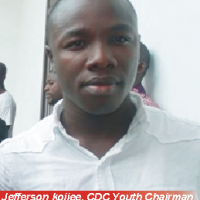
Koijee’s apology

By Tewroh-Wehtoe Sungbeh cdc_youth_200_200


Politics is a tough sport. Just ask Jefferson Koijee.

The young “revolutionary” of the Congress for Democratic Change (CDC), got that message the hard way after he was suspended indefinitely by his party for his public criticism of party founder and “First Partisan” George Weah during the 2012 national Vision 2030 conference in Gbarnga, for accepting the Peace Ambassador position from President Sirleaf.

Koijee captured the moment by his obviously frank and in-your-face public criticism of Weah and Sirleaf, which did not go well with the Monrovia-based hierarchical political establishment whose concerns are only about maintaining the status quo rather than actually running a serious political party that genuinely advocates democracy, free speech and progress in Liberia.

“We cannot be real in our desire to unify Liberians if we name one opposition leader as a peace emissary, no matter how loved he may be, if the public still see one person being named to three prominent governmental positions only because he is the son of the President. We must solve the real problems of Liberia including nepotism and tokenism if any kind of vision is to work for this country,” Koijee said.

The opinion of most people is that potent message of the kind that Koijee gave that railed against “nepotism and tokenism,” and the gullibility of George Weah shouldn’t warrant an indefinite suspension.

That message sounded loud and clear to the party bosses, and it was reported by the media that Koijee finally got his wish for which he shamelessly apologized and the suspension was lifted by the CDC.

As a legitimate grievable outburst that gained national and international attention, local party leaders should have found a way out by honestly listening to Koijee and finding possible solutions to his grievance in an open and honest way to move the party in the right direction.

To their credit, however, US-based party leaders feeling the outpouring of support for Koijee, and criticism for the undemocratic manner in which he was treated by the party, made it clear that CDC-USA does not support or endorse the action taken to suspend Koijee.

“In this formal manner we would like to emphatically state having not been informed of the negative information we have been reviewing in the press, we would like to formally document that the CDC-USA NEC does not in any way, shape or form endorse, condone, or recognize the suspension of Partisan Jefferson Joijee, the CDC’s National Youth League Chairman,” a letter to party chair, George Solo reads.

Certainly, this is a public relations nightmare for a political party that claims to be the potential heir to the presidency that Sirleaf currently occupies, and also poses an image problem for a political party that blindly idolizes its leaders and touts populism as a mantra, even though the CDC continues to fall short on new and original ideas, discipline and tolerance.

With the public overwhelmingly on his side for boldly criticizing the static, visionless and often bombastic power structure of the ‘mighty’ CDC, Koijee should have stood his grounds and not offer any apology to George Weah and the CDC.

Sadly, Koijee capitulated under intense pressure to survive in an economically tough climate such as Liberia; and did not stand up for his convictions, if he had any in the first place.

The problem for Koijee now is that he carried out an ego-driven public crusade for accountability in the CDC and punked out midway through a campaign that was too difficult for him to handle, which demonstrates his youthful inexperience and a knack for running his big mouth before thinking about the consequences.

“Please allow me to seize this moment and opportunity to officially and publicly extend to the executive committee, the standard-bearer Ambassador George Weah and the entire membership my sincere apology for the lack of due consultation before my statement at the 2030 Vision program. I take full responsibility as a person and deeply regret any embarrassment caused our party,” Koijee said.

Poor Koijee! He dropped the ball and caved under pressure. His wretched apology signifies cowardice and a buffoonery nature that reinforced his image as a reckless talking head, whose credibility is as questionable as the people who suspended him in the first place.

Koijee had the perfect opportunity to inspire others had he stuck to his convictions. But again, he has no conviction but will talk tough and passionately about an issue only to disappoint those who believes in him.

The young man is inconsequential in my book, from now on.

FrontPage Africa again ignores EPA-L: A case of media bias?

By Morris T. Koffa Morris__T__Koffa


About few weeks ago, FrontPage Africa published its “Who Passed; Who Failed in the Liberian Gov’t: FPA’s 2012 Assessment,” which is the annual ritual of that news media’s way of assessing the performance of the Liberian Government.

The exercise was somehow exhaustive. It assessed just about all of the government functionaries including the Drug Enforcement Agency, Liberia Anti-Corruption Commission, General Auditing Commission, Liberia Civil Aviation Authority, and Forestry Development Authority.

Although the process is nonscientific as FPA readily admits, this annual ritual is often a befitting exercise for public consumption, because it usually generates public interest and provides a window on how the government entities are performing. This exercise also helps the government gather some useful suggestions often driven by public opinion.

For the entities, the media exercise could serve as an opportunity to gauge and analyze their strengths, weaknesses, opportunities and threats (SWOT); in order to identify existing gap for improvement. Since the entire effort is about the functionaries of the government of Liberia, it is important to be inconclusive of all government entities to create a sense of media balance. Omitting one entity in the exercise, and more so on a consistent basis may generate reasonable perception and conclusion that such an entity is unimportant.

Unfortunately, the Environmental Protection Agency of Liberia (EPA-L) has been a victim of this exercise of exclusion since its inception several years ago. Such neglect raises logical questions as to why the EPA-L has been left out of the equation, when it should be regarded as an equally important entity of the government.

The EPA-L was created in 2003 by an Act of the Liberian Legislature as an autonomous agency charged with the responsibilities of protecting and managing the environment for the well-being of all citizens and residents. These responsibilities are geared toward developing and sustaining healthy human resources germane to the nation’s economic growth for present and future generations.

Furthermore, the EPA plays a vital role in sustaining the overall economic and social growth as well as the political stability of the nation. No nation succeeds in its developmental goals in the absence of sound environmental practices against the calamities from environmental degradation.

A well-managed and protected environment is considered the crux and indicator of measurable progress as enshrined in the United National Millennium Development Goal (MDG), which stresses that poverty reduction is the measure of sound, sustainable environmental practices.

It goes to say that no nation succeeds holistically without sound, measureable and achievable environmental goals. With such grounded information, EPA-L has been doing its very best even with limited national resources to ensure that Liberia remains a partner in the global desire to protect the environment for humanity. With such a national core mission, leaving out the EPA-L is inconceivable, to say the least.

Excluding EPA-L from the annual evaluation exercise concerns Africa Environmental Watch (AEW), Inc. and perhaps many other environmental groups. FrontPage is one of the iconic news organs in Liberia. It attracts more readerships, therefore, whatever news it provides is widely consumed; and perceptions are developed leading to serious public policy discussion.

Marginalizing a critical government entity such as the EPA-L is likely to give the perception that the entity is irrelevant, and contributes nothing meaningful to the social and economic sectors of the country. Such a notion of exclusion of the EPA-L may send mixed signals to the public and our international partners. In the end, the exclusion could undermine a thriving global partnership which the EPA-L has begun to build.

It should be recalled that at the September 2011 environmental forum held on behalf of EPA-L in Washington DC, partnership initiatives were established. The Liberia Environmental Forum for capacity building and technical assistance of the EPA brought together global partners such as the United States Environmental Protection Administration (USEPA), USAID, Global Environmental Facilities (GEF), UN Sustainable Development Office, National Council for Science and Environment (NCSE), Environmental Law Institute (ELI), Conservation International (CI), University of the District of Columbia UDC and many others.

At the conclusion of the conference, several memorandums of understanding (MOUs) were signed between the UDC and EPA-L, William V. S. Tubman University (TU), and Stella Maris Polytechnic (SMP). As a follow-up to the MOUs, a technical assessment team from UDC and AEW visited Liberia in May 2012 to conduct the need assessment for EPA-L, TU and SMP. Other tangible benefits derived from the conference are beginning to mature.

This is just a glance of what is unfolding in Liberia as a result of the EPA-L’s effort. Of course, there is more to be done but let’s recognize the little that is achieved through the many sacrifices of the hardworking people at the agency. The media has an important role to play in the process.

Another EPA accomplishment is that through its global partnership initiatives with Africa Environmental Watch and others, environmental degree programs are now being offered at Stella Maris Polytechnic and William V.S. Tubman University. These degree programs will prepare research practitioners to assist policymakers in making sound policies that will improve the nation’s environmental practices.

These initiatives are beginning to bear some tangible results. Liberians cannot afford to let these efforts waste. Furthermore, institutions inside and outside of Liberia including the media community bear equal responsibility to promote the EPA-L, because of its core value and mission to protect our environment. If we ignore the importance of the EPA-L and not help publicize the work it is doing, we will open the floodgate of corporations, companies and other institutions to constantly endanger the air we breathe, the water we drink and the soil that grows our food.

On several occasions, AEW brought these concerns to the attention of Front Page Africa’s editor-in-chief. To his credit, FPA published EPA-L related “concerned letters” during the administration of the late Hon. Ben Donnie. Notwithstanding, the situation still persists. Of course FPA has the right to evaluate or assess whomever it chooses, but as a matter of social responsibility and media balance, AEW hopes that just as FPA focuses on other government entities, it needs to extend similar attention to the EPA-L, so that the public will enjoy the same courtesy to better engage or promote the EPA-L in other circles of government.

Once again, the EPA-L was established in 2003; but it did not become fully institutionalized until in 2006 by the Sirleaf-led government. The EPA-L, like other government entities has had its share of challenges, but yet it is making measurable progress amidst limited resources to deal with the enormity of its core vision of protecting and regulating Liberia’s environment. Such progress along with the problems encountered need to be publicized. AEW believes that FPA’s readership deserves to know how their EPA-L is doing and how we collectively can make it better.

The current EPA-L leadership embarked on a visionary roadmap by building a network of domestic and global partnerships for a sustainable environmental future. For example, Environmental Social Impact Assessment (ESIA) is now a standard requirement for all companies (commercial and private), whose activities are deemed sensitive to the environment. This means that the EPA-L often assesses both pre and post environmental conditions of the companies’ activities. The EPA-L often trains inspectors to spot indictors of potential environmental threats. This was never the case in the past.

In conclusion, the AEW hopes that FPA will consider this article as an appeal to focus on EPA-L in present and future media exercises. We all are in this together. Where praise is due, let it be shared all around. Where suggestions for improvement are due, let them also be shared around.

Postwar Liberia needs a sound and balanced critique of development and progress that we all can be proud of. Thank you!

Mr. Morris T. Koffa, is an Environmental Engineer & Disaster/Emergency Management Practitioner, and Executive Director of the Africa Environmental Watch (AEW), Inc. He can be reached at [email protected] and 240-417-2545 begin_of_the_skype_highlighting 240-417-2545 end_of_the_skype_highlighting (cell).

Mentoring and football showed us the best of PSJ

By Tewroh-Wehtoe Sungbeh tws

He lived and died a poor man, but was forever rich in kindness.
Decent?

Oh yes, he was kind, and that puts him in my book as one of those I
truly admired since people like him are hard to come by in
Liberia.

In the swamps and slums of the Old Clara Town was PSJ, as all
referred to this giant of a man, including the many adoring kids he
mentored during his life on Earth.

I got to know Peter Slewion Jarkloh, this true Liberian hero when I
was growing up in New Kru Town, and during my many visits to Clara
Town in the early 1970s to see my mom, and at times to watch some
of the games that were being played in those Clara Town/Gibraltar
swamps.

Our means of transportation at times were those Renault
“Holay, Holay, De Dun” buses, (the ones from France that only started
by turning the iron in the front of the hood).

Some of the buses - the new ones could start with a key the
conventional way. However, as the buses got older they proved too
difficult to start.

Let me get back quickly to the story of PSJ before I lose my train of
though, because the life and good deeds of this great man are what
movies are made of.

PSJ was a man of unwavering loyalty and devotion to his sports
(football), and the inner city kids he spent his
entire life mentoring. PSJ proved to be a man of goodwill whose love
for kids robbed him of his own time.

With no help from the Liberian government, the then
Ministry of Labor, Youth and Sports, and the redundant and often
corrupt Liberian Football Association, (LFA), PSJ was a lone ranger
who did thing his own way.

His home was transformed into our version of the “Boys and Girls
Club of Metropolitan Monrovia,” where abandoned and neglected kids
were given love, attention and food to eat. The kids also used their
time at PSJ’s home to sharpen their skills to be somebody.

Humble and patient, PSJ was a teacher among teachers. An avid
football fan and player during his younger days, PSJ taught his
“children” the fundamentals of football. He organized football
matches, he taught those kids how to win games, he encouraged them to stay
in school, and he also watched their development from kids to adults.

George Oppong Weah, who hails from nearby Gibraltar, and
other prominent football players, plus his nephew, the Russian-trained
Telecommunications Engineer, (Joseph) Nyenetu Jarkloh benefited from
PSJ’s mentoring.

PSJ’s services to his “kids” didn’t stop in Clara Town either, because
when that city was destroyed by orders from the Executive Mansion
during the early days of the Tolbert administration, and with the
urging and blessings of the United Methodist Church, PSJ left his
beloved Clara Town for New Kru Town by the road to Duala, where he
resumed his services until his death years later.

The story about PSJ is one of unselfishness and unconditional love.
It is also one of patriotism, because a strong country is one that
invests in its children’s future.

As a private non-government employee, PSJ used his meager resources
to foster his beliefs by investing in Liberia’s vulnerable children, since
most Liberians with money don’t care to mentor or even sponsor kids
other than their own children and the children of their relatives.

We constantly hear about Liberians, the ones living in Victorian homes
overseas, whom, because of their own selfish reasons will never, never
help a needy child even during difficult times.

These individuals, instead would rather send their wives,
girlfriends, and children to live abroad with their
stolen riches while their husbands or friends live in Liberia with the
mindset of stealing more money from government.

Those are the Liberians who “don’t want to be bother with those Liberians,”
because “Liberians talk too much.”

PSJ was a surrogate father to many children. He died poor with no
recognition from the Liberian government or even a private
organization.

It is time that the Liberian government do the right thing.
Honor this patriot!

Mentoring and football showed us the best of PSJ

By Tewroh-Wehtoe Sungbeh tws

He lived and died a poor man, but was forever rich in kindness.
Decent?

Oh yes, he was kind, and that puts him in my book as one of those I
truly admired since people like him are hard to come by in
Liberia.

In the swamps and slums of the Old Clara Town was PSJ, as all
referred to this giant of a man, including the many adoring kids he
mentored during his life on Earth.

I got to know Peter Slewion Jarkloh, this true Liberian hero when I
was growing up in New Kru Town, and during my many visits to Clara
Town in the early 1970s to see my mom, and at times to watch some
of the games that were being played in those Clara Town/Gibraltar
swamps.

Our means of transportation at times were those Renault
“Holay, Holay, De Dun” buses, (the ones from France that only started
by turning the iron in the front of the hood).

Some of the buses - the new ones could start with a key the
conventional way. However, as the buses got older they proved too
difficult to start.

Let me get back quickly to the story of PSJ before I lose my train of
though, because the life and good deeds of this great man are what
movies are made of.

PSJ was a man of unwavering loyalty and devotion to his sports
(football), and the inner city kids he spent his
entire life mentoring. PSJ proved to be a man of goodwill whose love
for kids robbed him of his own time.

With no help from the Liberian government, the then
Ministry of Labor, Youth and Sports, and the redundant and often
corrupt Liberian Football Association, (LFA), PSJ was a lone ranger
who did thing his own way.

His home was transformed into our version of the “Boys and Girls
Club of Metropolitan Monrovia,” where abandoned and neglected kids
were given love, attention and food to eat. The kids also used their
time at PSJ’s home to sharpen their skills to be somebody.

Humble and patient, PSJ was a teacher among teachers. An avid
football fan and player during his younger days, PSJ taught his
“children” the fundamentals of football. He organized football
matches, he taught those kids how to win games, he encouraged them to stay
in school, and he also watched their development from kids to adults.

George Oppong Weah, who hails from nearby Gibraltar, and
other prominent football players, plus his nephew, the Russian-trained
Telecommunications Engineer, (Joseph) Nyenetu Jarkloh benefited from
PSJ’s mentoring.

PSJ’s services to his “kids” didn’t stop in Clara Town either, because
when that city was destroyed by orders from the Executive Mansion
during the early days of the Tolbert administration, and with the
urging and blessings of the United Methodist Church, PSJ left his
beloved Clara Town for New Kru Town by the road to Duala, where he
resumed his services until his death years later.

The story about PSJ is one of unselfishness and unconditional love.
It is also one of patriotism, because a strong country is one that
invests in its children’s future.

As a private non-government employee, PSJ used his meager resources
to foster his beliefs by investing in Liberia’s vulnerable children, since
most Liberians with money don’t care to mentor or even sponsor kids
other than their own children and the children of their relatives.

We constantly hear about Liberians, the ones living in Victorian homes
overseas, whom, because of their own selfish reasons will never, never
help a needy child even during difficult times.

These individuals, instead would rather send their wives,
girlfriends, and children to live abroad with their
stolen riches while their husbands or friends live in Liberia with the
mindset of stealing more money from government.

Those are the Liberians who “don’t want to be bother with those Liberians,”
because “Liberians talk too much.”

PSJ was a surrogate father to many children. He died poor with no
recognition from the Liberian government or even a private
organization.

It is time that the Liberian government do the right thing.
Honor this patriot!

Writing about Weah, Koiyee and the CDC comes with a price

By Tewroh-Wehtoe Sungbeh

cdc_youth_200_200

Jefferson Koiyee of the Congress for Democratic Change (CDC) found himself in a rather tough position recently when he publicly criticized party founder and former presidential candidate, George Weah, during the national vision conference in Gbarnga, Bong County in 2012.

Koiyee is a brave man who seems to have been frustrated with the leadership of his organization. And the only way he thought he could get the leadership’s attention is to speak out publicly about the problems that plagued the organization, which got him suspended indefinitely from the party.

Instead of party leaders suspending Koiyee and throwing him on the side of the road to rot in isolation, party members ought to applaud him and embrace him for being genuine, and for boldly putting the issues that got him suspended on the front burner to be debated.

The suspension was a stunning decision that got everybody talking, especially when the leadership of the CDC continually speaks fluidly of progressive populist politics and upholding democracy and free speech in Liberia, only to engage in such deliberate exercise of silencing critics who disagrees with the direction of the party.

This deliberate and nauseating practice of a group apology for George Weah resembles the kind of arranged proclamations, petition drives, and quasi statements of support supposedly from a section of the population Liberian leaders often used to neutralized and suppress their opponents to cement their grip on state power. Now, it’s the CDC’s turn.

Travesty of this kind proves that the CDC is only interested in the grand illusions of power and control that focuses on the majesty and grandeur of people/celebrity worship, and not substance and the healthy exchange of ideas that stimulates public debate.

“The National Youth League through its acting chairperson Salinto Montgomery has expressed its deepest regret and apology to the Standard Bearer of the Congress for Democratic Change George M. Weah and its Chairperson George Solo as well as the entire National Executive Committee,” a statement from the Youth League reads.

In another twists, the CDC put out a press release that discusses General Amnesty from the “National Executive Committee of the Congress for Democratic Change, on behalf of its Standard-Bearer and Liberia’s Peace Ambassador, George M. Weah” that “declared general amnesty for all expelled members of the party under Executive Order #004.”

The obviously vague press release did not memtion Jefferson Koiyee and his re-instatement as party member and Youth Chair, but cited broadly those “who may have been expelled for serious constitutional breaches between 2005 and 2012.”

The question now is what becomes of the issues Koiyee raised, that George Weah accepted without consultation the ceremonial job of “Peace Ambassador from President Sirleaf?”

How can members of the CDC stand by and allow Weah to accept such position, when the party is on record to opposed President Ellen Johnson Sirleaf on all fronts? Is it not the same President Sirleaf who refuses to accept the rulings of her own Peace and Reconciliation Commission?

Is it not the same President Sirleaf who continues to shamelessly defend nepotism and the hiring of her sons in government? What is the party’s position on that issue? As Peace Ambassador, will Weah do anything different that the Peace and Reconciliation Commission (TRC) did not do?

Instead of supporters of Weah attacking critics and suspending Koiyee indefinitely, are these individuals ready to build a genuine political party that operates on substance and the issues, and not hide behind the celebrity and wealth of Weah and a dysfunctional party to make decisions?

What kind of a political party is the CDC when it leaders cannot accept criticisms from other Liberians and its own members? Is this political party ready for big league Liberian politics, especially in this time of nation building that also requires political maturity and tolerance of the views of others?

Unfortunately, the rush to silence others and a member of the party for speaking out reduces or wipes out the quality of public debate and genuine discussions that supposed to be the cornerstone of the Congress for Democratic Change and other political parties.

However, when there is that level of swift and angry reaction coming from a party or a member for criticizing the so-called “charismatic first partisan” as noted by the learned Isaac Zawalo, it revealed that the CDC is not about winning elections, nation building and democratic change, but about maintaining the status quo of blind loyalty, personality worship and maintaining an imperial leadership, which has hampered growth, development and democracy in Liberian politics.

CDC’s diaspora member Zawolo took me on for my recent piece; (“Koiyee’s suspension confirms CDC’s problems, and George Weah’s lack of leadership”), which detailed Weah’s lack of judgment and leadership when he accepted the ceremonial “Peace Ambassador” job from President Sirleaf, which magnified Weah’s self-centeredness and the party’s shallowness and obvious lack of discipline and political maturity.

Zawolo’s response to my piece did not address the issues of making the CDC relevant, competitive, tolerant and responsive, but saw my piece as a “determination to malign the character and image of the Party and its leader.”

“Of specific interest,” Zawolo writes, “ is the ferocity with which you have engaged issues appertaining to the CDC and its charismatic first partisan, Ambassador George Manneh Weah.”

“Note though that, not that your position really matters since it is clearly the barking and ranting of a desperado wanting of recognition and a spot on the pedestal where greats of the likes of Ambassador rests comfortably pondering on how to achieve genuine reconciliation and peace in Liberia, such reckless behavior, if unchecked, could be misunderstood,” Zawalo added angrily.

For Zawolo’s tirade, my response to him is a short note, which is below.

Dear Isaac Zawalo,

I am an activist/political writer who cares deeply about Liberia and the issues. A reminder also that political activism is not limited to only certain names and characters in Liberian politics. Also, perhaps you are unaware, but I am not about seeking recognition, because I have decades and decades of involvement in progressive political activism and opinion writing under my belt, which I am proud of. Been there, done that also, my friend! Thanks.

However, having listened to Liberians at home and abroad, it appears that the unanimous sentiments raised by these individuals are George Weah’s inability or dismal failure to articulate his vision for Liberia, and the CDC’s failure to be a disciplined and matured political party.

If what these people are saying is so true, is it not the duty of opinion writers and other progressive activists to awaken the party and George Weah to this reality?

Even though Isaac Zawolo commended me “for taking the courage to voice your opinion on many issues that others would shy away from,” he still had problem with my piece because I went after his “chrismatic first partisan.” Are we, or am I only supposed to write flowery articles that heaps praises on Weah to please people like him?


A critical look at the role of the Diaspora in Liberia's development

By Cecil Franweah Frank

IMG_0545

The diaspora could be a very important force for good or for evil in any country’s development. In scholarly literature, the paradigm of diaspora is frequently viewed as a transnational community that is inclusive of migrant and ethnic communities.

In short, according to Baubock and Faist (2010, p.86), there are three important conditions for the diaspora to become a participant in development policy: first, national or ethnic origin; second, a capability to contribute to development in the country of origin; and, third, a readiness to do so.

Within the context of what has been said above, the question now is has the diaspora been a positive actor in Liberia’s development policy or a destabilizing factor or element undermining peace in the country of origin? This article in large part tries to address this question, particularly in light of the Liberian diaspora now demanding that government grants it dual citizenship.

Ascendancy of the Liberian Diaspora on the National Scene: 1960-1989

The history of the Liberian diaspora has not been fully chronicled in scholarly research. However, much can be said that the Liberian diaspora fully came of age in the 1960s. This is the period that the number of Liberians leaving the country mostly for studies began to increase. Many of these Liberians particularly traveled to the United States. The choice of the United States as opposed to other countries was informed by the perceived historical ties between the two countries and the deepening of US influence in Liberia.

The period 1960-1971 marked the formation of the diaspora as a participant in Liberia’s political and economic development. In the late 1960s, Liberian students in the United States organized the Liberian Student Union, which eventually was renamed the Union of Liberian Association in the United States (ULAA) (Watkins, 2007, p.130).

Many members of the diaspora at the time did not support anti-Tubman opponents like Tuan Wreh and Albert Porte. In fact, the diaspora was mostly complacent in Tubman’s dictatorial regime since they benefited from his paternalistic policies. Besides, the Liberian diaspora that saw its ranks increasing with indigenous Liberians felt the need to repay President Tubman with loyalty because of his policy of Unification which they taught liberated them from oppression by the Americo-Liberian elite.

The period 1971-1980 saw a new stage in diaspora development and participation in Liberia. This period saw the political radicalization of the Liberian diaspora, and was marked by the establishment of various political movements. The first of these movements was the Movement for Justice in Africa (MOJA).

This organization was created by misguided leftist Liberian educators Togba-Nah Tipoteh, Henry Boima Fahnbulleh, Jr., Amos Sawyer and Dew Mason. These were American educated lecturers who benefited from Tubman’s largesse but were led astray by socialist rhetoric. A year later, in 1974, Gabriel Baccus Matthews created the Progressive Alliance of Liberia (PAL). (Sirleaf, 2005, p.102).

1980-1989 marked the third stage in the participation of the diaspora in the development policy and economic affairs of Liberia. The diaspora at first misguidedly greeted the military coup that toppled the democratic civilian government of Liberia and backed the cancelation of Liberia’s 1847 Constitution. This was Africa’s first republican constitution.

This period also saw the struggle within the diaspora between the socialist and capitalist wings. This situation culminated into the Doe Administration being pushed over the cliff into an era of brutal rule. What is interesting to note is that elements of both wings were educated in the bastion of global capitalism and democratic governance – the United States of America.

The Consequential Outcomes of the Diaspora’s Role in Liberia’s Development

In view of the analysis carried out above, it is safe to conclude that the diaspora, particularly the Liberian diaspora in the United States, has had a largely negative influence on Liberia’s development. Given that throughout Liberia’s 165 years of existence, it has been an under-developed country struggling to solidify its sovereignty. Whatever positive contributions isolated members of the diaspora made to their motherland were effectively drowned out by the collective efforts of the diaspora members in political and economic leadership.

Rather than being a force for socio-economic development and political good governance, the diaspora has mainly been a force that led Liberia to its abyss under the deep cloud of poor governance, reckless economic management and massive corruption. This is the legacy of the diaspora’s role in Liberia’s development.

The diaspora had failed to use its influence in Liberia’s political and economic structure to craft development policies, but instead positioned the country to be a natural resource economically dependent nation. This explains why over the many years of Liberia’s existence, the country’s main revenues came from the export of its natural resources and not from any credible coordinated tax revenue-generating system. As such, a key consequence of the diaspora’s involvement in Liberia was the undermining of the country’s statehood and making Liberia dependent on the“George Haddads” to run its economy.

Liberia is one of two pioneer black countries globally. The other country is Haiti. Both nations share one common trait, even if they are not identical in terms of language and culture. The trait that unites them is that they are both spectacular failures. They have contributed to and consolidated the perception that blacks are not capable of ruling themselves without “white” intervention.

Another negative aspect of the diaspora’s role in Liberia has been the ‘governance crisis.’ The governing elites in Liberia had always considered the diaspora as a source of legitimacy. Thus, successive governments in Liberia had sought to cultivate the loyalties and support of members of the diaspora.

This attitude by the governing elite is not surprising given the belief fact that on the whole, diaspora Liberians tend to be more skilled, better educated and wealthier than Liberians in the homeland. Unfortunately, diaspora Liberians have failed by and large to leverage this power of knowledge and wealth to promote good democratic governance in Liberia.

This situation has affected even Liberians educated on the ground, and has created a culture whereby Liberians as a whole have tended to embrace misrule and discourage any efforts to correct the situation. This explains why Liberians continue to embrace the concept that “might is greater than strength” rather than seek to create a law-abiding society where all citizens are equal before the law.

Another negative aspect of the diaspora’s role has been its impact on public policies, particularly as it relates to the “corruption and poverty crisis.” Many members of the diaspora have served in influential decision-making positions, but they have never been able to develop effective policies to tackle widespread poverty and corruption in Liberia. To the contrary, it actually seems the diaspora has abetted poverty and corruption in Liberia. Poverty and endemic corruption are major obstacles to Liberia’s development (Andrews and Hadjimichael, 2006, p.3).

The issues of poverty and corruption have been underlying themes of the diaspora’s opposition to previous governments, but diaspora members have frequently backed away from these issues when given a chance to serve in the Liberian government. This explains why little progress has been made on poverty and corruption.

The present government, which has a large contingent of diaspora members in its ranks formulated an anti-corruption strategy, as well as declaration of assets, and Code of Conduct. But, Liberian newspapers continue to publish on a daily basis cases of high-profile corruption involving members of the diaspora in government.

Conclusion

The Liberian diaspora, particularly the diaspora groups in the United States, has been highly involved in Liberian economic and political structures. The influence of diaspora groups in the United States on Liberia has been one of historical making starting from the country’s founding in the mid-1800s, to the active surge of US influence in Liberia beginning in the 1940s.

However, there is little if anything positive to show for the diaspora’s involvement in Liberia. Even with diaspora members in leadership positions, Liberia continues to remain a deeply under-developed country whose leadership is stuck in the old ways of doing business.

An illustrative example of this perception is news that the current president appointed her sons and relatives to key positions of trust; from security to banking to the natural resource sectors, even though this runs against standard ethics of governance. Such action would have definitely been difficult if not impossible to carry out if there were functional institutions. Similar actions were widespread prior to the civil war.

In post-conflict Liberia, the diaspora still doesn’t have a positive influence on good governance and development. As events later showed, political and pressure groups that were created by diaspora members to advocate for greater openness and transparency in Liberia were not effective because the members of these organizations sought their own agenda under the pretext of seeking to liberate the populace.

Even when given the opportunity to demonstrate their passion and loyalty to their motherland, many of these diaspora members significantly underperformed in political and economic leadership, and failed to usher in any social change.

This should not be surprising given that the anatomy of the Liberian diaspora’s inability to have a positive impact on its motherland, can be linked to the manner in which diaspora organizations operate. A case in point is the Union of Liberian Associations in the United States (ULAA), which since its inception has been little more than a talking shop and instrument for political power in Liberia. ULAA currently lacks a standard headquarters and its leadership is in complete disarray.

The diaspora still has the ability to play a positive role in the establishment of credible, functional political, social, and economic institutions in Liberia. By leveraging the educational skills and know-how of its members, the diaspora can truly become a force for good.

As a start, the diaspora needs to advocate for improved conditions for downtrodden Liberians against an all-powerful centralized government. The diaspora needs to refocus the collective energies of its members on issues that matter such as good governance and stability in the country’s political environment, by pressing for credible, empowered institutions, accountable economic management; by tightening the screw on corruption and pressing for transparency, and by advocating astutely for post-conflict bread and butter deliverables like pipe-borne drinking water, electrification and speedy construction of infrastructure to improve the living conditions of ordinary Liberians.

A good start will be to pressure members of the diaspora that are in political and economic leadership to walk the walk and not only talk the talk. Besides, the diaspora should push the government to encourage inclusiveness rather than picking and choosing among Liberian intellectuals. These actions will enhance the role of the diaspora in Liberia’s development.


REFERENCES

Andrew, D., & Hadjimichael, M. (2006). Liberia: 2006 article IV consultation and staff-monitored program – staff report; public information notice on the executive board discussion; and statement by the authorities of Liberia [Edition illustrated]. International Monetary Fund, Washington, D.C..

Baubock, R., & Faist, T. (Ed.). (2010). Diaspora and transnationalism: concepts, theories and methods [Edition illustrated]. Amsterdam University Press.

Dolo, E. (2007). Ethnic tensions in Liberia’s national identity crisis: problems and possibilities [Edition illustrated]. Africana Homestead Legacy Publication.

Sirleaf, A.M.D. (2005). He die before his plans were realized [Edition illustrated]. AuthorHouse.

Watkins, S.R. (2007). Liberia communication [Edition illustrated


Cecil Franweah Frank is a PhD candidate at Walden University School of Public Policy and Administration, as well as the Ukrainian Institute of International Relations and World Economy.

A critical look at the role of the Diaspora in Liberia’s development

By Cecil Franweah Frank

IMG_0545

The diaspora could be a very important force for good or for evil in any country’s development. In scholarly literature, the paradigm of diaspora is frequently viewed as a transnational community that is inclusive of migrant and ethnic communities.

In short, according to Baubock and Faist (2010, p.86), there are three important conditions for the diaspora to become a participant in development policy: first, national or ethnic origin; second, a capability to contribute to development in the country of origin; and, third, a readiness to do so.

Within the context of what has been said above, the question now is has the diaspora been a positive actor in Liberia’s development policy or a destabilizing factor or element undermining peace in the country of origin? This article in large part tries to address this question, particularly in light of the Liberian diaspora now demanding that government grants it dual citizenship.

Ascendancy of the Liberian Diaspora on the National Scene: 1960-1989

The history of the Liberian diaspora has not been fully chronicled in scholarly research. However, much can be said that the Liberian diaspora fully came of age in the 1960s. This is the period that the number of Liberians leaving the country mostly for studies began to increase. Many of these Liberians particularly traveled to the United States. The choice of the United States as opposed to other countries was informed by the perceived historical ties between the two countries and the deepening of US influence in Liberia.

The period 1960-1971 marked the formation of the diaspora as a participant in Liberia’s political and economic development. In the late 1960s, Liberian students in the United States organized the Liberian Student Union, which eventually was renamed the Union of Liberian Association in the United States (ULAA) (Watkins, 2007, p.130).

Many members of the diaspora at the time did not support anti-Tubman opponents like Tuan Wreh and Albert Porte. In fact, the diaspora was mostly complacent in Tubman’s dictatorial regime since they benefited from his paternalistic policies. Besides, the Liberian diaspora that saw its ranks increasing with indigenous Liberians felt the need to repay President Tubman with loyalty because of his policy of Unification which they taught liberated them from oppression by the Americo-Liberian elite.

The period 1971-1980 saw a new stage in diaspora development and participation in Liberia. This period saw the political radicalization of the Liberian diaspora, and was marked by the establishment of various political movements. The first of these movements was the Movement for Justice in Africa (MOJA).

This organization was created by misguided leftist Liberian educators Togba-Nah Tipoteh, Henry Boima Fahnbulleh, Jr., Amos Sawyer and Dew Mason. These were American educated lecturers who benefited from Tubman’s largesse but were led astray by socialist rhetoric. A year later, in 1974, Gabriel Baccus Matthews created the Progressive Alliance of Liberia (PAL). (Sirleaf, 2005, p.102).

1980-1989 marked the third stage in the participation of the diaspora in the development policy and economic affairs of Liberia. The diaspora at first misguidedly greeted the military coup that toppled the democratic civilian government of Liberia and backed the cancelation of Liberia’s 1847 Constitution. This was Africa’s first republican constitution.

This period also saw the struggle within the diaspora between the socialist and capitalist wings. This situation culminated into the Doe Administration being pushed over the cliff into an era of brutal rule. What is interesting to note is that elements of both wings were educated in the bastion of global capitalism and democratic governance – the United States of America.

The Consequential Outcomes of the Diaspora’s Role in Liberia’s Development

In view of the analysis carried out above, it is safe to conclude that the diaspora, particularly the Liberian diaspora in the United States, has had a largely negative influence on Liberia’s development. Given that throughout Liberia’s 165 years of existence, it has been an under-developed country struggling to solidify its sovereignty. Whatever positive contributions isolated members of the diaspora made to their motherland were effectively drowned out by the collective efforts of the diaspora members in political and economic leadership.

Rather than being a force for socio-economic development and political good governance, the diaspora has mainly been a force that led Liberia to its abyss under the deep cloud of poor governance, reckless economic management and massive corruption. This is the legacy of the diaspora’s role in Liberia’s development.

The diaspora had failed to use its influence in Liberia’s political and economic structure to craft development policies, but instead positioned the country to be a natural resource economically dependent nation. This explains why over the many years of Liberia’s existence, the country’s main revenues came from the export of its natural resources and not from any credible coordinated tax revenue-generating system. As such, a key consequence of the diaspora’s involvement in Liberia was the undermining of the country’s statehood and making Liberia dependent on the“George Haddads” to run its economy.

Liberia is one of two pioneer black countries globally. The other country is Haiti. Both nations share one common trait, even if they are not identical in terms of language and culture. The trait that unites them is that they are both spectacular failures. They have contributed to and consolidated the perception that blacks are not capable of ruling themselves without “white” intervention.

Another negative aspect of the diaspora’s role in Liberia has been the ‘governance crisis.’ The governing elites in Liberia had always considered the diaspora as a source of legitimacy. Thus, successive governments in Liberia had sought to cultivate the loyalties and support of members of the diaspora.

This attitude by the governing elite is not surprising given the belief fact that on the whole, diaspora Liberians tend to be more skilled, better educated and wealthier than Liberians in the homeland. Unfortunately, diaspora Liberians have failed by and large to leverage this power of knowledge and wealth to promote good democratic governance in Liberia.

This situation has affected even Liberians educated on the ground, and has created a culture whereby Liberians as a whole have tended to embrace misrule and discourage any efforts to correct the situation. This explains why Liberians continue to embrace the concept that “might is greater than strength” rather than seek to create a law-abiding society where all citizens are equal before the law.

Another negative aspect of the diaspora’s role has been its impact on public policies, particularly as it relates to the “corruption and poverty crisis.” Many members of the diaspora have served in influential decision-making positions, but they have never been able to develop effective policies to tackle widespread poverty and corruption in Liberia. To the contrary, it actually seems the diaspora has abetted poverty and corruption in Liberia. Poverty and endemic corruption are major obstacles to Liberia’s development (Andrews and Hadjimichael, 2006, p.3).

The issues of poverty and corruption have been underlying themes of the diaspora’s opposition to previous governments, but diaspora members have frequently backed away from these issues when given a chance to serve in the Liberian government. This explains why little progress has been made on poverty and corruption.

The present government, which has a large contingent of diaspora members in its ranks formulated an anti-corruption strategy, as well as declaration of assets, and Code of Conduct. But, Liberian newspapers continue to publish on a daily basis cases of high-profile corruption involving members of the diaspora in government.

Conclusion

The Liberian diaspora, particularly the diaspora groups in the United States, has been highly involved in Liberian economic and political structures. The influence of diaspora groups in the United States on Liberia has been one of historical making starting from the country’s founding in the mid-1800s, to the active surge of US influence in Liberia beginning in the 1940s.

However, there is little if anything positive to show for the diaspora’s involvement in Liberia. Even with diaspora members in leadership positions, Liberia continues to remain a deeply under-developed country whose leadership is stuck in the old ways of doing business.

An illustrative example of this perception is news that the current president appointed her sons and relatives to key positions of trust; from security to banking to the natural resource sectors, even though this runs against standard ethics of governance. Such action would have definitely been difficult if not impossible to carry out if there were functional institutions. Similar actions were widespread prior to the civil war.

In post-conflict Liberia, the diaspora still doesn’t have a positive influence on good governance and development. As events later showed, political and pressure groups that were created by diaspora members to advocate for greater openness and transparency in Liberia were not effective because the members of these organizations sought their own agenda under the pretext of seeking to liberate the populace.

Even when given the opportunity to demonstrate their passion and loyalty to their motherland, many of these diaspora members significantly underperformed in political and economic leadership, and failed to usher in any social change.

This should not be surprising given that the anatomy of the Liberian diaspora’s inability to have a positive impact on its motherland, can be linked to the manner in which diaspora organizations operate. A case in point is the Union of Liberian Associations in the United States (ULAA), which since its inception has been little more than a talking shop and instrument for political power in Liberia. ULAA currently lacks a standard headquarters and its leadership is in complete disarray.

The diaspora still has the ability to play a positive role in the establishment of credible, functional political, social, and economic institutions in Liberia. By leveraging the educational skills and know-how of its members, the diaspora can truly become a force for good.

As a start, the diaspora needs to advocate for improved conditions for downtrodden Liberians against an all-powerful centralized government. The diaspora needs to refocus the collective energies of its members on issues that matter such as good governance and stability in the country’s political environment, by pressing for credible, empowered institutions, accountable economic management; by tightening the screw on corruption and pressing for transparency, and by advocating astutely for post-conflict bread and butter deliverables like pipe-borne drinking water, electrification and speedy construction of infrastructure to improve the living conditions of ordinary Liberians.

A good start will be to pressure members of the diaspora that are in political and economic leadership to walk the walk and not only talk the talk. Besides, the diaspora should push the government to encourage inclusiveness rather than picking and choosing among Liberian intellectuals. These actions will enhance the role of the diaspora in Liberia’s development.


REFERENCES

Andrew, D., & Hadjimichael, M. (2006). Liberia: 2006 article IV consultation and staff-monitored program – staff report; public information notice on the executive board discussion; and statement by the authorities of Liberia [Edition illustrated]. International Monetary Fund, Washington, D.C..

Baubock, R., & Faist, T. (Ed.). (2010). Diaspora and transnationalism: concepts, theories and methods [Edition illustrated]. Amsterdam University Press.

Dolo, E. (2007). Ethnic tensions in Liberia’s national identity crisis: problems and possibilities [Edition illustrated]. Africana Homestead Legacy Publication.

Sirleaf, A.M.D. (2005). He die before his plans were realized [Edition illustrated]. AuthorHouse.

Watkins, S.R. (2007). Liberia communication [Edition illustrated


Cecil Franweah Frank is a PhD candidate at Walden University School of Public Policy and Administration, as well as the Ukrainian Institute of International Relations and World Economy.

"Koijee’s suspension confirms CDC’s problems, and George Weah’s lack of leadership" - Rejoinder

By Isaac Saye-Lakpoh Zawolo Isaac Zawolo


Firstly, we must commend you for taking the courage to voice your opinion on many issues that others would shy away from. Let me , however quickly aver that while your courage is admirable, your inability to stay away from falsehoods, half-truths, slandering remarks, casting of aspersions, anecdotes and unfounded allegations have captured my attention.

Of specific interest is the ferocity with which you have engaged issues appertaining to the CDC and its charismatic first partisan, Ambassador George Manneh Weah. Your determination to malign the character and image of the Party and its leader is becoming a pattern thus meriting a response.

Note though that, not that your position really matters since it is clearly the barking and ranting of a desperado wanting of recognition and a spot on the pedestal where greats of the likes of Ambassador rests comfortably pondering on how to achieve genuine reconciliation and peace in Liberia, such reckless behavior, if unchecked , could be misunderstood.

Now let us return to the arguments in your last misguided criticisms of Ambassador Weah and the CDC. While “due process” is an important tenet of democratic systems, the standing law of any political institution is sacrosanct and cannot be circumvented.

While I may have my own position on the issue of Honorable Koijee’s suspension, the bye-laws of the CDC allows for the suspension pending a full scale investigation. You asked: Do you suspend a person indefinitely before investigating them to know what actually took place.

My answer is an emphatic yes. Yes, consistent with the policy of the institution. Now is this a good policy? I quite honestly don’t think so. But, until laws are amended and policies changed the existing laws must be adhered to. Obviously, such situations presents opportunity for the Party to review its policies and I am certain that such is the case with the CDC.

Having addressed what was supposed to be the focus of your article, reading from the title, I beg to touch on the other issues that you quickly ventured into. What is Ambassador Weah risking? How is he supposed to answer a call to service? Is accepting to work for peace an acceptance of a position in government? Is that position a cabinet position? Does accepting to work as a Peace Ambassador constitute endorsement of the policy or position of the ruling party? Such line of argument sickens me.

Mr. Sungbeh, this is not the years when politics was about making enemies. Ambassador Weah sees the President of the country as the leader chosen by the people. As one who supports democracy he is to respect the office of the Presidency no matter how much he disagrees with the policy of the government.

Additionally, the CDC has vested interest in the future of Liberia. A Party which draws its strength from the youths of the nation, the CDC must be ready to work to ensure that its constituents enjoy the peace and stability that have eluded them for most part of their lives. Don’t you think then, it is the right call for their leader to rise up to work for peace? My man, this is not the politics of the old.

The CDC goal is to see a just, free, prosperous and peaceful society where opportunities abound not for a few but for all. How can such be achieved in the absence of peace? How can such be achieved when we leave with it with a government that has demonstrated its inability to deliver on peace and reconciliation?

Let’s move to your allegation that Ambassador Weah did not consult with his “party”. What is your source? Though you are correct that the issue of peace is not about “Weah”, you are equally wrong to say it is about the CDC. No, peace is not just about the CDC- it is about Liberia and the people of Liberia.

Yet another paradox in your vain attempt to bad-mouth the CDC is the fact that you would think that an individual can own a “party”. Just look at the following lines from your diatribe: “if I had a political party”, I will restructure my political party”, I will push my legislative members”. Here you are accusing Ambassador Weah of being autocratic and self-centered but yet you are claiming that as the leader one can own “legislative members”. Is that “due process”? Is that how “educated people” do it? Is that what the “policy papers” will be about? Is that how you will “frame compelling messages “? Is that how you will repudiate “questionable alliances”? Good thing that our people have gone beyond hearing “policy speeches” to demanding genuine patriotism , actionable commitment as evidenced by the willingness of Ambassador Weah to abandon his career to partake in disarmament efforts in Liberia and the generosity he has shown to many.

Concluding let me say that the other allegations about how“most people” see Ambassador Weah are more of a therapy for you than a fact. If that sooths you then I am happy for you. You, however, have failed on every occasion to provide any evidence of the allegations you heaped. To the contrary, Ambassador has scored victories in the first round of every election he has participated in as a candidate.

The CDC is moving on and I hope you too will move on. Remember, the Struggle continues!

About the author

Isaac Saye-Lakpoh Zawolo is an award winning teacher who resides with his wife and son in Bryans Road, Maryland, a Washington DC suburb. He has been a very active member of the Liberian Community in the United States. He served the Union of Liberian Associations in the Americas, ULAA as National Secretary General for two terms. He most recently ran for the presidency of the Union of Liberian Associations in the Americas, ULAA. The writer can be reached at (301)728-1210 begin_of_the_skype_highlighting (301)728-1210 end_of_the_skype_highlighting and [email protected].

Editor”s Note:

Mr. Zawalo,

The CDC obviously is a personality-driven organization. And since it is perceived that he (George Weah) your “First Partisan” and ‘Ambassador’ founded the organization, he’s treated preferentially.

You can dispute it all you want, but that’s the fact. And that is the way it has been in Liberian politics - the Liberian government and in political parties, with those at the top being treated as if they are above the law and above everything in the country.

Item: With decades and decades of involvement in political activism and opinion writing, I am not in the arena to make you happy, and to prove anything to you and others to gain recognition. Perhaps you don’t know it, but I’ve played my part very well, my friend.

Item: The first paragraph of your “rejoinder” commended me “for taking the courage to voice your opinion on many issues that others would shy away from,” but you drifted away quickly by putting on your CDC hat when you attacked me for my “inability to stay away from falsehoods.”

Item: If I had written a flowery and flattering article about Weah that sings praises of him, I guess I would have gotten the recognition I needed from you and others. Isn’t it? This is not about gaining recognition, it is about doing the right thing for the Liberian nation and people. The days of blindly worshipping ‘idols’ and personalities are over, my friend.

Item: You are quite right. Others don’t have the courage to take on the CDC and your “First Partisan” George Weah out of fear that they too would be attacked by a fiercely loyal and partisan gentleman like yourself, who will blindly defend his Ambassador and his party than working to solve the problem in the institution.

Item: Because Weah is the most visible, wealthy and popular member of your party, he can use his enormous influence to get his legislative members from being benchwarmers and cheerleaders to being the legislative members they were elected to be.

Item: “Peace Ambassador?” Please! How can Weah accept such ceremonial title from President Sirleaf, who has since refused to acknowledge the TRC report, and also refuses to acknowledge the practice of nepotism in her administration, with the hiring of her sons? Are you kidding me, Isaac?

Item: The article in question has gotten kudos from some in the CDC, who asked me privately to write the piece.

Tewroh-Wehtoe Sungbeh

Disclaimer:

The views contained and expressed are those of the author. The writer does not speak on behalf of the CDC, ULAA or any organization with which he has affiliated.

“Koijee’s suspension confirms CDC’s problems, and George Weah’s lack of leadership” - Rejoinder

By Isaac Saye-Lakpoh Zawolo Isaac Zawolo


Firstly, we must commend you for taking the courage to voice your opinion on many issues that others would shy away from. Let me , however quickly aver that while your courage is admirable, your inability to stay away from falsehoods, half-truths, slandering remarks, casting of aspersions, anecdotes and unfounded allegations have captured my attention.

Of specific interest is the ferocity with which you have engaged issues appertaining to the CDC and its charismatic first partisan, Ambassador George Manneh Weah. Your determination to malign the character and image of the Party and its leader is becoming a pattern thus meriting a response.

Note though that, not that your position really matters since it is clearly the barking and ranting of a desperado wanting of recognition and a spot on the pedestal where greats of the likes of Ambassador rests comfortably pondering on how to achieve genuine reconciliation and peace in Liberia, such reckless behavior, if unchecked , could be misunderstood.

Now let us return to the arguments in your last misguided criticisms of Ambassador Weah and the CDC. While “due process” is an important tenet of democratic systems, the standing law of any political institution is sacrosanct and cannot be circumvented.

While I may have my own position on the issue of Honorable Koijee’s suspension, the bye-laws of the CDC allows for the suspension pending a full scale investigation. You asked: Do you suspend a person indefinitely before investigating them to know what actually took place.

My answer is an emphatic yes. Yes, consistent with the policy of the institution. Now is this a good policy? I quite honestly don’t think so. But, until laws are amended and policies changed the existing laws must be adhered to. Obviously, such situations presents opportunity for the Party to review its policies and I am certain that such is the case with the CDC.

Having addressed what was supposed to be the focus of your article, reading from the title, I beg to touch on the other issues that you quickly ventured into. What is Ambassador Weah risking? How is he supposed to answer a call to service? Is accepting to work for peace an acceptance of a position in government? Is that position a cabinet position? Does accepting to work as a Peace Ambassador constitute endorsement of the policy or position of the ruling party? Such line of argument sickens me.

Mr. Sungbeh, this is not the years when politics was about making enemies. Ambassador Weah sees the President of the country as the leader chosen by the people. As one who supports democracy he is to respect the office of the Presidency no matter how much he disagrees with the policy of the government.

Additionally, the CDC has vested interest in the future of Liberia. A Party which draws its strength from the youths of the nation, the CDC must be ready to work to ensure that its constituents enjoy the peace and stability that have eluded them for most part of their lives. Don’t you think then, it is the right call for their leader to rise up to work for peace? My man, this is not the politics of the old.

The CDC goal is to see a just, free, prosperous and peaceful society where opportunities abound not for a few but for all. How can such be achieved in the absence of peace? How can such be achieved when we leave with it with a government that has demonstrated its inability to deliver on peace and reconciliation?

Let’s move to your allegation that Ambassador Weah did not consult with his “party”. What is your source? Though you are correct that the issue of peace is not about “Weah”, you are equally wrong to say it is about the CDC. No, peace is not just about the CDC- it is about Liberia and the people of Liberia.

Yet another paradox in your vain attempt to bad-mouth the CDC is the fact that you would think that an individual can own a “party”. Just look at the following lines from your diatribe: “if I had a political party”, I will restructure my political party”, I will push my legislative members”. Here you are accusing Ambassador Weah of being autocratic and self-centered but yet you are claiming that as the leader one can own “legislative members”. Is that “due process”? Is that how “educated people” do it? Is that what the “policy papers” will be about? Is that how you will “frame compelling messages “? Is that how you will repudiate “questionable alliances”? Good thing that our people have gone beyond hearing “policy speeches” to demanding genuine patriotism , actionable commitment as evidenced by the willingness of Ambassador Weah to abandon his career to partake in disarmament efforts in Liberia and the generosity he has shown to many.

Concluding let me say that the other allegations about how“most people” see Ambassador Weah are more of a therapy for you than a fact. If that sooths you then I am happy for you. You, however, have failed on every occasion to provide any evidence of the allegations you heaped. To the contrary, Ambassador has scored victories in the first round of every election he has participated in as a candidate.

The CDC is moving on and I hope you too will move on. Remember, the Struggle continues!

About the author

Isaac Saye-Lakpoh Zawolo is an award winning teacher who resides with his wife and son in Bryans Road, Maryland, a Washington DC suburb. He has been a very active member of the Liberian Community in the United States. He served the Union of Liberian Associations in the Americas, ULAA as National Secretary General for two terms. He most recently ran for the presidency of the Union of Liberian Associations in the Americas, ULAA. The writer can be reached at (301)728-1210 begin_of_the_skype_highlighting (301)728-1210 end_of_the_skype_highlighting and [email protected].

Editor”s Note:

Mr. Zawalo,

The CDC obviously is a personality-driven organization. And since it is perceived that he (George Weah) your “First Partisan” and ‘Ambassador’ founded the organization, he’s treated preferentially.

You can dispute it all you want, but that’s the fact. And that is the way it has been in Liberian politics - the Liberian government and in political parties, with those at the top being treated as if they are above the law and above everything in the country.

Item: With decades and decades of involvement in political activism and opinion writing, I am not in the arena to make you happy, and to prove anything to you and others to gain recognition. Perhaps you don’t know it, but I’ve played my part very well, my friend.

Item: The first paragraph of your “rejoinder” commended me “for taking the courage to voice your opinion on many issues that others would shy away from,” but you drifted away quickly by putting on your CDC hat when you attacked me for my “inability to stay away from falsehoods.”

Item: If I had written a flowery and flattering article about Weah that sings praises of him, I guess I would have gotten the recognition I needed from you and others. Isn’t it? This is not about gaining recognition, it is about doing the right thing for the Liberian nation and people. The days of blindly worshipping ‘idols’ and personalities are over, my friend.

Item: You are quite right. Others don’t have the courage to take on the CDC and your “First Partisan” George Weah out of fear that they too would be attacked by a fiercely loyal and partisan gentleman like yourself, who will blindly defend his Ambassador and his party than working to solve the problem in the institution.

Item: Because Weah is the most visible, wealthy and popular member of your party, he can use his enormous influence to get his legislative members from being benchwarmers and cheerleaders to being the legislative members they were elected to be.

Item: “Peace Ambassador?” Please! How can Weah accept such ceremonial title from President Sirleaf, who has since refused to acknowledge the TRC report, and also refuses to acknowledge the practice of nepotism in her administration, with the hiring of her sons? Are you kidding me, Isaac?

Item: The article in question has gotten kudos from some in the CDC, who asked me privately to write the piece.

Tewroh-Wehtoe Sungbeh

Disclaimer:

The views contained and expressed are those of the author. The writer does not speak on behalf of the CDC, ULAA or any organization with which he has affiliated.