Subscribe via RSS Feed

Archive for May, 2014

Jucontee Woewiyu's finally in jail: Who's next?

By Tewroh-Wehtoe Sungbeh woewiyu_tom


Like George S. Boley before him who was arrested, jailed and deported to Liberia years ago by US authorities for his heinous and opportunistic role in the Liberian civil war, US authorities also arrested Jucontee Thomas Woewiyu, ULAA’s so-called “Eminent” person, for his role in the Liberian civil war.

Homeland Security agents on Monday arrested Woewiyu, 68, at Newark Liberty International Airport. Where he was traveling to or from is unclear; but he was arrested and is now in US custody.

According to reports, Woewiyu was charged with seven counts of perjury, two counts of trying to fraudulently obtain US citizenship, and multiple counts of fraud, and making false statements.

The indictment states, however, that Woewiyu as Minister of Defense during the NPFL reign of terror on the Liberian people “tortured perceived enemies and civilians, girls raped and forced into sex slavery, children were conscripted into the army, and humanitarian aid workers were murdered.”

According to the indictment, Woewiyu, who applied for US citizenship in 2006, did not disclose his war past. When he signed a sworn statement during the process, he lied that he did not advocate the overthrow of a government by force or violently, and he did not persecute any person because of “race, religion, national origin, membership in a particular social group, or political opinion.”

News of Jucontee Thomas Woewiyu’s arrest by US authorities sent shockwaves in Liberian communities across the US, as Liberians, unafraid of saying what’s on their minds let it known that it’s about time something is done to bring Woewiyu and the other killers to justice, for what they did to the Liberian people. Now, who’s next? We all want to know.

“God don’t like ugly,” says one Liberian. “One thing I like about America, no one is above the law. No matter how long it takes, if you violate the law, you will be caught and prosecuted even if it takes hundred years,” echo another Liberian.

I am not surprised by the sentiments expressed by these Liberians. I share those sentiments not because I dislike the individuals personally, but because they committed crimes against humanity for which they must pay a price, which should have been done long time ago.

That’s because when a person commits a crime, we as members of society expect the individual or individuals to be arrested to answer charges levied against them. And if the individual or individuals are found guilty after a court trial before jury of their peers, they must meet the consequences of the law.

That has not been the case with Liberia’s many former warlords, financiers and co-conspirators who carried out the civil war, and are roaming Liberia as if they did nothing wrong.

What’s so troubling is the naked truth that the President of Liberia, Ellen Johnson Sirleaf, who should have set the moral tone by funding and empowering her Justice Ministry or an Independent Counsel to look into charges of human rights abuse that occurred during the Liberian civil war, has never been honest, and has been playing games with the Liberian people.

Because of her own involvement in the Liberian civil war, Ellen Johnson Sirleaf has been dragging her feet, and even disrespected the Liberian people when she adamantly and arrogantly refused to heed to the TRC ruling that she not run for office for 30 years, for her role as financier of the civil war.

However, Ellen Johnson Sirleaf ran for reelection anyway, even though she made an earlier promise to the Liberian people that she will not run for a second term.

Ms. Sirleaf did not listen to her own TRC Commission, but listened to her humongous ego and ambitions, which says a lot about the lady who has since hired, and is paying an international public relations firm millions of dollars to enhance her public image.

No wonder she is receiving those numerous international awards and honorary degrees from across the world, even though Ellen Johnson Sirleaf, the person has been a disaster and her presidency has been a colossal failure.

Ellen Johnson Sirleaf’s created the impression and the dubious environment that it is right to kill hundreds of thousands of your fellow citizens, rape young girls, rape and kill pregnant women, maimed innocent people and remain in Liberia and run for political office, and nothing will happen to you.

The Enabler-in-Chief she is has made the warlords to believe that they are above the law, they cannot be prosecuted, and have nothing to worry about, which emboldened the criminal killers to believe they are above the law.

Ellen Johnson Sirleaf’s symbiotic relationship with the former warlords has emboldened them so much that even the notorious killer, now ‘Senator’ Prince Y. Johnson, ran for president during the last elections and is contemplating another run for president in 2017.

Only in Liberia!

Ellen Johnson Sirleaf’s leadership style of enabling and cuddling warlords helped her win two controversial elections. While it is true that the strategy of enabling and protecting the warlords helped her win two elections, that political strategy is prolematic, and has tarnished her legacy.

That is because people are hurting, and the lady is insensitive. However, as the Liberian people continue to feel the pains of losing their loved ones, there can never be genuine peace and closure.

Those reasons alone are enough reasons for Liberia’s future leaders to reopen the case in order to re-write the history books and put that asterisk on Ellen Johnson Sirleaf’s name, indicating that she financed the civil war that killed hundreds of thousands of innocent Liberians.

After all, the senseless civil war that Madame Sirleaf and her opportunistic friends started did not ‘liberate’ their people and country as they publicly hinted it would do.

Instead, it maimed, raped, destroyed a country and killed innocent Liberians who had nothing to do with their aimless and fatal adventure.

Jucontee Thomas Woewiyu, who was arrested on Monday, should have been arrested long ago for being a sleazy scumbag whose shameless maneuverings had fatal consequences.

Now that Woewiyu has been arrested and is in prison where he rightfully belong, other former warlords, their financiers and co-conspirators, and even Ellen Johnson Sirleaf should be arrested to face trial.

Can it happen? Good question.

That is the million-dollar question stirring at frustrated Liberians and heartbroken families of the victims.

But when a former warlord is arrested and later jailed in the US, the individual is later released and deported; as it was with the case of George Boley, who is now in Liberia reportedly running for a senate seat in Grand Gedeh County.

Again, only in Liberia!

The eyes of Liberians who lost their relatives and friends are still dripping with tears, and their hearts bleeding non-stop since their loved ones were raped, maimed and killed by those barbarians years ago.

Since the civil war ended in 2003, Jucontee Thomas Woewiyu has been wandering between the US and Liberia, often pontificating on political issues as if he’s this knowledgeable and innocent choirboy whose wonderful life Liberians should emulate; even though, he is far from being an innocent choirboy.

Woewiyu’s latest foray into the political arena is his bid to run for the senatorial seat in his native Grand Bassa County, in the 2014 mid-term elections.

Just recently, Jucontee Thomas Woewiyu showed his chameleon side when he wrote an op-ed piece (this website and other websites carried the article) in which he criticized Ellen Johnson Sirleaf for the exorbitant salaries her government is paying transplanted Liberians working in her government.

If Woewiyi is so concerned about wasteful government spending now, why did he not speak out when he worked so comfortably and loyally as Taylor’s Minister of Defense, senator, and at times spokesman for the NPFL?

Throw the prison keys in the Atlantic Ocean. Let Woewiyu rot in jail!

Jucontee Woewiyu’s finally in jail: Who’s next?

By Tewroh-Wehtoe Sungbeh woewiyu_tom


Like George S. Boley before him who was arrested, jailed and deported to Liberia years ago by US authorities for his heinous and opportunistic role in the Liberian civil war, US authorities also arrested Jucontee Thomas Woewiyu, ULAA’s so-called “Eminent” person, for his role in the Liberian civil war.

Homeland Security agents on Monday arrested Woewiyu, 68, at Newark Liberty International Airport. Where he was traveling to or from is unclear; but he was arrested and is now in US custody.

According to reports, Woewiyu was charged with seven counts of perjury, two counts of trying to fraudulently obtain US citizenship, and multiple counts of fraud, and making false statements.

The indictment states, however, that Woewiyu as Minister of Defense during the NPFL reign of terror on the Liberian people “tortured perceived enemies and civilians, girls raped and forced into sex slavery, children were conscripted into the army, and humanitarian aid workers were murdered.”

According to the indictment, Woewiyu, who applied for US citizenship in 2006, did not disclose his war past. When he signed a sworn statement during the process, he lied that he did not advocate the overthrow of a government by force or violently, and he did not persecute any person because of “race, religion, national origin, membership in a particular social group, or political opinion.”

News of Jucontee Thomas Woewiyu’s arrest by US authorities sent shockwaves in Liberian communities across the US, as Liberians, unafraid of saying what’s on their minds let it known that it’s about time something is done to bring Woewiyu and the other killers to justice, for what they did to the Liberian people. Now, who’s next? We all want to know.

“God don’t like ugly,” says one Liberian. “One thing I like about America, no one is above the law. No matter how long it takes, if you violate the law, you will be caught and prosecuted even if it takes hundred years,” echo another Liberian.

I am not surprised by the sentiments expressed by these Liberians. I share those sentiments not because I dislike the individuals personally, but because they committed crimes against humanity for which they must pay a price, which should have been done long time ago.

That’s because when a person commits a crime, we as members of society expect the individual or individuals to be arrested to answer charges levied against them. And if the individual or individuals are found guilty after a court trial before jury of their peers, they must meet the consequences of the law.

That has not been the case with Liberia’s many former warlords, financiers and co-conspirators who carried out the civil war, and are roaming Liberia as if they did nothing wrong.

What’s so troubling is the naked truth that the President of Liberia, Ellen Johnson Sirleaf, who should have set the moral tone by funding and empowering her Justice Ministry or an Independent Counsel to look into charges of human rights abuse that occurred during the Liberian civil war, has never been honest, and has been playing games with the Liberian people.

Because of her own involvement in the Liberian civil war, Ellen Johnson Sirleaf has been dragging her feet, and even disrespected the Liberian people when she adamantly and arrogantly refused to heed to the TRC ruling that she not run for office for 30 years, for her role as financier of the civil war.

However, Ellen Johnson Sirleaf ran for reelection anyway, even though she made an earlier promise to the Liberian people that she will not run for a second term.

Ms. Sirleaf did not listen to her own TRC Commission, but listened to her humongous ego and ambitions, which says a lot about the lady who has since hired, and is paying an international public relations firm millions of dollars to enhance her public image.

No wonder she is receiving those numerous international awards and honorary degrees from across the world, even though Ellen Johnson Sirleaf, the person has been a disaster and her presidency has been a colossal failure.

Ellen Johnson Sirleaf’s created the impression and the dubious environment that it is right to kill hundreds of thousands of your fellow citizens, rape young girls, rape and kill pregnant women, maimed innocent people and remain in Liberia and run for political office, and nothing will happen to you.

The Enabler-in-Chief she is has made the warlords to believe that they are above the law, they cannot be prosecuted, and have nothing to worry about, which emboldened the criminal killers to believe they are above the law.

Ellen Johnson Sirleaf’s symbiotic relationship with the former warlords has emboldened them so much that even the notorious killer, now ‘Senator’ Prince Y. Johnson, ran for president during the last elections and is contemplating another run for president in 2017.

Only in Liberia!

Ellen Johnson Sirleaf’s leadership style of enabling and cuddling warlords helped her win two controversial elections. While it is true that the strategy of enabling and protecting the warlords helped her win two elections, that political strategy is prolematic, and has tarnished her legacy.

That is because people are hurting, and the lady is insensitive. However, as the Liberian people continue to feel the pains of losing their loved ones, there can never be genuine peace and closure.

Those reasons alone are enough reasons for Liberia’s future leaders to reopen the case in order to re-write the history books and put that asterisk on Ellen Johnson Sirleaf’s name, indicating that she financed the civil war that killed hundreds of thousands of innocent Liberians.

After all, the senseless civil war that Madame Sirleaf and her opportunistic friends started did not ‘liberate’ their people and country as they publicly hinted it would do.

Instead, it maimed, raped, destroyed a country and killed innocent Liberians who had nothing to do with their aimless and fatal adventure.

Jucontee Thomas Woewiyu, who was arrested on Monday, should have been arrested long ago for being a sleazy scumbag whose shameless maneuverings had fatal consequences.

Now that Woewiyu has been arrested and is in prison where he rightfully belong, other former warlords, their financiers and co-conspirators, and even Ellen Johnson Sirleaf should be arrested to face trial.

Can it happen? Good question.

That is the million-dollar question stirring at frustrated Liberians and heartbroken families of the victims.

But when a former warlord is arrested and later jailed in the US, the individual is later released and deported; as it was with the case of George Boley, who is now in Liberia reportedly running for a senate seat in Grand Gedeh County.

Again, only in Liberia!

The eyes of Liberians who lost their relatives and friends are still dripping with tears, and their hearts bleeding non-stop since their loved ones were raped, maimed and killed by those barbarians years ago.

Since the civil war ended in 2003, Jucontee Thomas Woewiyu has been wandering between the US and Liberia, often pontificating on political issues as if he’s this knowledgeable and innocent choirboy whose wonderful life Liberians should emulate; even though, he is far from being an innocent choirboy.

Woewiyu’s latest foray into the political arena is his bid to run for the senatorial seat in his native Grand Bassa County, in the 2014 mid-term elections.

Just recently, Jucontee Thomas Woewiyu showed his chameleon side when he wrote an op-ed piece (this website and other websites carried the article) in which he criticized Ellen Johnson Sirleaf for the exorbitant salaries her government is paying transplanted Liberians working in her government.

If Woewiyi is so concerned about wasteful government spending now, why did he not speak out when he worked so comfortably and loyally as Taylor’s Minister of Defense, senator, and at times spokesman for the NPFL?

Throw the prison keys in the Atlantic Ocean. Let Woewiyu rot in jail!

To people of good faith, Let us save little Felecia Prowd’s life!

By T. Gbuo-Mle Bedell kid with head injury


Seven-year-old Felecia Prowd was dragged several yards under the carriage of a Danish Refugee Council’s (DRC) motor car in Little Wlebo Refugee Camp, Maryland County, on May 15, 2012 when she was just five years old.

Her head kept bouncing under the vehicle as the chauffeur drove on. When the chauffeur noticed the unusual movement of the truck, he made a stop to see what the matter was. When he looked under the vehicle he saw who was under the truck. She was Little Felecia. And he was shocked. Little Felecia was hanging under the truck helplessly and bleeding profusely. Every part of her head was oozing blood.

Little Felecia became unconscious. Immediately, the chauffeur took her to The J. J. Dossen Memorial Hospital in Harper City. Because the hospital is not qualified to deal with such problem Little Felecia was faced with neurological trauma. At that point, Little Felecia was referred to the Jackson F. Doe Memorial Hospital in Tapita, Nimba County for treatment. After few days, she became conscious and was discharged from the Hospital prematurely.

Little Felecia was driven back to her Bigtown residence from Tapita to be with her parents in Harper City, Maryland County.

Because little Felecia’s parents lacked the know-how and skills in dealing with her neurological conditions, she was forced to live with the problem for two years. She has since been delirious and mentally confused. As a result, she’s out of school.

To recover, little Felecia needs serious medical attention outside Liberia. Intervention cost could be over thousands United States dollars, which is well above the family’s finances.

The Danish Refugee Council’s (DRC) insurance company is Mutual Benefits Assurance (MBA) Company on 17th Street in Monrovia. Mutual Benefits Assurance is doing everything in its power to help underwrite the hospital bill to help save little Felecia’s life.

But Mutual Benefits Assurance says its policy does not go beyond the borders of Liberia. And that’s bad news for little Felecia.

But the good thing is, Danish Refugee Council, the nongovernmental organization holding the insurance and whose driver was driving their vehicle that dragged little Felecia several yards under its carriage, is expressing willingness to help little Felecia travel abroad for neurological treatment.

Little Felecia’s dad passed away few months ago and her mother is a housewife and a subsistent farmer. The widow and relatives of the little girl are struggling daily to save her life.

We have contacted representatives of clinics outside Liberia. If need be, we will just need to collect the money to treat her.

Sarah Gbuo Prowd is forced to raise her daughter alone. The little girl’s father left them few months ago while little Felecia was struggling with the head pain. Since then the mother has been struggling to see her baby healthy.

Little Felecia may be having serious neurological problems that may lead to brain damage. She has an extreme case that without proper medical attention her life will be in danger.

Her mother is a housewife and does not have the capability to treat her daughter. It will cost thousands of United States dollars to treat her daughter at the hospital. If we all get together we can help this family and SAVE this precious little girl!!

We are calling on people of good faith to help this little girl.

Let us save Little Felecia Prowd’s life!

Contact us at Email: [email protected] or [email protected] or +231.886.920.151


T. Gbuo-Mle Bedell/Advocating on behalf of the Family

Top Business Student Joan Curran Darkortey inducted into prestigious International Business Honor Society

Joan Curran DarkorteyStaff Writer


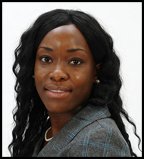
Cleveland, Ohio—The Beta Gamma Sigma Chapter at the Monte Ahuja College of Business at Cleveland State University inducted Joan Curran Darkortey into the prestigious international business honor society on April 11, 2014.

Curran Darkortey will receive an Executive Master of Business Administration degree with honors, graduating magna cum laude from Cleveland State University during the spring commencement exercises on May 10, 2014 at the Bert L. and Iris S. Wolstein Convocation Center.

In recognition of her exceptional academic achievements and scholarship, Curran Darkortey has earned a lifetime membership in Beta Gamma Sigma, which is reserved for the top 10 percent of baccalaureate, and top 20 percent of graduate students at schools accredited by The Association to Advance Collegiate Schools in Business (AACSB International). Membership in Beta Gamma Sigma is the highest recognition a business student anywhere in the world can receive in a business program accredited by AACSB International.

Joan Curran Darkortey was also the sole recipient of the Graduate College of Business 2013 Nance Endowed Academic Scholarship for leadership and commitment to academic scholarship, following a rigorous and highly competitive vetting process.

“As a woman who has worn many hats over the past two years of my program – wife, mother of a two-year old son, full-time worker and full-time student, I feel blessed that my hard work and persistence has paid off. I am deeply honored to receive such amazing recognition and plan to use the skills I have acquired to make a difference in the business world” Curran Darkortey stated.

Joan Curran Darkortey is employed with the Federal Reserve Bank of Cleveland, and has continued to passionately serve her community as a philanthropist, even during the course of her rigorous Executive MBA program. She is Chief Operating Officer & Interim Board Chair of the Liberia Economic Development Initiative (LEDI), a Cleveland-based nonprofit with an international focus to economically empower the impoverished people of the Republic of Liberia.

Joan Curran Darkortey also holds a degree in Paralegal Studies from Clayton State University 2005, and a B.A. political science degree from Emory University, 2002.

Reckless and controversial public servant salary: régime legalizes bribery and normalizes corruption in Liberia

By Sarr Abdulai Vandi Sarr Abdulai Vandi


There is a huge compensation of salary to imported indigene Liberians in the Ellen Johnson-SIRLEAF administration. Paying a monthly salary in excess of US$5K, US$10K, US$15K, US$20K, US$25K and US$30K per month to a public servant in any category is in insane and a reckless pattern of governance that makes public service a path to personal wealth, which is totally out of step with democracies around the world. And especially when such extravagant and massive monthly salaries are being paid to corrupt, unqualified, incompetent, and sometimes misplaced and recycled folks who were in the recent past unemployed, and/or holding menial jobs and occupying marginal positions in the United States, the European Union and the diaspora.

I challenged any of these so-called expert civil servants to make public their pay stubs and employment certificates indicating comparable salary régimes in their previous and/or recent past employments in the diaspora.

The USAID Sensitive But Unclassified (SBU) report findings confirmed that the Government of Liberia (GoL) payroll is dominated by syndicates of corruption at all levels of public administration and the public sector. Ironically, a bogus GoL recruitment incentive programs, the Senior Executive Service (SES) and the UN Transfer of Knowledge through Expatriate Nationals (TOKTEN), has been receiving USAID funding since 2006 to increase the pool of so-called competent civil service managers and employees, which, would have laid the foundation for civil service reforms.

Partisan public servants and preferential ministers in some cabinet ministries, the Legislature, the Judiciary, and a host of other government institutions, including the Central Bank of Liberia (CBL), Liberia Bank for Development and Industry (LBDI), the Liberia Telecommunications Authority (LTA), the Liberia Maritime Authority (LMA), the National Port Authority (NPA). Others are the National Oil Corporation of Liberia (NOCAL), the new Liberia Telecommunications Corporation (LIBTELCO), and the National Social Security and welfare Corporation (NASSCORP).

There is also the Civil Service Administration (CSA), the Governance Commission (GC), National Elections Commission (NEC), Liberia Petroleum & Refining Corporation (LPRC), Liberia Airport Authority (LAA), the Liberia Civil Aviation Authority (LCAA), Liberia Revenue Authorities (LRA), et-al; are commanding these unprecedented and astronomical monetary gains and rewards. Only for being favored and chosen by the tyrant and plutocrat, Ellen Johnson-SIRLEAF!

Many of these beneficiaries are simply masquerading as technocrats and experts. Their qualifications continue to be questioned and their credentials and professional certifications remain in the shadows.

Several of their curriculum vitaes (CVs) are doctored, and majority of them told outright lies about themselves. Many persons in her inner circle claim degrees they did not earn, and attended online, and inferior and open colleges and universities, and other deficient and low quality polytechnic institutes.

Yet, the crooked plutocrat and imperial president continue to defend, appoint, re-nominate, reappoint and recycle cronies and sycophants. It is particularly unsustainable, irresponsible, and bad governance for an impoverished post-conflict country like Liberia to pay its public servants such colossal sums of monies mostly obtained from donor funding and international goodwill. It is estimated that between 2003 and the present, the Government of Liberia has benefited from more than $10 Billion dollars in direct donor subsidy and over $20 Billion dollars in foreign direct investment (FDI) according to government’s own sources and records. The Republic’s foreign debt of $4.6bn (£3.1bn) has been waived, and our national cash-based budget has increased from $80m to nearly $600m. Yet the country wallows in poverty and remains at the bottom of the UN human development index.

These indigenous Liberian importees, and one-time US underclass welfare and perpetual food stamps recipients, and ghetto dwellers are using their newly ill-gained wealth and undeserved huge salaries to buy luxury homes and brands named SUVs (sport utility vehicles) abroad, and provide financial support to their overseas dependent families, concubines and associates.

There is indiscreet and alarming capital flight since July 2006, six months into the initial sitting of the Unity Party administration. Authoritative sources at the Central Bank of Liberia and money transfer centers indicate that fifty ($50M) million United States Dollars is transferred monthly from Liberia to the United States, Ghana, and South Africa and in the European Union and other Western countries by indigenes and residents in the Government of Liberia employment, particularly, the Ellen Johnson-SIRLEAF administration(s).

Still others charter special luxury ambulance flights and purchase deluxe premium class and royal business class tickets to airlift parents, siblings and

friends; for overseas medical treatment and healthcare services, pleasure retreats, offshore marriages and weddings, and birthday anniversaries, and shopping sprees. Whilst the rest of us sink in abject poverty, and deteriorate in health, suffer nervous breakdowns and become insane or die from poor and lack of safe and proper medical care.

Yet, notable others like the late Gabriel Baccus MATTHEWS (2007), Jenkins Kolubah SCOTT (2010), and not long ago, the late former President Moses BLAH (2013), who fell sick, went hungry and zany; and eventually died in abject poverty as a result of selective political neglect and flagrant vengeance administered by the Republic’s cruel, wicked and snobbish president. Both Gabriel Baccus a former minister of foreign affairs and doyen of the cabinet and Jenkins Kolubah former minister of justice and attorney-general, died from depression, and from other ailments associated with loneliness and poverty.

Quite recently, on Wednesday 16 April 2014, Charles Gyude BRYANT, former head of state and Chairman of the National Transitional Government of Liberia (NTGL), was reported dead. The National Transitional Government of Liberia (NTGL) was inaugurated on October 14, 2003 and dismantled on 16 January 2006 to usher in a constitutionally elected president and national legislature. The NTGL took over a deeply troubled and dangerous nation-state and government, and a bitterly divided society and wounded people.

According to the terms of the Accra Comprehensive Peace Accord (ACPA,) each of the factions – GoL (Government of Liberia Forces), LURD (Liberians United for Reconstruction and Democracy), and MODEL (Movement for Democracy in Liberia) – were allocated a share of the leadership positions in Ministries, Agencies, State Owned Enterprises (SOEs), and the National Transitional Legislative Assembly. Civil Society was also allocated a small number of positions. This power-sharing arrangement insured broad representation of all factions across the government.

Reports indicated that the former transitional leader died at the poorly administered, and unequipped and inferior John F. KENNEDY Medical Center in Monrovia after a sudden, massive heart attack.

FrontPageAfrica also reports that interviews with family members, lawyers and close friends on Thursday, 17 April 2014 suggest that Bryant’s last few months on earth was marred by frustration and what the former head of state believes was an unjust treatment by the Government of Liberia and the Unity Party administration of Ellen Johnson-SIRLEAF and company.

The family has declined any government’s posthumous assistance and/or intervention in the funeral arrangements of the former chief of state. Other former Liberian heads of states that were neglected and endured hardships before their deaths include Wilton SANKAWULO (2009), and

David KPORMKPOR (2010). The deceased former officials of government were perceived political opponents and nemesis of the President and some of her operatives.

Deep psychological damage and torture, and physical injuries and abuse remain in the land after an aborted military invasion (1985) and three ruinous consecutive wars, which ran from 1985 – 2003, leaving approximately 350,000 people dead. Liberia’s Truth and Reconciliation Commission (TRC) found the incumbent president and several present officials and others culpable for the wars and annihilating consequences. Numerous rebel factions raped, maimed and killed, some making use of drugged and vitiated child soldiers, and intractable and cantankerous ethnic rivalries and bitterness remain across this West African nation of now more than four million inhabitants.

A former president is serving a fifty-year prison term in Scotland, United Kingdom for crimes against humanity in a neighboring Sierra Leone. Madame President, a war criminal and confessed product and victim of dysfunctional family is incapable, or more correctly, lacks the moral rectitude and fortitude to neither unite and reconcile, nor build a cohesive, transformational, and prosperous nation, society and peoples.

The ghettos, the streets, the lanes, the graveyards and the undergrounds, in Monrovia and other urban centers, have become the nation’s dilapidate sub-cities. These subterranean enclaves comprise more vagrant kids and the girl child, callow and naïve prostitutes, including gays and lesbians; and cracked, and rickety people than at any time in the history of this “Glorious Land of Liberty”. The number has increased fivefold, and progressing since 2006 when Ellen Johnson-SIRLEAF was first inaugurated president of the Republic. The gender candidate prided herself as a mother, grandmother and former spouse with loving, caring, and nurturing and gentle female instincts and qualities.

The fight against corruption is simply political rhetoric and Kum Ba Yah politics. No serious effort has been made to curb, minimize and/or illuminate this national menace. The late indigene Kissi journalist and political activist Saar Thomas KAMARA in one of his legendary editorial commentaries and columns denouncing the corruption craft entitled: The Era of Omertà, published in the Tuesday 8 February 2011 edition of the New Democrat, essentially exposed President Ellen Johnson-SIRLEAF’s duplicity and countenance in the war against corruption.

Frankly, Madame President is disgustingly a recidivist on corruption, favoritism, nepotism, and proper vetting and appointments in government, who is being led astray by grasping chums and subordinates. Put simply, the Ellen Johnson-SIRLEAF administration is the notorious cabal régime of the corrupt, the incompetent, and the banditti.

There was an overwhelming expectation that the first regular post-war government in the Republic might have been representation of the best and the brightest of a new generation of elites - professional, technocratic, internationally experienced, and democratic in orientation. Instead, the two incumbent administrations are a re-incarnation of Liberia’s pre-1980 Americo-Liberian oligarchy, in combination with a disguised continuation of rule by selected warring party elites and miseducated and assimilated indigenes and apologists, and the undertakers.

After almost a decade of the Ellen Johnson-SIRLEAF administration(s), and billions of US dollars in direct budgetary funding for capacity and infrastructure development, and foreign direct investments, the Republic continuous grinding in poverty. Eighty to eight-five (80-85%) percent of Liberia’s work force is formally unemployed, while literacy is estimated to be 15-20 percent. Liberia is one of the poorest countries in the world, with a per capita gross domestic product of $185.

There is huge youth convexity and massive unemployment among the youth, with only 15 percent of general work force formally employed. Education is a messy sector, and the authorities are clueless. The University of Liberia has a zero acceptance rate. Last year in July 2013, 25,000 school-leavers and aspiring college and university students failed the test for admission in the state public University of Liberia. One analyst said, “That is everyone, between. It is pretty incredible statistics.”

Of the estimated 20 percent literacy rate out of a population of nearly 4 Million, a meager 5 percent is truly literate, and the imaginary 15 percent functionally illiterate – meaning the fabulous 15 percent can poorly speak and neither barely read, nor properly write.

National peace and stability remain fragile and there is deficient and lack of reliable and effective security forces, poorly and unjustly functioning justice system, and a reticent legislature and a bribery-ridden judiciary, whose escapades is documented and abound.

The Liberian political analyst and Mo Ibrahim Foundation PhD scholar at the University of London School of Oriental and African Studies (SOAS), Robtel Neajai PAILEY is correct in her recent narratives marking the 10th Liberia Anniversary of the Accra Peace Accord, in the Guardian. http://www.theguardian.com/global-development/poverty-matters/2013/aug/16/liberia-anniversary-accra-ccord-positive-peace.

She was bold and blunt in suggesting that the Republic must mark the 10th anniversary of the Accra Peace Accord by pursuing positive peace, and that the administration must build lasting peace by tackling poverty, inequality and graft.

She eloquently tells us of our national calamity and loses ten years ago. Approximately 250,000 people died. Hundreds of thousands of Liberians fled to other West African countries, while others escaped across the Atlantic. Our roads had holes the size of bomb craters, and our electrical grid was destroyed. Children of school age missed a basic education. Economic activity waned, and Western Union became a household name.

Nonetheless, she said we Liberians may not agree on many things, but we are unanimous about why we do not intend to shun peace. The costs are too numerous to contemplate.

Unfortunately, we lamented that a decade on, we are reminded of how far we have left to go. A raised voice, threats of riot and protest, and overall disillusionment remind us that peace is the mask we wear to hide our fears of violence.

Robtel further reminded us that although the guns have fallen silent, Liberia is experiencing what the social theorist Johan GALTUNG called negative peace – that is, peace derived from the absence of physical violence.

She rightly cautions that over the next decade and beyond, Liberia must strive for positive peace: the absence of indirect, structural violence manifested in poverty, inequality, and impunity.

In addition, that when Liberians publicly rebuke corruption, they are calling for positive peace. When Liberians lament that a third of their land is being leased to concession companies without local consultation, they are calling for positive peace.

Moreover, when Liberians scorn the pay disparities between those who come from abroad and those who remained in the country during the war, they are calling for positive peace. When Liberians call for a war crimes tribunal and full implementation of the Truth and Reconciliation Commission (TRC) recommendations, they are calling for positive peace.

Ms Neajai PAILEY suggests that positive peace requires a movement away from exclusion, marginalisation and economic deprivation, major key causes of Liberia’s uncivil wars. It requires local ownership, agenda setting, and – above all – a commitment to transformation for everyone. In the decade ahead, Liberia should eschew lofty goals, such as achieving middle-income status by 2030, and avoid lengthy roadmaps and ad-hoc committees.

Instead, PAILEY demands that the government should form a pact with its people similar to the Accra Peace Agreement, this time focusing on a positive peace agenda. By identifying five structural reforms that it intends to pursue – (1) decreasing aid dependency by 10%, (2) ensuring quality education through university, (3) instituting a living wage system, (4) renegotiating unfair concessions, (5) and making concrete and tangible inroads on public and private sector corruption – Liberia should focus on achieving these goals in a systematic fashion.

Liberians, friends and partners of the Republic, and those committed to Liberia’s development, must yield and comply with this clarion and propitious call to focus on setting and achieving benchmarks for positive peace. Merely moving towards peace is simply not enough.

Scandal at APRM, Infractions of Amos SAWYER, and a National Tragedy The Liberian corrupt machine has surfaced at the Secretariate of the African Peer Review Mechanism (APRM), in the Ethiopian Capital of Addis Ababa. Having legalized bribery and normalizes corruption in Liberia, the fantastic and spectacular architects and troika - the President, the co-President and the super Minister (Granny, Moose and Amara), have exported their régime of the corrupt and the incompetent in the African Union (AU) Secretariate. Ironically, Dr. SAWYER was recently honored and knighted by President SIRLEAF with Liberia’s highest honors for distinguished leadership service and good governance qualities. He was admitted into the Most Venerable Order of the Knighthood of the Pioneers with the grade of Grand Cordon.

“Who Audits the Auditors: Scandal at the Heart of the African Peer Review Mechanism (APRM)”, is a bold and blunt narrative of corruption and scandal in the APRM agency. It is a well-researched and written article of mismanagement and misappropriation of funds, revealed in Think Africa Press, by the Burkinabe Deutsche Welle investigative journalist Ramata SORE, on 9 April 2014. Ramata SORE exposes corruption and abuse of authority in the leadership of the African Peer Review Mechanism (APRM), the marque governance agency of the African Union (AU) and, the New Partnership for Africa’s Development (NEPAD), respectively.

An initiative of the African Union, the African Peer Review Mechanism (APRM) was established in March 2003 by the Heads of State and Government Implementation Committee (HSGIC) of the New Partnership for Africa’s Development (NEPAD). It is a self-monitoring instrument for assessing performance in governance among the member states. To date, thirty-four (34) Member States have voluntarily acceded to the Mechanism. Seventeen (17) Member States have completed their self-assessment exercise and they have been peer-reviewed by the Forum of Heads of State and Government.

President Ellen Johnson SIRLEAF of Liberia is currently the president of the APRM’s Forum of Heads of State, and Amara Mohammed KONNEH, president of the APRM’s Committee of Focal Points, consistent with his portfolio in the Government of Liberia (GoL). Amos Claudius SAWYER, a former Liberian interim president was the Chairperson of the Panel of Eminent Persons from January 2012 to May 2013, period in which“inside figures allege that the APRM is fraught with corruption and mismanagement and that its integrity and independence have been undermined”. He was appointed, not elected to the APRM Panel of Eminent Persons at the 12th Summit of the APR Forum held in Addis Ababa, Ethiopia in January 2010.

Dr. Amos Claudius SAWYER is at the centre of the corruption scandal, and President Ellen Johnson-SIRLEAF and her blue chip cabinet minister Amara Mohammed KONNEH, were accused of intimidation and cohesion, and the arrogance of power and abuse of authority, to shield and protect Dr. SAWYER. According to the article, “Johnson SIRLEAF seeks to protect SHIFA to prevent the audit of the Trust Fund which may expose Amos SAWYER,” says the insider. SAWYER, the former Liberian president, was the Chairperson of the Panel of Eminent Persons from January 2012 to May 2013, and just before he stepped down personally urged that Shifa’s tenure be extended.

Some suggest that Sawyer is concerned that if Shifa were to be replaced, certain transactions might be exposed. The report alleges that from documents Think Africa Press has seen, there is a record of SAWYER misapplying for APRM funding support. On 21 May, 2011, for example, Sawyer received a letter from the APRM’s Finance Department asking him to reimburse the organisation R58,837 ($5,500). The letter states that Sawyer claimed expenses for a journey from Monrovia to Maputo − which, being for APRM business, would be eligible to be paid for by the organisation − but which first went via Indianapolis in the US. SAWYER was a research scholar at Indiana University. A more direct journey from Monrovia to Maputo would have been much cheaper, and the APRM requested that SAWYER pay back the difference.

According to the report, an APRM insider also claims that Sawyer took advantage in more ways that have not been uncovered. For instance, our source claims Sawyer used APRM funds to pay private healthcare bills and received $9,000 for secretarial expenses, the need for which was never justified with supporting documents.

An Interim President of a National Unity Government arrangement, Amos Claudius SAWYER is a significant figure. A fine and competent academic, he is the godfather and mentor of much of Liberia’s progressive political class. However, and although he is respected in some circles for impartiality, others see him as irrevocably tainted by his actions in the presidency. Principal among these was urging that ECOMOG forces not seek the NPFL’s military defeat. Others hold that SAWYER engages in inappropriate business and financial dealings. The Economic Community of West African States Monitoring Group (ECOMOG) was a West African multilateral armed force established by the Economic Community of West African States (ECOWAS).

Professor SAWYER’s domestic political infractions and intrigues have been tragic and disappointing. Unclassified documents in the research archives of Siahyonkron NYANSOER, a Movement for Justice in Africa (MOJA) operative and Liberia People’s Party (LPP) activist, suggest that the Professor in the past exploited the daily rhythms of our society and nudged the popular political wave to reshape and redefine him even as it amplified his flaws.

There are indications and suggestions that Amos SAWYER has been a lightning rod and has polarized the Liberian People’s Party (LPP) that he once chaired in a way unimaginable. And that during and after his interim years as President of IGNU (Interim Government of National Unity of Liberia 2 September 1990 – 7 March 1994), he left a trail of disappointed friends and former allies, some of whom feel betrayed, and others who barely speak to him over his deception and his alleged shameless financial dealings in the interim period.

The late Sumowuoi PEWU (2001), a former protégé and associate described Amos SAWYER as a spent force and a tragic political figure, a man diminished by his self-inflicted political missteps, and deflated in his relative importance by his own foreordained flaws. He compares Professor SAWYER in Shakespearean folklore’s as a comic figure, who endures all manners of political slips and humiliations to remain alive only to come seeking rehabilitation and redemption from those he betrayed earlier in his journey.

According to Pewu, SAWYER has proven to be a formidable opponent to the building of democratic precepts in Liberia, perhaps, owing to his petroleum deal that rendered him and his business partner Musa BILITY beholden to President Charles TAYLOR (Republic of Liberia, 1997-2003). There are and remain mounting speculations about SAWYER’s numerous shoddy business and financial deals while he served as Interim President. Musa BILITY is alleged to be a crooked businessman and a presidential confidant. He is embroiled in a series of scandalous corruption entanglements, and is currently on trial for tax invasion.

PEWU admits that while many admire Professor SAWYER’s intellectual brilliance and political abilities, notwithstanding, others are equally troubled by his liaisons and the apparent opportunistic relationships he occasionally fostered with individual Liberian régimes, at the expense of democratic forces endeavoring to engender a culture of social justice, peace and reconciliation, democracy and good governance.

He recalls that until the Professor and his preferred protégé, Conmany WESSEH, were brutally assaulted by President TAYLOR’s vigilantes and both fled into exile for the second time in late 1999, Professor SAWYER was the chief spokesperson and an enthusiastic defender of the Charles TAYLOR’s régime and often provided the intellectual muscle needed to rationalize the former President’s indefensible undertakings. He is said to have gone to Washington DC many times at the President’s behest to lobby Congress and State Department officials. Conmany WESSEH is co-founder and an executive director of the Center for Democratic Empowerment (CEDE), with Professor SAWYER.

Moreover, Pewu indicates that Dr. SAWYER is also on record in Abuja, Nigeria, for vehemently asserting in the presence of U.S. Department of State officials, that “democracy mean different thing to different people.” Translation, TAYLOR’s “democracy and governance” might be more applicable in Liberia than that of a western style democracy. Furthermore, the disingenuous professor had argued that the United States and its western allies are being substantially unfair to hold President TAYLOR to higher standards on human rights than they would otherwise in similar cases and circumstances.

Some of the aggrieved Professor’s loyalists, protégés, and LPP cadrés mentioned in one of the publications include, Anthony KESSELLY, John JOSIAH, Steve KONAH, Yanqui ZAZA, and the late Sumowuoi PEWU, among others.

The Liberia Project is a Nightmare and a Colossal Failure

There is imminent state failure, because according to Daron ACEMOGLU and James A. ROBINSON, in their classic Why Nations Fail: The Origins of Power, Prosperity and Poverty (2012), they contend that what separates successful states from failed ones is whether their governing institutions are inclusive or extractive. Extractive states are controlled by ruling elites whose objective is to extract as much wealth as they can from the rest of society. Inclusive states give everyone access to economic opportunity; often, greater inclusiveness creates more prosperity, which creates an incentive for ever greater inclusiveness.

Corruption poses risks to political legitimacy and stability in fragile and weak administrations, including bad and poor governance countries. There is an urgent need for the international community, donor partners and foreign aid agencies to prioritize corrective action on corruption in fragile nation-states and instable administrations. The powerful and prevalent citizen uprisings in the Maghreb region and the North African nations of Tunisia, Libya and Egypt in recent times are a strong and compelling reminder that failure to curb and halt reckless corruption, and desist from imperious rule and autocratic governance can directly affect the legitimacy and stability of suspect political régimes.

Liberia’s political trajectory continuous and remains to be characterized by a system of patronage that is apparent in society, politics, and the economy. The country is emerging from internal conflict and still grappling with pockets at the sub-national levels. Patronage networks in the Africa region are linked to economic crimes, electoral fraud, democratic disenfranchisement, prejudice and exclusion, political terrorism and violence; and rampant corruption, extreme favoritism and flagrant nepotism.

The secret Liberia Governance Stakeholders Survey (LGSS) report suggests that, even though both formal and informal institutions play a role in Liberia’s modern political economy, it is the informal institutions that play critical and influential roles. Those enticing and irresistible informal institutions were identified as corruption, cronyism, and ethnicity, tribalism and religion, of recent gender, patronage and family ties, and sycophancy.

According to the report, powerful and strong formal institutions or think tanks play decisive and vital roles, which enable negative and tempting informal institutions to strive. These principal formal institutions include an imperial presidency and dominant executive, enabled by lack of checks and balances of the legislature and judiciary, weak enforcement and regulatory bodies, ineffective rule of law institutions, poor systems of accountability, an incomplete legal framework, and unimplemented laws.

The LGSS report characterizes the strengths and weaknesses of internal and external agents in Liberia. An agent is one who works for the accomplishment of the goals or objectives of the organisation, conflict resolution, increased understanding, and more leadership. The report suggests that agents are important actors who directly influence the political economy of Liberia. They can be either individuals or categories of individuals, and are characterized into internal and external agents.

Internal agents include political leaders and political parties, and tribal and secret society leaders, who are particularly important vs. professional and business organizations, civil society organizations (CSOs), and community-based organizations (CBOs), which are not as important or influential.

According to the report, there are four highly powerful and influential external agents in the Liberia body politics and political economy. They are (i) bilateral donors, (ii) multilateral development banks, (iii) international organizations (IGOs), and (iv) Multinational Corporations, including concessionaires. Other external agents, such as regional organizations of the African Union (AU), the Economic Community of West African States (ECOWAS), and the Mano River Union (MRU), have less impact in the four contentious and problematic sectors of the Republic’s political economy: payroll, land, concessions, and auditing/accounting, which remain the source of conflict.

The report refers to the above factors in totality as fomenting or impeding change in Liberia and as drivers of change in country-level analysis. Understandingly, the LGSS report identifies the Republic’s principal and significant drivers of change to include urban elites, international donors, the domineering President and her close advisors, government officials who act

with impunity, the belligerent and stubborn remnants of war, and traditional leaders.

Different forms of corruption pose risks to political legitimacy and stability in fragile situations, and what this means for prioritising action on corruption. It focuses in particular on potential types of engagement and support by the international donor community. It also considers how anti-corruption initiatives affect political legitimacy and stability in fragile situations.

Political leaders, lawmakers, government officials, intellectuals, and others influence decision making at both national and sub-national levels. These actors wield a disproportionate amount of political and economic power in “fragile states.” They are political elites, whose views of the state influence state stability. Public perceptions are critical because citizens, often together with elite, may marshal public sentiment to justify or orchestrate popular uprisings. Moreover, a state’s legitimacy is determined by a dynamic between citizens’ expectations and the state’s ability to meet those expectations. If citizens or elites perceive that, the state is failing to meet citizens’ expectations, instability often results and régime imminent.

There is a rebranding of Liberia political and economic patronage on the horizon. It is brutal, pervasive and unprecedented. It comprises an elite cartel and broad-based network of crooked politicians, petite party leaders, unprofessional bureaucrats, fake intelligentsias and functional illiterates, and shadow business people, who share the spoils and benefits among each other. The network binds together and resists pressure from political and economic competitors. Critics are bought off and/or paid off. They are marginalized and often times blackmailed into silence, perpetual dependence, irrelevance and/or rendered inconsequential.

Reconciliation is elusive, and national cohesion is in decline and negligible. The Republic is disintegrating at a fast pace, and the population is disenchanted and restless. The Republic’s social network is a bubbling volcano ripe for dangerous and catastrophic explosion. Major public services are poor, nonexistent and inaccessible, or beyond the reach of majority of the citizens.

Essential elements of brand ELLEN in 2005, and 2011, respectively, were trustworthiness, competence, international contacts and connections, private sector footprint and global reach; virtues the candidate used to contrast herself with other candidates and her predecessors. She promised honesty in foreign policy, efficiency and transparency in economic and fiscal affairs, and the effective and equitable management of the Republic’s resources. She even pledged devolution of governance and precision in governing. We now know that all of the above were empty exaggerations and symptomatic narcissisms.

Furthermore, the President’s Agenda for Prosperity (AfP) and the Agenda for Transformation (AfT), designed at creating a middle-income society by 2030 are Sangoma delusions and Voodoo economics. Both of these policies and strategies are colossal distortions and massive deceptions. The incompetent and inexperienced golden-boy minister, and naïveté minister of finance and economic development, and the Machiavellian Professor and surreptitious chairman of the Governance Commission (GC) are her collaborators in the above scandalous scheme.

The Professor turned Politician is a bankrupt intellectual and a visionless interim leader who jeopardized the state and ceded the Republic. He abandoned the University of Liberia, which severely deteriorated and broke down during his chequered tenure as President of IGNU (the Interim Government of National Unity). The university was his stronghold, where he commanded huge and almost fanatic following and massive support, and impeccable loyalty among rural and impoverished students, and colleagues. Today, he enjoys co-presidential status alongside his compatriot and co-founder of the Association for Constitutional Democracy in Liberia (ACDL).

The ACDL is ancestor to the National Patriotic Front of Liberia (NPFL). Elements of the ACDL founded the NPFL and financed the military wing of the movement, after the failed and lethal Tuesday, 12 November 1985 military invasion by Brigadier General Thomas QUIWONKPA, and his Patriotic Forces, the forerunner of NPFL.

Ellen Johnson-SIRLEAF has been at the center of the past 35 years (April 1979 – April 2014) of Liberia’s chequered history, sowing the seeds of conflict and disunity, agitating and financing rebellions and wars, commandeering poor governance and economic thievery. The woman has shown herself to be an outright fraud and hypocrite of the vilest sort. This writer is completely and thoroughly disgusted with her and anyone who defends her. The lame duck President ought to be forced into retirement at once, without delay, and the constitutional succession mechanism invoked, effective immediately.

Besides, the Omertà type collaborating deals been struck between the President and the Legislature as in September 2012 over the passage of the corruption triggered 2012-2013, and now comparable 2013-2014 national budgets, publicly admitted by the president in a forum organized by the US Foreign Relations Council in New York; legalizes bribery and normalizes corruption in the Republic. Incidentally, both budgets indicate shortfalls; contain astronomical and selected extravagant salary régimes, and lack transparency and accountability.

The post-conflict country and Ellen Johnson-SIRLEAF’s administrations continue to benefit from the most generous international reconstruction support and supplementary budget financing of any recent post-conflict nation.

Liberia’s development partners and member states of the International Contact Group on Liberia (ICGL), in particular, have been most proactive and supportive in the Republic’s rebuilding initiatives and reconstruction undertakings.

Notwithstanding the 2010 national debt waiver by the international lenders that flagrantly increased and recklessly mushroomed to a staggering US$4.9 Billion in the brief tenure and under the signature of then Finance Minister Ellen Johnson-SIRLEAF in the William Richard TOLBERT Jr administration. As of April 2014, our national debt has been reinvented and now stands at a whopping US$1.5Billion, under very peculiar and suspicious circumstances. Perhaps the advancing octogenarian plutocrat is up to her old games and tricks, and is determined to mortgage the Republic before she exits into forced retirement. The new and imminent national debt burden is bound to choke the next generation of politicians and state actors, civil society organizations, the public and national stakeholders.

The 2010 National Debt Waiver: A Gyude BRYANT’s Legacy Incidentally, it was the NTGL’s adoption and successful implementation of the Governance and Economic Management Assistance Program (GEMAP) that qualified Liberia as a Heavily Indebted Poor Countries (HIPC) Initiative client, which precipitated the waiver of the national debt. GEMAP is an effort, started September 2005, by the Liberian government and the international community, via the International Contact Group on Liberia (ICGL) to reshape the fundamentally broken system of governance that contributed to 23 years of conflict in Liberia. GEMAP and subsequently HIPC were Chairman Charles Gyude BRYANT’s signature programs and achievements.

The Governance and Economic management Assistance (GEMAP) signed in Accra, Ghana on September 9, 2005 empowered foreign expatriates to co-manage all of Liberia entities, including those Ministries and Agencies that are responsible for preparing and concluding concessionary agreements. GEMAP was a partnership between the Government of Liberia and the international community to promote accountability, responsibility and transparency in fiscal and financial management.

Featured in a series of world development reports, this ground breaking, multi-donor, multi-million dollar program is emerging as a model for improving governance in post-conflict environments. The majority of GEMAP was funded by USAID and implemented by IBI. Initially, the program was vigorously opposed by the Madame, the Professor, and company.

Because of the positive Liberia project and experience, it has been suggested that GEMAP is now under serious consideration by both academics and policy makers as a tool for other post-conflict states. With greater awareness by donors that they function as ‘investors’ in developing, it is likely that additional GEMAP-like programs will be created in the future in order to provide the ‘investors’ some measure of reassurance that their ‘partners’ are in fact spending their money, as well as the donors’ money, responsibly and with accountability.

Actionable Legislation and curbing reckless hiring and extravagant compensation There must be legislation to limit the incentives and salaries of public officials to enable government keep vital programs revived, funded and active. Correspondingly, rigid requirements must be legislated and competitive vetting criteria introduced and implemented to recruit qualified, competent, experienced, and independent professional public and civil servants, in senior executive service (SES) positions, and not left to the whims and caprices of the cruel plutocrat and wicked witch to recruit and appoint her cronies to positions of wealth and power.

Unless we forget what candidate Ellen Johnson-SIRLEAF said in a 16 July 1997 Special Presidential Elections Address to the Nation, that:

“As a political philosophy, I would like to see the creation of a free and open society, in which the government is democratically elected, and where respect for the rule of law applies as much to those who govern as to those who are governed.

I will set the example by restricting myself to those appointments that are expressly reserved for the president under the Constitution, i.e., ministers, their deputies and assistants, and ambassadors.

Government is a sacred trust and those in positions of trust must be competent. They must be qualified. Nothing is more destructive to a good government than having unqualified people making powerful decisions.

But competence alone is not enough. People in positions of trust must also understand and demonstrate by their behavior that they acknowledge the limits of power. My government will be committed to bringing in the best and the brightest.

There is a need for political renewal. Our history is full of examples of government officials who have not governed themselves by the very laws they created. Efficiency, honesty and the rule of law shall be the bedrock of a Sirleaf

administration. It will apply to those who govern as well as those who are governed.

In concert with the people, our government will seek constitutional reforms to remove the historical impediments to good governance. Accordingly, we will discourage an imperial presidency; promote the political autonomy of local governments within the framework of decentralization. We will advocate leadership rotation and demand accountability at all levels.”

What a political charade and arrogance of power!

I approve and confirm the above quote. I was there and I am principal coauthor of that speech along with Eugene PEABODY, on 16 July 1997.The Special Elections were held on 19 July 1997.


Sarr Abdulai VANDI is University Professor of International Affairs, ITU senior expert, and IBB professor and director emeritus (2000-2010). He initiated the ongoing Liberia telecommunications and ICTs/ICT4D reform process (1999-2004), which culminated into the establishment of the Liberia Telecommunications Authority (LTA). He was first chairman and chief executive of the Liberia Telecommunications Authority (LTA) 2004-2007. He is former Howard University assistant professor, School of Communications (1977-1981), and senior fellow, African Studies and Research Centre (1994-1998), and Minister of Posts and Telecommunications, RL. He was briefly Provost and VPAA, Grand Bassa Community College (GBCC) 2010-2011. Dr. VANDI is principal co-author with the Kenyan academic, Prof. MOHIDDIN of the good governance framework document (UNDESA, 2000), which gave birth to the Good Governance Commission (GC). He is presently in exile in the United States, and can be reached at [email protected].

References http://www.theguardian.com/global-development/poverty-matters/2013/aug/16/liberia-anniversary-accra-accord-positive-peace http://mirror.undp.org/liberia/goodgov.htm http://thinkafricapress.com/politics/scandal-heart-african-peer-review-mechanism Pewu, Sumowuoi D. (2001): Sawyer’s Infractions and LPP’s Cadres, Unpublished Article in the Archives of Siahyonkron NYANSEOR, Lawrenceville, GA USA.


Liberia is hypocritical in the fight for Women’s Rights by applying the 1973 Alien and Nationality Law as amended in 1974

By Emmanuel S. Wettee Angie Brooks Randolph
Liberia produced the late Madam Angie Elizabeth Brooks, the first African female President of the United Nations General Assembly and President Ellen Johnson Sirleaf, Africa’s first female elected President and Nobel Peace Winner.
On July 17, 1984 Liberia became a party to the Convention on The Elimination of all forms of Discrimination against Women of 1979 (CEDAW). By accepting the Convention, Liberia committed itself to undertake a series of measures to end discrimination against women in all forms, including:
• to incorporate the principle of equality of men and women in their legal system, abolish all discriminatory laws and adopt appropriate ones prohibiting discrimination against women;
• to establish tribunals and other public institutions to ensure the effective protection of women against discrimination; and
• to ensure elimination of all acts of discrimination against women by persons, organizations or enterprises.
Paradoxically, Liberia’s current 1973 Alien and Nationality Law as amended in 1974 legally discriminates against women.
For example:
According to ANALYSIS OF THE ALIENS AND NATIONALITY LAW OF THE REPUBLIC OF LIBERIA by the American Bar Association Rule of Law Initiative (2009, p. 16):
The subchapter on Naturalization or Restoration to Citizenship of Special Categories of Aliens of Chapter 21 presents several concerns regarding gender-based and racial discrimination. Section 21.30 permits the naturalization of female spouses of Liberian citizens who are of Negro descent and otherwise conform to the requirements of Section 21.1. However, the subchapter does not permit naturalization of male spouses or persons not of Negro descent.
The law should be amended to avoid discrimination on the basis of gender, in light of Liberia’s obligations under ICCPR Article 23(4) requiring the state to take appropriate steps to ensure equality of rights and responsibilities of spouses as to marriage. It should be particularly noted that, as a woman does not presently have the right to pass on her citizenship to her children, this effectively denies Liberian citizenship to the children of a union between a Liberian woman and a non-Liberian man, in violation of Liberia’s obligations under CEDAW Article 9(2). This provision may also affect a child’s right to acquire a nationality pursuant to ICCPR Article 24(3).
Section 21.31, which states that a child born outside Liberia to alien parents or to a citizen mother and a non-citizen father may become a citizen of Liberia through the naturalization of the father, also raises concerns. This is incompatible with CEDAW Article 9(2), as discussed above, and also is incompatible with contemporary norms of jus sanguinis, which allow the citizenship to be passed on via either the mother or the father.

General recommends proven approach for relief from stress of war and violence

Kulwant Singhph_david_leffler_phdBy Maj. Gen. (Ret.) Kulwant Singh, Dr. David Leffler and David Shapiro


david-shapiro-150In the past 20 years, 18 African nations have been ravaged by war. It is estimated that up to 100 million Africans have been victims of war, violence, sexual abuse or natural disasters or witnessed horrific acts of terror and now suffer from post-traumatic stress (PTS).

PTS disables Africans and prevents people from living happy productive lives. Its influence ripples out, affecting the lives of friends and families, co-workers, communities, nations and Africa as a whole. In many ways, PTS keeps affected communities under the shadow of trauma, even after the overt disturbance has passed. Left untreated, PTS cripples functioning and puts its victims at greater risk for self-destructive and violent behavior: severe depression, alcoholism, drug abuse, anxiety, emotional numbness, unemployment, family problems and suicide.

Experts acknowledge that PTS has been resistant to the many conventional approaches used to treat psychological disturbance. Particularly in Africa, with limited numbers of psychiatrists and psychologists and limited access to physician-prescribed drugs, there is a pressing need for simple, cost-effective and easily sustainable treatments. There is, however, an alternative approach that is highly effective in treating PTS. We suggest that all Africans and in particular all African militaries implement the Transcendental Meditation program because there is a large body of evidence supporting the positive benefits this alternative approach.

A number of pilot studies published in refereed journals have demonstrated that Transcendental Meditation® (TM) can rapidly reduce symptoms of PTS and with regular practice these symptoms are further reduced and a wide range of other benefits is gained.

Transcendental Meditation, also known as TM, is an evidenced-based solution, with a substantial amount of published, peer-reviewed research that has accumulated since 1970. In both case studies and clinical trials, TM has vastly outperformed other modalities by dramatically reducing stress, anxiety, depression and a host of PTS symptoms.

Here are some evidence-based examples showing reductions in *PTS:

  • The February 2014 issue of the
  • Journal of Traumatic Stress documents significant reductions in PTS symptoms within ten days among African war refugees from the Congo who were taught TM. In a month, eleven subjects were virtually free of symptoms.
  • An April 2013 study in the same journal showed that PTS symptoms among African refugees went from “severe” to “non-symptomatic levels” after 30 days of TM and remained low at 135 days.
  • In 2011, the journal Military Medicine published a study showing the effectiveness of TM in reducing PTS in veterans of Operation Enduring Freedom and Operation Iraqi Freedom. Participants had a 50 percent reduction of symptoms after eight weeks of TM.
  • And in 1985, a report in the Journal of Counseling and Development demonstrated a significant reduction of symptoms among Vietnam War veterans practicing TM for at least three months. A control group using psychotherapy was found to have had no significant improvements.

In recent years, military-related leaders in the USA, Latin America, Asia, and Africa, have applied TM not only because it reduces PTS, but because peer-reviewed scientific papers have confirmed that regular practice produces many other wide-ranging, measurable benefits. These include increased intelligence, creativity; reduced stress and improved health; and more fulfilling and harmonious interpersonal relationships. Most importantly to warriors, TM increases resilience, mental clarity and physical strength as well enhancing mind-body coordination (See Defence and Security Alert, Vol. 4, Issue No. 8, pages 34-39). Also, from a practical standpoint, the TM program is easy to do and has no religious philosophy attached. For nearly sixty years it has been taught to millions of people (including schoolchildren and their teachers) around the world from every race, cultural background, religion, ethnicity and educational background.

Numerous studies show that TM uniquely calms the stress of tense, burnt-out, anxious, and depressed people. In particular, a 2013 meta-analysis of 10 controlled studies found that TM significantly reduced anxiety, and the higher the anxiety level, the greater the reduction.

Over 350 research studies on TM have been published in 160 peer-reviewed academic and medical journals. The peer-reviewed process ensured that this evidence-based research met the highest standards. No other stress-reduction program has comparable research support. The American Heart Association, in a Summary Paper, said “the Transcendental Meditation technique is the only meditation practice that has been shown to lower blood pressure.”

Retired U.S. Army Reserve Colonel Brian Rees, M.D., M.P.H., primary author of the previously mentioned Congo studies and veteran of five tours of duty in Afghanistan and Iraq, says that Transcendental Meditation “provides the mind and body with a unique state of ‘restful alertness’ that reduces deeply-rooted stress and improves brain function.”

In 2011, the David Lynch Foundation and African PTSD Relief co-sponsored an initiative to make the Transcendental Meditation program initially available to 10,000 Africans suffering from PTS. We support this initiative. Any organization, whether a school, business, or a military, would be pleased to know that its members are operating free of PTS. They would also want to be more effective and efficient, whether during war or peace. We recommend that TM be put on military training programs because it brings out the best in any individual, and any military would be pleased that its warriors are working at their optimal levels.

The TM evidence-based research tells an objective story pointing to a simple, fast, and cost-effective solution for not only conquering PTS, but to help alleviate many of Africa’s other pressing problems. Achieving lasting happiness and peace-both inner and outer, that’s what we all want for all African people, sooner, if possible, than later.

The authors urge African leaders to adopt this evidence-based program.

*Note: A table listing the American Psychological Association’s twenty DSM-5 symptoms of Post-Traumatic Stress Disorder (PTSD) along with the scientific research conducted on the Transcendental Meditation program published in peer-reviewed scientific journals addressing each of these symptoms/criteria is available online at: http://www.davidleffler.com/tm-reduces-twenty-symptoms-of-ptsd.


Major General (Ret.) Kulwant Singh, U.Y.S.M., Ph.D., leads an international group of generals and defense experts that advocates Invincible Defense Technology. He was awarded the Uttam Yudh Sewa Medal, the second highest decoration for senior officers during operations in Sri Lanka as part of IPKF (Indian Peace Keeping Force).

David Leffler, Ph.D., is Executive Director of the Center for Advanced Military Science (CAMS). http://www.StrongMilitary.org. He served as an Associate of the Proteus Management Group at the Center for Strategic Leadership, US Army War College. Dr. Leffler is the author of “A New Role for the Military: Preventing Enemies from Arising - Reviving an Ancient Approach to Peace.” He is on Twitter.

David Shapiro, M.A., is Founding President of African PTSD Relief (Twitter: AfricaPTSRelief, YouTube video: http://www.davidlynchfoundation.org/africa.html#video=goWNosrfFvI), an Iowa, US non-profit, charitable corporation dedicated to reducing PTS across Africa by teaching the Transcendental Meditation program to individuals or groups with PTS or at risk of getting PTS. He is a co-author of the two research studies on TM and PTSD in Uganda. For information on African PTSD Relief or to implement a program, please contact David Shapiro at [email protected].


Liberia’s 2014 midterm elections: A missing link

Liberian electionsBy Ralph Geeplay


Eight years into post-war Liberia, the West African state goes to mid-term elections this year. Only that the country will be electing members of the Liberian Legislature for the third time, yet, municipal elections were never ever considered.

Reports say, while much has been written about decentralizing political power in the country so that executive administrative governance is affected and felt, the issue is still a floating posted mail! Observers also say, governance largely in Liberia has been fundamentally academic and no political will harnessed—on the part of those who currently hold state power to effectuate this all important state matter.

Simply put, electing mayors for Liberia’s major cities including Monrovia and county superintendents for important counties like Nimba etc., has been lost to the quiet wind of lip service.

President Sirleaf petitioned the Liberian Supreme Court on the matter few years into her presidency and it granted her a favorable opinion under the Lewis bench, the argument was made that the president could appoint governors until it had the budgetary allotments to do so, but since then nothing has been done. Why not hold the presidential and legislative elections and and county wide elections which could see superintendents and mayors elected also? It makes sense.

Post-war Liberians know all too well the noise these past few years which have surrounded Madame Mary Broh’s appointment and reappointment to the post of city mayor of the Great City of Monrovia. Yet say some, if Monrovia had a legitimate elected city mayor with full powers vested and constituted by its citizens, perhaps in the first place, Monrovia would have been a less contentious issue and place, and perhaps a much cleaner and greener city! There are less independent executives in the country to prove their mantles and show their talents as leaders.

Even as the country approaches 2017—hence, any executive powers there is today in the country is bestowed by the presidency—not good! It is mayors who lead successful economic sensible campaigns; and superintendents who do the most to lead and improve the lives of the people, are those Liberians would look up to. It is those who lead and change the lives of their people are those who will because of their policies, start the exodus of the people from Monrovia’s slums!

Romeo D.N. Gbartea, in his researched paper: ‘Decentralization: Prospect for Sustainable Development in Liberia,’ argued that “the Government policy document which is the Poverty Reduction Strategy sees decentralization as the way to improve governance over time, increase transparency of government processes, enhance accountability, promote democracy and reduce poverty and ensuring the fulfillment of the Government’s responsibilities to serve the Liberian people.”

Gbartea then asked,” But, what is the government doing to ensure that the mandate of the PRS is implemented to the fullest”? He gives due credit to the Governance Commission for crafting national public policies measures and initiatives to foster the governance process in post-war Liberia, but added, “decentralization becomes [a] threat when the central authority does not want to transfer some powers to the local authorities.”

“The basis for losing [some] control [of power to] the local authority is the best fear.” He also talks about the lack of political will, adding “Some central political actors are certainly threatened by decentralization. Some are simply reluctant to release power…The National Legislature has not made the National Policy on Decentralization and Local Governance a priority for constitutional referendum.”

Upon her election as Liberia’s first post-war and Africa’s first female president, Johnson Sirleaf said in her first Inaugural address on January 6, 2006, that she would ensure that “ government,” would under her leadership come “closer to the people, assuring that “ the days of the imperial presidency,” as she assume the mantle of state was “over in Liberia.” Nothing has been done significantly to change that, say observers.

“Every Dick and Harry, Muna and Monsu wants to be senator and representative in Liberia these days. One, because there are fewer offices to run for besides these seats in the country, and two, these guys are well paid,” says a staffer at the Capitol Building in Liberia’s capital of Monrovia.

Says an analyst, because of these reasons, Monrovia is still the only centre of power in the country. Important counties like Lofa and Maryland etc, have no independent administrative executives vetted by the people to do their work. Instead though, presidential appointments continue to dominate as it imposes superintendents and mayors on a population that demands development, which local elected leaders could deliver. The national legislature which should be the leading voice on the issue in the country, reports say, is busy increasing its remunerations and perks instead of taking on the all-powerful imperial presidency.

There are great potentials to reap, political and economic watchers say, to the national growth both in the body politic of the nation and the broader dialogue to decentralize political power in Liberia, which ultimately could improve the livelihood of the average Liberian in these troubled post war times.

There is a need for strong elected mayors in Kakata, Pleebo, Careysburg, Buchanan and Fishtown! So too, do we need competent superintendents in Cape Mount, Bong, Grand Gedeh and Montserrado! It seems these coming elections there is a missing link.

Will there ever be a political will on the part of our current leaders to put this critical issue back on the national agenda?

I would like to think so.

Ralph Geeplay is editor of the Liberian Listener

Anthony Kanneh, Acting National Executive Chairman, UPUSA Impeached

The National Association of Members of the Unity Party in the Americas / Diaspora Anthony Kanneh - Unity Party, USA

OFFICE OF THE NATIONAL CHAIRMAN OF THE BOARD OF DIRECTORS, UPUSA


April 24, 2014

Impeachment and Removal from Office as Acting National Executive Chairman of UPUSA

Cognizant of the duties and responsibilities of the National Board of Directors and that of the Association and mindful that the National Leadership in the Diaspora must evolve through the tenet of rigorous participatory democratic and legislative proceedings; the National Board of Directors, with recommendations from the National Executive Counsel, hereby effect impeachment proceedings as follows:

WHEREAS the honorable Anthony Kanneh, Acting Chairman of the National Association of Members of Unity Party in the Americas was duly, in continuation of leadership as provided for by ARTICLE VII: SECTION D AND COUNT IV of the constitution “in the event of removal from office, death, resignation or incapacitation of the National Chairman, the 1st Vice Chairman shall assume the duties and functions of that office”; to serve the Members and fulfill the purposes of said organization’s constitution and professional ethics; and

WHEREAS the provision of the constitution specified in Article VII: Duties and Responsibilities of National Officers;

i. Board of Directors:

ii. In the absence of the National Convention, the Board of Directors shall be the highest decision-making body of the National Association and shall make decisions reserved for Convention. The Board shall be vested with legislative powers and shall have oversight responsibilities over the National Executive Committee of the Association;

iii. The Board shall comprise of seven (7) members who will be appointed by the various chapters of the Association. Each Chapter shall appoint only one Board member after a careful and judicious vetting process;

iv. Board members shall be appointed for a term of four (4) years. They may succeed themselves for as many times as their Regional Chapters may choose or decide;

v. The Board may evolve its own leadership structure and rules by which it shall be governed. It shall also establish criteria and determine cause and extent by which actions may be taken against its members. And with the concurrence of two-thirds (2/3) majority of its members, it may expel a Director;

vi. In the case of a vacancy involving a Regional Chapter representative, the Chairperson of the Board shall through the National Chairman inform the appropriate Chapter to fill the vacancy;

vii. The Board shall have the authority to impeach and remove from office elected officials of the National Association for cause and after due process;

viii. The Board shall approve election guidelines for the election of members of the Executive Committee;

ix. The Board shall approve the annual budget of the National Association and direct all audits of officers and members entrusted with the finances of the National Association;

x. The Board shall approve all contracts with financial obligation of more than $1000. It shall also ratify all agreements between the National Association and other parties;

xi. The Board shall meet in regular sessions at least every three (3) months. A simple majority shall constitute a quorum, and decisions shall be made in the form of a resolution. The Board may convene in the event of an emergency;

xii. During instances of misunderstanding arising from the interpretation or intent of the Constitution and By-Laws of the National Association, the Board shall have the sole authority to intervene and make final determination;

xiii. Only the National Convention may override the decision of the Board; and

WHEREAS, the National Board of Directors, after three weeks of careful deliberations finds actions on the part of Hon. Anthony Kanneh, inimical and counter- productive to the growth and development of the National Association thereby further dampening Inter Regional

Chapter Relationships in the diaspora; due to the gravity of this offence, the Board, in its sitting and judicious prudence, served a six months suspension of Hon. Anthony Kanneh as of November 11, 2013; and

WHEREAS, in complete disregard to the constitution and the decisions of the National Board of Directors; while serving suspension, Mr. Kanneh had engaged in the following actions:

* On November 26, 2013 served an expulsion letter from UP-USA ref. NAUP/USA/ANC/145 to Hon. Leo Mulbah, Secretary to the National Board of Directors , an elected official from Georgia Chapter;

* On November 26, 2013 served an expulsion letter from UP-USA ref. NAUP/USA/ANC/143 to Hon. Samuel E. Greaves, Chairman of Delaware Valley Chapter;

* On November 26, 2013 served an indefinite letter of suspension ref. NAUP/USA/ANC/144 to Hon. Arthur Quaye, Delaware Valley Chapter’s Board Representative;

* On November 26, 2013 served an indefinite letter of suspension ref. NAUP/USA/ANC/142 to Hon. Henry Y. Kessessly Sir, Chairman Minnesota Chapter;

* Led an array of delegation on February 1, 2014 to the funeral of partisan Hawa Kpakah and eulogized on behalf of UP-USA, sat up accounts, collected and disbursed funds to bereaved family on behalf of UP-USA;

In keeping with the configuration of the National Association, Mr. Kanneh continuous actions to expelled these elected officers without affording them due process stands in shape violation as enshrined in ARTICLE XIX REMOVAL OR DISMISSAL OF ELECTED OFFICIAL(s)

Only the Board shall preside over proceedings for impeachment or removal of elected officials. Any elected official may be removed from office by a two-third (2/3) vote of the Board members after being accorded due process as guaranteed by this Constitution.

NOW, THEREFORE, BE IT RESOLVED, that the National Board of Directors, in its April 24, 2014 sitting unanimously VOTED TO IMPEACH and REMOVE Mr. Anthony Kanneh as Acting National Chairman of the National Executive Council of UPUSA . The decision is supported by enormous evidence of total disregard to the National Association and wanton violation of our

constitution and unprofessional code of ethics. It is by no means philosophical differences but rather the legal authority of this body in the absence of an annual convention. Therefore, the NATIONAL BOARD OF DIRECTORS deemed it illegal and unauthorized, thus anyone interacting with Mr. Anthony Kanneh as Chairman of the National Association of Members of Unity Party in the Americas will be doing so at his/ her own risk. Main while, Mr. Isaiah Teasley will serve as Acting Chairman for UP/USA to replace Mr. Kanneh and will have the legal authority to plan and effectively organize our next Annual Convention at which time a new set of leaders will be elected. We hope Mr. Kanneh could avoid any legal actions by the Board starting from the date this communication is published.


As we strive to improve UPUSA, I remain

Philip Jorgu

Mr. Philip Jorgu


Chairman

National Board of Directors

UPUSA


CC Regional Chairs

UP/USA


CLLR. Varney Sherman

Chairman

Unity Party, Republic of Liberia


Hon. Jeremiah Solunteh

Liberian Ambassador

United States of America


General Secretary

Unity Party, Republic of Liberia


Her Excellency Madam Ellen Johnson Sirleaf

Gyude Bryant deserves a state funeral

Gyude BryantBy Thomas Bedell


I have been reading in the dailies that the family of Chairman Charles Gyude Bryant are rejecting the participation of the Liberian government in the funeral ceremonies that will take him to his final resting place, thus taking away his rightful dues as a former head of state of the Republic of Liberia.

I don’t know how true this is but I will say what I said when some Liberians in the US refused to give Madam Ellen Johnson Sirleaf the courtesy to speak to Liberians during her travel to the US, to make campaign statement during the 2005 Presidential election.

I said to those Liberians who refused Ellen a platform to speak to her fellow compatriots: “What the heck; let the oldma speak!”

The reason those Liberians did not want Ellen to speak at the time was because of the statement she reportedly made: “Level the Executive Mansion and we will rebuild it.” And of course she admitted making those comments during the early days of the civil war that plunged the nation into decadence.

All things considered, I thought the oldma needed to speak. And she did!

I will say the same today, “Heck, let the Liberian government give Gyude his dues – give him a state funeral with a 21-gun salute. He deserves it!”

Did the Liberian government do any harm to Chairman Gyude? Probably, it did! But does that take away from him his dues as a former Head of State of the Republic of Liberia? I say no!

Take a step further and ask: “Did the Liberian government treat the body of President William Vacanarat Shadrach Tubman – the nation’s longest serving President the same way when he died?

But did Tubman not get his due respect as a former Head of State of the Republic of Liberia? Yes, he got it!

Don’t stop there.

Ask the late William Richard Tolbert, the 19th President of the Republic of Liberia.

Did the Liberian government and some Liberians treat President Tolbert right? I’ll bet! he’s gonna say, hell, no!

Well then, heck! Let Chairman Gyude, our Honorable Chairman, get his honors! It could have been worse!

Ask our former President who now sits in prison in the White man’s country, His Excellency Charles Gankay Taylor, whether or not the Liberian government treated him right? The answer is a resounding no! But does that take away his dues as a former President of the Republic of Liberia? Heck, no!

Well then, let Gyude get his props! Let him get a state funeral with all the pomp that comes with it! He deserves it!

What’s about President Samuel Kanyon Doe?

Does one think Doe was happy over the manner in which the Liberian government and other Liberians treated and continue to treat him after his death? If you ask me, I’ll say no!

President Doe was openly bludgeoned and murdered in the open for the world to see. Did that take away his respect as a former president of the Republic of Liberia? Heck, no!

Well, review the scope of things with His Excellency Moses P. Blah.

I understand President Blah cried his way into the earth asking for help from the Liberian government. But he was denied help. Did the Liberian government treat him right? Of course not!

So, I say, heck! Let Chairman Gyude get his props, dues and salute right now! No one should deny him his dues!

There’s more. And all of those former presidents, dead or alive, have reasons to cry out loud for justice.

All I am saying is, let Chairman Gyude get his 21-gun salute.

Everything that the Government of Liberia allegedly did to him just go into the pages of history. Anyone responsible for all that was wrongfully done to Chairman Gyude will have to give an account in the future.

Go Chairman Gyude! go home and join our martyrs in the Great Beyond. Whatever you have done for our country will be left with history. Honorable Fidel Castro says it right, “History will absolve me.”

Indeed, “History will absolve” Chairman Gyude!

Farewell! Chairman Gyude, farewell!

May your soul rest in Perfect Peace and Light Perpetual shine upon you! Pass on our love and respect to the rest.

Long Live Liberia!

Thomas Bedell can be reached at [email protected].