Subscribe via RSS Feed

Archive for July, 2014

Our Lady of Lourdes Parishioners in the Americas, 2014 Reuinion

Our Lady of Lourdes Parishioners in the Americas will have its reunion activities in Lawrenceville, Georgia August 8-10, 2014. We will Blay Jerbohdiscuss among other things ways to better help our parish, better way to set up a feeding center for the poor people in our community in Liberia.

Delegates are expected to arrive on time to have a great reunion. The event will include dinner and grand ball to raise funds for our projects in Tweh Farm, Bushrod Island.


Reunion Events

August 8

Arrival of delegates

618 Briarhurst Court

Lawrenceville, Gorgia 30046


August 9

Programs and Meeting

St. Lawrence Catholic Church

319 Grayson Hwy,

Lawrenceville Georgia 30045


August 9

Occasion Dinner and Grand Ball

618 Briarhurst Court

Lawrenceville, Gorgia 30046

7:00p.m. to the wee wee hours


Thanks,


Mr. Blay Jerboh

Reunion Host & Coordinator

678-372-1222


Liberia's Ebola crisis and presidential incompetence

By Tewroh-Wehtoe Sungbeh Patient with the Ebola virus


The Ebola virus started in neighboring Guinea. Sadly, it is now Liberia’s turn.

With its deadly symptoms of diarrhea, vomiting, internal and external bleeding, the virus is causing pain and heartaches among the Liberian people.

A country that just came out a civil war and continues to struggle from the ravages of that deadly war shouldn’t have to grapple with the Ebola virus and the painful tragedies it continues to dish out to the Liberian people.

At least Liberians who wants nothing but peace, security, good health and prosperity in their country understands where I am coming from; and wishes that the Ebola virus will go away completely before it throws our people and country back million years.

With bad political leadership making life even unbearable, and uncertainty about the strategy the Sirleaf administration is using to fight the deadly virus makes it even more troubling to know how long, and how many people must die before the Liberian government fights back?

So far, it seems the Liberian government of Madame Ellen Johnson Sirleaf is not fighting back harder enough to at least contain the virus, and instill confidence in a traumatized people who cannot shake off the virus that looms in the country.

Anxieties are building up and national chaos has become the way of life in a country where the strong are always expected to survive, and the weak are being buried either fast or not so fast to enable the strongest and the willing to bury the next victim.

So frustrated with the incompetence of the do-nothing president and the Ministry of Health for the death of his 14-year old brother , one Edward Deline set the ministry on fire to protest his brother’s death from the Ebola virus. As the number of Ebola deaths inches upward, other Liberians who lost relatives to the virus could take matters into their hands by setting buildings on fire, or fatally injuring government officials.

The number of deaths caused by the Ebola virus is over 100 and counting, and the value Liberians, including elected and appointed officials place on human life in this era since the end of the civil war that reportedly killed over 200,000 is at its lowest.

“I saw so many people including my friends and relatives died around me during the civil war. This time when I see people dying, it concerns me; but I just continue to go wherever I am going. There is nothing I can do but protect myself,” a Liberian whom I discussed the Ebola pandemic with said.

The same Liberian told me during our phone conversation that Liberians who believe they are not infected with the Ebola virus are hurriedly moving to other parts of the city of Monrovia, hoping to get away from their sick friends, relatives and their neighborhoods.

If what he told me is true, and if nothing is done to aggressively fight the deadly virus, than sadly, the Ebola virus will definitely be around Liberia for a long, long time.

Because what is happening is as those people who are understandably in a panic mode moved from one location to the other, it is possible for an infected individual or a group of people to unknowingly take the virus with them and spread it to their new locations and their new neighbors.

In this case, the Sirleaf administration should have intervened immediately by discouraging and stopping (for the sake of public health and public safety) the movement of people from one area of town to the other, since one of the few ways to contain the Ebola virus is to monitor people and quarantine those that are believed to be sick with the virus.

Hopefully, Liberians will not see my suggestion of discouraging or preventing the movement of people from one part of town to the other in this Ebola virus era as tramping on the civil liberties of Liberians.

As a frequent critic of Madame Sirleaf and the Sirleaf administration, I will be the first to criticize her and protest such decision had it not been about protecting the Liberian people from the Ebola virus. However, protecting the Liberian people and the Liberian nation are my concerns at this moment.

As is the case with most decisions coming out of Liberia and the Sirleaf administration, the Liberian people are always left out of the decision-making process. Also, in most cases with Liberian presidents (the current president is no exception), Madame Sirleaf is so worshipped and feared that she often gets away with murder.

With the stubborn Ebola virus undermining the daily activities of the Liberian people, and also claiming the lives of their relatives and loved ones, has it ever occurred to the national legislature to ask the president or her senior health officials to testify before them to know what they are doing to contain or eradicate the Ebola virus in the Liberian society?

Or since the Ebola crisis has been mishandled in an incompetent way by the president and her health officials, is Madame Sirleaf capable of garnering the courage to resign the presidency or fire Dr. Walter T. Gwenigale, her Minister of Health who has been on the public dole forever, and has mishandled this crisis?

If President Sirleaf refuses to resign, and if Dr. Gwenigale is not fired by Sirleaf, hopefully, a new administration will do the right thing by getting rid of him and bringing in young and dynamic medical professionals who are in tune with the modern practices of medicine that can make a difference in the country.

The Ebola crisis is a mournful headliner and an unnecessary distraction in Liberia right now.

Depending on how quick the crisis is dealt with to prevent more deaths and heartaches for Liberian families, this health crisis is destabilizing lives, and could also affect the midterm elections.


Liberia’s Ebola crisis and presidential incompetence

By Tewroh-Wehtoe Sungbeh Patient with the Ebola virus


The Ebola virus started in neighboring Guinea. Sadly, it is now Liberia’s turn.

With its deadly symptoms of diarrhea, vomiting, internal and external bleeding, the virus is causing pain and heartaches among the Liberian people.

A country that just came out a civil war and continues to struggle from the ravages of that deadly war shouldn’t have to grapple with the Ebola virus and the painful tragedies it continues to dish out to the Liberian people.

At least Liberians who wants nothing but peace, security, good health and prosperity in their country understands where I am coming from; and wishes that the Ebola virus will go away completely before it throws our people and country back million years.

With bad political leadership making life even unbearable, and uncertainty about the strategy the Sirleaf administration is using to fight the deadly virus makes it even more troubling to know how long, and how many people must die before the Liberian government fights back?

So far, it seems the Liberian government of Madame Ellen Johnson Sirleaf is not fighting back harder enough to at least contain the virus, and instill confidence in a traumatized people who cannot shake off the virus that looms in the country.

Anxieties are building up and national chaos has become the way of life in a country where the strong are always expected to survive, and the weak are being buried either fast or not so fast to enable the strongest and the willing to bury the next victim.

So frustrated with the incompetence of the do-nothing president and the Ministry of Health for the death of his 14-year old brother , one Edward Deline set the ministry on fire to protest his brother’s death from the Ebola virus. As the number of Ebola deaths inches upward, other Liberians who lost relatives to the virus could take matters into their hands by setting buildings on fire, or fatally injuring government officials.

The number of deaths caused by the Ebola virus is over 100 and counting, and the value Liberians, including elected and appointed officials place on human life in this era since the end of the civil war that reportedly killed over 200,000 is at its lowest.

“I saw so many people including my friends and relatives died around me during the civil war. This time when I see people dying, it concerns me; but I just continue to go wherever I am going. There is nothing I can do but protect myself,” a Liberian whom I discussed the Ebola pandemic with said.

The same Liberian told me during our phone conversation that Liberians who believe they are not infected with the Ebola virus are hurriedly moving to other parts of the city of Monrovia, hoping to get away from their sick friends, relatives and their neighborhoods.

If what he told me is true, and if nothing is done to aggressively fight the deadly virus, than sadly, the Ebola virus will definitely be around Liberia for a long, long time.

Because what is happening is as those people who are understandably in a panic mode moved from one location to the other, it is possible for an infected individual or a group of people to unknowingly take the virus with them and spread it to their new locations and their new neighbors.

In this case, the Sirleaf administration should have intervened immediately by discouraging and stopping (for the sake of public health and public safety) the movement of people from one area of town to the other, since one of the few ways to contain the Ebola virus is to monitor people and quarantine those that are believed to be sick with the virus.

Hopefully, Liberians will not see my suggestion of discouraging or preventing the movement of people from one part of town to the other in this Ebola virus era as tramping on the civil liberties of Liberians.

As a frequent critic of Madame Sirleaf and the Sirleaf administration, I will be the first to criticize her and protest such decision had it not been about protecting the Liberian people from the Ebola virus. However, protecting the Liberian people and the Liberian nation are my concerns at this moment.

As is the case with most decisions coming out of Liberia and the Sirleaf administration, the Liberian people are always left out of the decision-making process. Also, in most cases with Liberian presidents (the current president is no exception), Madame Sirleaf is so worshipped and feared that she often gets away with murder.

With the stubborn Ebola virus undermining the daily activities of the Liberian people, and also claiming the lives of their relatives and loved ones, has it ever occurred to the national legislature to ask the president or her senior health officials to testify before them to know what they are doing to contain or eradicate the Ebola virus in the Liberian society?

Or since the Ebola crisis has been mishandled in an incompetent way by the president and her health officials, is Madame Sirleaf capable of garnering the courage to resign the presidency or fire Dr. Walter T. Gwenigale, her Minister of Health who has been on the public dole forever, and has mishandled this crisis?

If President Sirleaf refuses to resign, and if Dr. Gwenigale is not fired by Sirleaf, hopefully, a new administration will do the right thing by getting rid of him and bringing in young and dynamic medical professionals who are in tune with the modern practices of medicine that can make a difference in the country.

The Ebola crisis is a mournful headliner and an unnecessary distraction in Liberia right now.

Depending on how quick the crisis is dealt with to prevent more deaths and heartaches for Liberian families, this health crisis is destabilizing lives, and could also affect the midterm elections.


Visa cancellation and war crime news in Liberia: The sad truth

By Arthur B. Dennis War crimes


After reading FrontPage Africa news story on the visa cancellation of certain government officials in Liberia, we prepared this article on our sick bed in order to share the sad truth with our fellow Liberians at home and abroad. The information contained herein was obtained from the laws and official policies published by U. S. Departments and agencies operating under the U. S. Federal Government.

Alien Tort Claims Act and Torture Victim Protection Act

History tells us that the Founding Fathers of the United States fled religious persecution in England and arrived in North America to establish a nation of their own where human rights abuses and other unspeakable crimes against humanity would be strictly prohibited.

In their first initiative taken on September 24, 1789, the U. S. Congress enacted the Alien Tort Claims Act, granting Aliens the right to sue a person in any U. S. Court for civil offense committed in a foreign state in violation of international law. But because only Aliens had the right to sue, not U. S. Citizens, not very much was achieved under this Act.

On March 12, 1992, the U. S. Congress enacted the Torture Victim Protection Act to supplement the 1789 Alien Tort Claims Act. The new provision enacted in the 1992 Act was threefold. First, U.S. citizens and aliens have equal right to file a human rights lawsuit in U.S. Courts against any person for torture or extrajudicial killing perpetrated in foreign countries. The slogan for the 1992 Act was “No Safe-Haven for Torturer.”

Second, the accused perpetrator (s) of Torture or Extrajudicial killing must have acted alone or acted on Government orders. Third, the Act provides that if the perpetrator is residing in the United States, the family of the victim of the extrajudicial killing or torture, can file a complaint to U. S. Department of Justice or to any U. S. Court for judicial remedies.

We understand Chucky Taylor was prosecuted and convicted under this Act. Several other aliens living in the United States, who were identified and convicted of perpetrating torture and extrajudicial killing in foreign countries, have also been deported since the 1992 Act came into force.

No Safe Haven Policy for Human Rights Violators & War Criminals

The September 11, 2001 terrorist attacks in the United States opened the eyes of U.S. policymakers not only to purge the country of aliens with tainted human rights character but also to deny entry to war crime suspects wishing to use America as a safe haven to escape justice.

To achieve this end, on November 25, 2002, the U. S. Congress created the Department of Homeland Security where the U.S. Bureau of Immigration and Custom Enforcement(ICE) was transferred with its Homeland Security Investigation (HSI). In October of 2009, the Human Rights Violators and War Crime Center, which began in 2008 as a pilot project under ICE Bureau, was created and mandated to carry out the following “NO-SAFE HAVEN” missions:

(1) To prevent the admission of foreign war crime suspects, persecutors, and human rights abusers into the United States.

(2) To identify and prosecute individuals who have been involved or responsible for the commission of human rights abuses across the globe.

(c) To remove, whenever possible, those offenders and war crime suspects, who are located in the United States.

The U.S. Human Rights Violators and War Crime Center is mandated to also target perpetrators of Genocide, Torture, Child Solder Recruiters, Naturalization Fraud, Visa Fraud, False Statement Providers, and other crimes prohibited by U.S. Federal Statutes and international laws.

The list of aliens denied entry into the United States as well as those deported from the country under the operations of the Human Rights Violators and War Crime Center will be published in our next article.

Meanwhile to boost the U.S. No-Safe Haven initiative, U. S. President Barrack Obama, on January 15, 2013, signed into Law a War Crime Reward Program established under U.S. Department of State.

The Reward Program seeks to reward five-million U.S. Dollars to any person who provides information, leading to the arrest of certain wanted war crime suspects, (like Uganda Rebel Leader John Koney) wanted on international arrest list. The Office of Global Criminal Justice headed by Ambassador-At-Large Stephen J. Rapp, supervises this reward program.

U. S. Justice Dept. Human Rights and Special Prosecution Section

On March 30, 2010, the U.S. Department of Justice created a Human Rights Special Prosecution Section to be the law enforcement and prosecution arm for the Tort Claims Act, Torture Victim Protection Act, and the Human Rights Violators and War Crimes Center.

Therefore, the uncomfortable truth is that the visa cancellation news coupled with the war crime rumors in Liberia could be largely centered around the implementation of these laws by the U.S. agencies listed above.

Though we do not have the exact number of people being targeted in the U. S. data base for entry denial or deportation removal, based on the information provided above, FrontPage speculations on the human rights and war crime concerns as the underlying cause of these developments seem to bear some undeniable truth.

Meanwhile on the question of the war crime rumors , here is what we know in truth and reality. First, on July 17, 1998, Liberia signed the Protocol for the International Criminal Court (ICC) and ratified it on September 22, 2004 to be a part of Liberian Criminal Laws.

Thus, under the principle of complementarity adopted under the ICC Statute, Liberia is required to try war crimes committed on its territory. Or if Liberia is unable or unwilling to do so, the war crime prosecutor will have no option but to request the government to hand over the accused persons.

Second, under Article 24 of the ICC Statute, the International Criminal Court absolutely has no jurisdiction over war crimes committed before July 1, 2002. Thus, only war crimes committed after July 1, 2002 in Liberia can be prosecuted by Liberian Government or international war crime court.

Third, Article 26 of the Statute expressly provides that persons under the age of 18 at the time of the commission of war crimes, are exonerated from criminal responsibility. Their commanders bear the burden of their crimes under the doctrine of command responsibility. It is these commanders that the U.S. “NO-SAFE HAVEN” Policy is also targeting. THE END.


Arthur B. Dennis, a Retired Army Brigadier-General, holds a hybrid Liberian citizenship, and also holds a naturalized U. S. Citizenship. He can be reached in New Jersey at [email protected] or 609-328-5260.

Presidential characters and the road to 2017

By Jefferson Davidson Kwame Clement


Historically, there has not been much evidence that a two-term ruling party was successful in winning a third term presidency. But you know in Liberia, the possibility of strange things happening is not as strange as many are aware. Like Napoleon said: “In politics, stupidity is not a handicap.” And in the Liberian parlance it is often said that “poverty is no respecter of persons.” Legitimizing wrong decisions during electioneering processes is not unique to us Liberians.

In this piece of narrative which shall overtime form the basis for more narratives, I present a clear and stumbling block analysis of the likely would-be key players for the Liberian presidency come 2017. In my analytical opinion, I then dissect them, and finally pass a thin judgment on their standing. To admit, it is not a fair deal, but the truth be told, I do not know most of the candidates and as such submit myself as been bias in my narrative. The rationale basis is that some of the presumed presidential candidates are still sucking on the breast of the current regime and are afraid to announce their intentions, while there are many others still testing the waters financially, socially and spiritually.

Many are called but few are chosen; and on that basis I have elected to deal with seven would-be “presidential” candidates (George Weah, Augustine Ngafuan, Charles Brumskine, Mills Jones, Benoni Urey, Kwame Clement and Joseph Boakai) who are likely to be running . The order of names does not signify the candidates’ standings with the Liberian people. In subsequent time, I will publish a “standing report” based on a nationwide survey.

George Weah was considered iconic and a political idol during the 2005 elections. His glory was grossly due to his passionate and resounding statement “love for country” but more importantly, his popularity as a football legend of all times. However, this glory has faded with changing times including the ages of the voting population. Most of the kids born after 1993 cannot speak much to the legendary characteristics of Manneh (His native name), and this is not their fault simply because politics is present history.

Secondly, Manneh is seemingly been guided by the wrong people. First he started out as a presidential candidate, and six years later became a running mate to the lesser known Winston Tubman. And finally has announced his intentions to contest the senatorial seat for Montserrado County. The implications for all this flip-flopping is that Manneh’s credibility and popularity are by themselves taking a downward slope like his decisions. So it is gradually becoming obvious that Manneh, by nature of his own character, will likely be the king maker of his own dilemma.

At an institutional level, the Congress for Democratic Change represents one of the most disorganized and immature political houses in the country. Few characteristics: the CDC speaks disjointedly on national issues, is quick to suspend members for negligible reasons, expels members that take up issues with the Party and even give ultimatums to associating members. All of these negativities no doubt are the pathways to political failure. Politics is about numbers, reconciliation and respect, but the CDC sees it differently.

Augustine Kpehe Ngafuan, a man of great intelligence and integrity, a former student leader par excellum, and a man of great public service recognition. Ngafuan has good standing within the chambers of the youth population, especially the various universities. His candidacy is a clarion call to rid Liberia of the “old school never die politicians” and replace them with hard working and integrity driven characters. As doyen of the Cabinet, he has managed to extend his tentacles at the international level. Meeting with presidents and diplomats has enabled him to sell his ambition quietly.

However, in spite of the distinctiveness of this emerging leader, the question that begs answer is: “Which party will carry his load and give him that needed support”? Probably if he works hard and wins the confidence of Her Excellency, he could be the next standard bearer of the Unity Party. This task is not impossible, especially in the Unity Party. Mournfully, like in my opening statement, the history of a ruling party winning three successive elections is skewed around the world. However, if the question: “Is the people stupid” is answer in the affirmative, then Like Ellen, Ngafuan would be in the line up to remake history.

Accordingly, Ngafuan is seemingly the craftsman of his woes. Close friends say the comrade is low on interpersonal relationship, and surrounds himself with people he can easily manipulate. There are still others who maintained that Ngafuan has been too slow in helping some of his closest friends from BWI and the UL with jobs based on their qualifications and expertise. If these allegations are true, then it is also very hurtful as well. The best thing to do is to start rebranding himself by seeking reconciliation with his colleagues.

Charles W. Brumskine has carved for himself a legacy as the authoritative voice of the Bassa People. His popularity swelled during the ending days for former president Charles Taylor. Even though he had no party of his own by then, he was hailed as the consensus national alternative to Charles Taylor. But all of that changed when the political playing field became so leveled. More hurtful to the Liberty Party big Whig presidential ambition was the late and unexpected entrance of the CDC into the national political space.

The ghost of the besmearing accusations of Brumskine’s role in the Status of Forces Agreement (SOFA) is quietly dissipating into the unknown. However, his problems are far from over. Many, mostly those that have not come into close contact with him have accused him of being a proud fellow with branded arrogance. Yet still few others despise him for being too well dressed even during casual engagements. As cheap as the latter may seem, be reminded that in Liberia, politics can sometimes be an art of stupidity.

Brumskine’s poor showing in the 2011 elections due to what partisans attributed to the lack of money may speak decisively to his return on the political Broadway. Importantly, Brumskine’s political career could be in serious jeopardy if Senator Findley wins the senatorial seat in Brumskine’s backyard (Grand Bassa County).

At the Party level, Liberty seems very responsible as compare to CDC. The order of public speaking is uniformed and less aggressive. The Chairman of the Party has been able to carefully maintain an order in policy and analysis of national issues. What remains a greater challenge is how these fine attributes of a well organized and moderate Party can help transform Brumskine into a fine and submissive candidate. But importantly, LP also needs to rebuke the devil of “lack of money” and call on the gods of “more money” if they should make any meaningfully impact in 2017.

Mills Jones a very good man wanting to move Liberians out of the dungeon of entrapped poverty, and has not expressed his interest for the presidency yet. However, there are signs on the wall that his ambition is gravitating towards that line. His monetary approach at poverty alleviation has earned him a big space in the hearts and minds of the downtrodden masses. In the voters’ paradise, what you see is not always what you get. The recent legislative act calling on officials of government interested in contesting for elected positions to resign is a test of his continuous goodwill to the underprivileged and destitute. If he continues unabated he could be a serious contender in 2017.

To the contrary of his good nature, people allegedly close to him say he is arrogant and boisterous and has flagrant disregard for his fellow men. How true this information is remains uncertain given the fact that people will always have something to say about anyone. Further to this alleged accusation is the question of which party will Mills run on? Will he form a merger with Senator Prince Y Johnson? Will he join the Unity Party or the Congress for Democratic Change in the coming future? Mills may certainly not have the luxury of time on his side, and additionally, rented crowd are all money choppers. Winston Churchill says: “Healthy citizens are the greatest assets any country can have” but do we have healthy citizens or poverty stricken citizens?

Benoni Urey appears to be a quiet man with fewer words. His entrance into the political sphere raises questions about his real intentions. Most Liberians know Benoni for two things: Former Maritime Commissioner, a share holder in the LoneStar Cell communication, and an agriculturalist. So his pronouncement came as a surprise to many. Urey chances are great, especially as he has announced his intentions sooner than expected. His trailblazing all over the country is gaining traction gradually.

The Friends of Urey, most of whom are members of the National Patriotic Party are working overnight to sell him quickly to the Liberian people. Selling Urey is less difficult in the less conscious parts of the country that once enjoyed and still reminisces the days of former president Charles Taylor. Urey has not mentioned or does not have a political homestead; whether it is with the NPP or the CDC. Fresh from sanction, Urey could put sand in the eyes of old timer politicians.

Kwame Clement a former news reporter and currently a Washington D.C based super lawyer is speculatively in the running for the Liberian presidency as well. History been told, Kwame was the first and possibly the only candidate that defeated the Student Unification Party in an ULSU elections in the early 80s.

Politically, not much is known about him, and as a matter of fact he has been out of the country for a long time. His appearance on the political stage will be rather strange for both his name and his social or political standing. Tina Fey could be correct when she states: “Politics and prostitution have to be the only jobs where inexperience is considered a virtue.”

In terms of institutional affiliation, Kwame is said to the progenitor of the Alternative National Congress (ANC). The Party itself is riddled with political leftovers from the CDC, including the curly Chairman. As a recently registered political party, the ANC will have to work overtime to create an image based on trust, credibility and integrity.

Finally, though speculatively a Liberian but with a ‘Kwame’ (Ghanaian name) at the center stage of this newly break-away Party, many Liberians will be wondering whether the country is so much politically bankrupt as to look the “Ghanaian way.” But like I said, anything is possible in Liberia because the question: “Is the Liberian people stupid” has not been answered to the contrary, overtime.

Joseph Boakai may not be the tiresome old man that many Liberians think he is. While the President has not outrightly announced her support for a two-term vice president, there are signals that he may be the “Jose Mourino” of UP. Joe Boakai has a commanding authority within the rank and file of UP with a right hand of support from its chairman, Varney Sherman. Furthermore, Joe Boakia, it is rumored has more support in the Lofa and Margibi (Firestone Belt). Importantly, his base in Monrovia is gradually swelling in the Kissi Community, including the Chicken Soup Factory area.

The flip side of Joe Boakai is that his successes may turn into failure if the UP government shows nothing for its 12-year rule. Secondly, age may be another impeding factor, though he looks weary and overwhelmed by fatigue, there are rumors that JB will be 69 years of age come 2017.

So if JB decides to run, Ngafuan will have to make way for his uncle. But even if JB is the Ellen-anointed, Liberians may not want to see one Party taking up 18 years of their precious time. And more noticeably, it is only rumored that JB is likely to be chosen by Ellen, and as a matter of fact the implication could be more devastating for his campaign. Remember Bill Clinton and Al Gore?

There are more names like Kofi Woods, John Morlu, Prince Johnson, Simeon Freeman, Alex Tyler and the list of political jugglers. Ruling them out of the package may as well be a bias approach. After all, Ronald Reagan says: Politics is not a bad profession. If you succeed there are many rewards; ft you disgrace yourself you can always write a book.” In Liberia, if you disgrace yourself as a presidential candidate, you can further disgrace yourself by hustling for a superintendent or an assistant ministerial position.

So those that are unelected should not just consider themselves as total failures even though most of them already know their potential and outcomes of their participation in the coming elections. And like Chris Hedges said: A society without the means to detect lies and theft soon squanders its liberty and freedom.”

We can only hope that the right decision is made by simply electing the right people into power. For redeeming the time requires characters with trust and credibility. Characters that will lead us down the road to redemption, and not characters that will lead us down the road to perdition.

email: [email protected]


Expunging Our National Symbols of Falsehoods: A Rejoinder to James Thomas-Queh's "Preserve our Historical National Symbols, But Cleanse Our Minds into a Positive Future"


By Siahyonkron Nyanseor & J. Kpanneh Doe Liberian national symbols
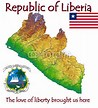
 

This rejoinder is a response to James Thomas-Queh’s article: “Preserve Our Historical National Symbols, But Cleanse Our Minds into a Positive Future” published in the July 2, 2014 edition of theperspective.org. While we find the discussion of our national symbols very important, on second thought, we considered it a distraction from the burning issues that confronts our country today, which includes the worsening economic inequality, growing youth unemployment, poor health conditions, an outdated educational system that is producing a generation of functional illiterates, and a host of other socioeconomic problems that has trumped this discussion.

In other words, our people are more concerned with ‘bread and butter’ issues now than things that are abstract they cannot connect with. If this debate was being held 10 years ago when the country was poised for a new political renewal, it may well have generated tremendous interest - but the newly-elected national leadership chose not to give it the necessary attention that it deserved.


The debate, however, still remains relevant to the future of our country. Both Judge Gladys Kiawion Johnson and James Thomas-Queh, though coming from different perspectives, presented some very valid points that are worth considering. Judge Johnson radical proposition that our national symbols, i.e., flag, motto, etc. should be changed to reflect our African or cultural identity has some merits as we are African people and we should be proud of whom we are. However, Thomas-Queh’s central thesis that we should preserve our national symbols in its current state is also equally relevant insofar as these symbols have become an important part of our national identity, for well over a century and the half.

Wow, Liberia, 167 years old in a few weeks! What a history, a flawed history in many respects, but a history we continue to honor. I think the real challenge is how do we find a balance that preserves this history, but at the same time expunging it of those elements that are not healthy for building a robust democracy. The Flag is a classic example; it is a replica of the flag of the United States of America, and the motto is very divisive.

The question is how does one preserve historical national symbols that are not inclusive, and at the same time cleanse one’s mind into having a positive future? Is it true to say that because something is historical, therefore, it needs preserving?

We think not! If as Thomas-Queh argued that symbols or history should be preserved than the enslavement of African people should be celebrated. We argue the opposite; because something is historical does not mean it should be preserved and the truth about it not be told and corrected.


Apart from the flag and the motto, there are other very important national symbols we can look for that can unite us in this discussion. For example, some countries have found unity in such things as a national fruit (Kenya, we believe uses Orange or Banana or Orchid); a national sport (South Africa has Rugby); a national dish (Ethiopia has the Injera meal); a national music; a national color; a traditional national language (Tanzania has Swahili-a language that is widely spoken in East Africa); and many more. South Africa, for example, took an important step during its post-Apartheid era to foster unity and reconciliation.

One of the things Mandela and the ANC did was to preserve (accept) some of the symbols of the Boer Afrikaneers who had lived in South Africa for more than 300 hundred years and also controlled political and economic power in that land. They allowed the Afrikaneers, for example, to keep their national anthem, while the ANC introduced its own anthem- Nkosi sikelele (God Bless Africa). Both anthems are sung whenever South Africa holds major national events. Can we do such a thing as Liberians? Moreover, South Africa has adopted Rugby (originally played by Afrikaners, but now played by a lot of Black South Africans. Of course, soccer will eventually outgrow this…).


In some enlightened Liberian circles, it is being suggested that at this point in our history, we ought to have several of our traditional native languages taught in the schools starting at the primary level. Out of the 16 or more languages spoken by our people, two or three of the languages that have established written scripts should be introduced. Those being suggested for consideration are Vai, Kpelle, and Kru. Many more can be introduced with time. How about the “VAI” shirt as traditional national attire?


Another thing we ought to consider is how we name our streets, schools, holidays, public buildings, etc. In Liberia, the Tubman name and names of Americo-Liberian culture are almost everywhere as if no one of any significance has ever existed in Liberia prior to their arrival to the area known today as Liberia. This has to change! We need to develop a tradition of assigning names to our public spaces in honor of those who have made significant contribution

to promoting unity, peace, and democracy. There are so many unsung heroes and heroines, both living and dead, who are yet to be given their well-deserving honor. Meanwhile, the national leadership continues to promote a tradition of honoring some distinguished Liberians with a national symbol called the “The

Liberian Humane Order of African Redemption,” or “The Most Venerable Order of Knighthood of the Pioneers of the Republic of Liberia” that has historically been divisive and should be discontinued.


There are other arguments that Thomas-Queh make, two of which we will address in this article. The first is:


….Whether we accept it or not, Liberia was founded by the American Colonization Society (a philanthropic NGO), and not the government of the United States. And if this humanitarian NGO was not farsighted enough to have associated the name of US President James Monroe to our national capital – Monrovia, and the flag and constitution crafted after those of the United States – probably there would not have even been a Liberia. France and Britain would have certainly absorbed our tribes into their protectorates. So there are no inconsistencies or contradictions, but mere pragmatism, farsightedness and common sense that we seem to lack today in finding for our nation a sense of direction and purpose.


In the first place, Thomas-Queh did not introduce new scholarship into the debate; he relied on the manner in which *“tales of the hunt is told by the hunter,” or Columbus’ discovery of America, an area occupied by the Native American population.


President James Monroe, like most white Americans of his era, was a racist and bigot who having benefitted from slaves’ labor did not want them living as free citizens in the United States. Therefore, he and those who shared similar belief came up with the scheme to deport them out of America. We agreed with Thomas-Queh that there won’t have been a Liberia, but there would have been a country with another name; so what is his point? What are the “inconsistencies or contradictions, mere pragmatism, farsightedness and common sense that we lack today in finding for our nation a sense of direction and purpose?”


Secondly, to refer to the American Colonization Society (ACS) as a philanthropic NGO or humanitarian NGO is like rewarding Lucifer for making SINS attractive to mankind. In short, the ACS was not philanthropic or humanitarian! Henry Clay whom Clay Street is named after, helped establish

and became president of the American Colonization Society (ACS); the group that came up with the colonization scheme to remove freed blacks (African American) slaves to Africa, and to establish Providence Island in ‘Dukor;’ later named, Monrovia for the purpose of re-settling freed blacks. Such a scheme in today’s language is called, ‘forced deportation.’ On the amalgamation of the black and white races, Clay is on record to have made the following statement:

“The God of Nature, by the differences of color and physical constitution, has decreed against it” — the removal of Blacks from North America so as not to intermingle with whites. Clay went on to preside at the meeting of the founding of the ACS. The meeting was held on December 21, 1816. The founding members were all white Americans. The meeting that was held at the Davis Hotel in Washington, D.C., was attended by Robert Finley, James Monroe, Bushrod Washington, Andrew Jackson, Francis Scott Key, and Daniel Webster.


This brings us to the MYTH of Matilda Newport in Liberian History, whose annual celebration – December 1st- Thomas-Queh wants us to continue celebrating because of her alleged victory against the “16 hostiles (sic) tribes on the ground”. Did the Battles of Fort Hill (the Gatoomba War of 1822) involve 16 hostile tribes? This is new to us!


Thomas-Queh’s article is also replete with restatement of faulty accounts of the ‘history of Liberia’. The two paragraphs listed below are examples of the restatement of faulty accounts of Liberian history without bringing to the debate new scholarship.


Thomas-Queh writes:

First, the assertion that the Americo-Liberians preferring to be called Congos is a “false label” is far from the truth; the denomination Americo-Liberian was the real false label. By acceptance of the label “Congo”, it was to manifest the desire of the Americo-Liberians to assimilate into their African roots. And how could we question that when the Congos were their first important African immigrant community, with whom they had more affinities than the 16 hostiles (sic) tribes on the

ground. In fact, our history has proven all along that the Americo-Liberians have assimilated other African immigrants much easier in order to reinforce the strength of their tribal grouping vis-à-vis the other existing 16 tribes. And this is a (sic) normal survival instinct in the pioneering of nations. So Liberia has 17 distinct tribes (well, unless the Liberian Congos object to being classified as a tribal grouping).


We do not understand Thomas-Queh’s here; but let’s move on!


When President Tolbert established the Commission to review our national symbols in the early 1970s, he underestimated the consequences of the resentment from his own Congo tribal grouping. And that was among the reasons for which the recommendations of that Commission never went beyond the renaming of the “Front Street” to Chief “Sao Boso Street”

and abolishing of the famous “Matilda Newport Day” (December 1st). But even with this minimum gesture, the damage was already done; the confidence of his own group was gone for exposing them to ridicule. And were we thoughtful and objective then - as we still not today - we would have known that the Matilda Newport myth was serving mainly to honor the courage and bravery of all the women of Liberia. And without this myth, how could the hegemony of Liberian women be at the helm of power today?


Was the reason the Commission’s recommendations “never went beyond the renaming of the “Front Street” to Chief “Sao Boso Street” and abolishing of the famous “Matilda Newport Day” (December 1st)” because Tolbert “underestimated the consequences of the resentment from his own Congo tribal grouping?”

We do not think Tolbert underestimated the reactions of the ruling class; he knew precisely what he was doing when he made the proposal.

In a piece written by this writer (Nyanseor, December 2003 & January 2004) December 1, 2003 and January 7, 2004, Siahyonkron Nyanseor, published in theperspective.org, two articles titled: “Putting the Matilda Newport Myth to Rest - Parts I and II”, research refuted the claim that Matilda Newport performed the heroic task as written in Liberian History.


The Matilda Newport Myth in the History of the Settlers

According to Jane J. Martin and Rodney Carlisle, Liberian history tells the tale of Matilda Newport and the Battles of Fort Hill (the Gatoomba War of 1822) and her famous deeds - similar to that of Joan of Arc. Reportedly, she fired cannon using a coal from her pipe and destroyed the Dey warriors. She has been characterized as “Liberia’s Joan of Arc” and called “This Sainted Mother.” In the

annals of Liberian history, she is ranked among the likes of “Cleopatra and Queen Elizabeth I of England.” In textbooks written by both Liberians and non-Liberians, Matilda Newport is described as “pipe-puffing, be skirted, widowed, occasionally as from Georgia, sometimes as a teacher. She was ‘intrepid,’ quick-witted, acting calmly and with complacency.” (Jane J. Martin and Rodney Carlisle, “The Search For Matilda Newport” research study conducted in 1975 at the University of Liberia).


In fact, President Edwin Barclay continued the Matilda Newport myth by dedicating this poem, “Silent Deeds,” in her honor:


Silent Deeds


‘Tis not the fame of blackest shame

That makes our neighbor’s virtue less:

‘Tis not great deeds proclaimed abroad

That can our vileness e’er repress;

But pure soul-searching principles,

A soul that’s great, a heart that seeks

A mind from vileness free.

The mystic Trinity.

‘Tis not the wealth of coin and health

That makes one man o’er others blest;

‘Tis not earth’s fill of happiness;

‘Tis not good motives unexpressed:

But ‘tis the wealth of sacred love;

Good thoughts in deeds expressed

A sweet commune with heavenly souls,

That give the spirit rest.


Full many a flower of sweetest fume

Oft wastes its sweetness midst the thorn;

Full many a bud of brightness bloom

Wakes not to see the light of morn;

But this makes not its sweetness less,

Nor shades its brilliancy:

It lives in silence, and alas,

It dies, but happily!


This list provided below supports the findings of the research conducted by Martin, Carlisle and Nyanseor. Between1820-1843, there were only three (3)

Newports that went to Liberia; among them was Ralph Newport, who in 1820 was 17 years of age. Later, Ralph Newport married Matilda Spencer when her husband Thomas Spencer was killed in one of the battles that took place in 1822. The same 1820-1843 Emigrants Roll showed a 25 year-old Matilda Spencer, a wife of Thomas Spencer (32 years old).

Based on available sources, Matilda Newport was a real person who resided in Liberia during that period. She came to Africa on the “Elizabeth” March 9, 1820 at the age of 25 as Matilda Spencer not Matilda Newport. Matilda was the wife of 32 years old Thomas Spencer. According to the records, she was illiterate (could not read nor write). She was no school teacher as she’s portrayed in Liberian history books.

During the Battles of Fort Hill, Matilda Spencer was 27 years old. Had she performed the deed she is credited with, she would have been known as Matilda Spencer, and not Matilda Newport. Probably, her husband, Thomas Spencer was killed in one of the conflicts. According to the Emigrant List, Spencer died as a casualty in 1822. Matilda Spencer married to Ralph Newport her husband’s friend sometime after 1822. Her story borne of the need to pass on the so-called victory of the Settlers over the natives, and it was nurtured through myth of larger-than-life proportions, passed on as a ‘Griot’ would do regarding family history.


The Matilda Spencer Newport story is woven in myth that is passed on as a tradition from generation to generation until it was discontinued as an official holiday by the People’s Redemption Council (PRC). And it is our belief that history should be written in such a way that it will enable students to distinguish between those aspects of the subject which are based on facts, and those which lean more heavily on myth and fable.

Unlike African historians like Chieka Anta Diop, most early Liberian historians wrote history to glorify the past no matter how inaccurate the account of the past was. Diop sought to expand the role played by history in the day-to-day life of all people. He did not undertake the study of Africa’s “past to generate a mere collection of data to be used for contingent reference, or a catalog of persons and places and a picturesque list of political events”.


As a matter of fact, African Liberian history can be traced from their activities with Europeans - such as the Normans who visited the Liberian shores in 1364; Pedro de Cintra in 1461, the English in 1551, 1556, 1562, 1564 and 1567; a German-Swiss by the name of Samuel Braun in 1611, the Dutch in 1626 and 1668 and the French in 1725. Therefore, to suggest, “The cannon went off. The sound was so loud, it frighten (sic) the attackers who had never seen such a discharge of firing power before.” It is not only a BIG LIE but a ridiculous portrayal of African Liberians. In fact, during this period, some of the natives were literate; they traded and interacted with the Portuguese, Dutch, French, and Germans prior to the arrival of the Settlers. Common sense tells us that in order to carry out these activities or transactions, some of them had to speak and understand some of these languages.


CONCLUSION

“Let sleeping Dog Lie” is how some Liberians want to treat lies uncovered, which is a typical Liberian behavior – “Your leave the people’s thing alone” or “Mind your own business!” For example, when Dr. Martin discussed their research findings with one of her Liberian colleagues, it was condemned as a “futile exercise in scholarship, serving no useful purpose except to exhume attitudes and words better left buried with the past.” (The highlight is ours).


The PAST as part of history cannot remain buried; especially the stories of a people who has had extensive interaction with Europeans prior to the arrival of the Settlers (Americo-Liberians), and who are portrayed as stupid, “savage, primitive, and belligerent people?” The portrayal of African Liberians in “Liberian history” written by these Liberian historians or so-called “scholars” and their contemporaries resembles some comic script out of Hollywood, which depicts Native Americans in similar vein - Cowboys/Scouts as smart and

intelligent, always victorious in their battles with Native Americans. This is the same manner in which Liberian history was written.


Since new evidence has proven Matilda Newport’s so-called victory to be FALSE, the People’s Redemption Council (PRC) did the right thing to abolish a celebration whose aim it was to divide the Liberian people rather than unite them. To continue this type of ‘scholarship’ will only satisfy the segment of the Liberian society who find pride in promoting and celebrating antebellum southern cultural practices.


Therefore, as Liberians, it behooves us to make it our mission to base our account of history of the people of Africa, Liberia in particular on facts by applying that which modern technology has to offer in order to acquire the correct perspective on African history, culture and tradition so as to wrestle from the clutches of the distorters of our civilization and history - who are bend on keeping up such tale as Matilda Newport’s alleged victory against the natives of Liberia. Instead, we should do as one patriot suggest, “to produce one people that shall see with one eye, think with one mind, feel with one heart, and work for one purpose – the building up of a strong and exemplary Negro Republic on this continent, small but elastic enough to accommodate all the sons of Africa who wish to become Liberians ‘for the love of liberty’”.


A wise man once made this profound statement: “He who cannot remember the past will be condemned to repeat it”. This should be our mission! This exercise should be seen in that light. We certainly seek the Truth, and not to offend anyone group in particular but rather to do the right thing. We seek the Truth in the hope of effecting change of attitude. This is in no way an attempt to change history (what has already taken place) but rather to correct history and put Liberian history in its proper perspective.

*An African proverb reminds us that, “Until lions have their own historians, tales of the hunt shall always glorify the hunter”.


Sources

Jane J. Martin and Rodney Carlisle, “The Search For Matilda Newport” research study conducted in 1975, published in the Liberian Studies Journal.

Honorable D. Twe (Didwho Twe) 1926 Matilda Newport Day Oration.

Thomas-Queh, James, “Preserve Our Historical National Symbols, But Cleanse Our Minds Into A Positive Future”, theperspective.org, July 2, 2014.

Siahyonkron Nyanseor, “Putting the Matilda Newport Myth to Rest - Parts I and II,” theperspective.org, December 1, 2003 and January 7, 2004.

Shick, Tom W., Roll of Emigrants to Liberia, 1820-1843 and Liberian Census Data, 1843.

Sawyer, Amos C., The Emergence of Autocracy in Liberia, Tragedy and Challenge, 1992.

Recommended Readings

Mohamedu F. Jones, Esq., “Matilda Newport and the Miracle at Crown Hill”, published in the December 5, 2003 edition of theperspective.org.

Fred P. M. van der Kiaaij, “Matilda Newport (1822) and the civil war”, posted on December 1, 2008 on Dr. van der Kiaaij’s website.

Theodore Hodge, “The Controversy of the Legendary Matilda Newport”, published in the December 1, 2003 edition of theperspective.org.

S. Jabaru Carlon, “Some Disturbing Voices Are Arising”, published in the January 7 2004 edition of theperspective.org.

J. Kpanneh Doe and Siahyonkron Nyanseor, “‘Coups’ & Building Tyranny”, published in the April 17, 2001 edition of theperspective.org.

Siahyonkron Nyanseor, “A Cultural Legacy of False Starts”, published in the November 16, 2000 edition of theperspective.org.

Siahyonkron Nyanseor, “Unraveling Our Past to Make Necessary Corrections”, published in the February 28, 2001 edition of theperspective.org, in celebration of Black History Month.

Siahyonkron Nyanseor, “Americo-Liberians: The 17th Tribe of Liberia - Parts I & II”, published in the May 22, 2013 edition of theliberiandialogue.org.

Siahyonkron Nyanseor, “Liberian History 101: The Man Called D. Twe”,

June 11, 2014 edition of theperspective.org

Siahyonkron Nyanseor can be reached at: [email protected]; also, J. Kpanneh Doe can be reached at: [email protected].

Expunging Our National Symbols of Falsehoods: A Rejoinder to James Thomas-Queh’s “Preserve our Historical National Symbols, But Cleanse Our Minds into a Positive Future”


By Siahyonkron Nyanseor & J. Kpanneh Doe Liberian national symbols


This rejoinder is a response to James Thomas-Queh’s article: “Preserve Our Historical National Symbols, But Cleanse Our Minds into a Positive Future” published in the July 2, 2014 edition of theperspective.org. While we find the discussion of our national symbols very important, on second thought, we considered it a distraction from the burning issues that confronts our country today, which includes the worsening economic inequality, growing youth unemployment, poor health conditions, an outdated educational system that is producing a generation of functional illiterates, and a host of other socioeconomic problems that has trumped this discussion.

In other words, our people are more concerned with ‘bread and butter’ issues now than things that are abstract they cannot connect with. If this debate was being held 10 years ago when the country was poised for a new political renewal, it may well have generated tremendous interest - but the newly-elected national leadership chose not to give it the necessary attention that it deserved.


The debate, however, still remains relevant to the future of our country. Both Judge Gladys Kiawion Johnson and James Thomas-Queh, though coming from different perspectives, presented some very valid points that are worth considering. Judge Johnson radical proposition that our national symbols, i.e., flag, motto, etc. should be changed to reflect our African or cultural identity has some merits as we are African people and we should be proud of whom we are. However, Thomas-Queh’s central thesis that we should preserve our national symbols in its current state is also equally relevant insofar as these symbols have become an important part of our national identity, for well over a century and the half.

Wow, Liberia, 167 years old in a few weeks! What a history, a flawed history in many respects, but a history we continue to honor. I think the real challenge is how do we find a balance that preserves this history, but at the same time expunging it of those elements that are not healthy for building a robust democracy. The Flag is a classic example; it is a replica of the flag of the United States of America, and the motto is very divisive.

The question is how does one preserve historical national symbols that are not inclusive, and at the same time cleanse one’s mind into having a positive future? Is it true to say that because something is historical, therefore, it needs preserving?

We think not! If as Thomas-Queh argued that symbols or history should be preserved than the enslavement of African people should be celebrated. We argue the opposite; because something is historical does not mean it should be preserved and the truth about it not be told and corrected.


Apart from the flag and the motto, there are other very important national symbols we can look for that can unite us in this discussion. For example, some countries have found unity in such things as a national fruit (Kenya, we believe uses Orange or Banana or Orchid); a national sport (South Africa has Rugby); a national dish (Ethiopia has the Injera meal); a national music; a national color; a traditional national language (Tanzania has Swahili-a language that is widely spoken in East Africa); and many more. South Africa, for example, took an important step during its post-Apartheid era to foster unity and reconciliation.

One of the things Mandela and the ANC did was to preserve (accept) some of the symbols of the Boer Afrikaneers who had lived in South Africa for more than 300 hundred years and also controlled political and economic power in that land. They allowed the Afrikaneers, for example, to keep their national anthem, while the ANC introduced its own anthem- Nkosi sikelele (God Bless Africa). Both anthems are sung whenever South Africa holds major national events. Can we do such a thing as Liberians? Moreover, South Africa has adopted Rugby (originally played by Afrikaners, but now played by a lot of Black South Africans. Of course, soccer will eventually outgrow this…).


In some enlightened Liberian circles, it is being suggested that at this point in our history, we ought to have several of our traditional native languages taught in the schools starting at the primary level. Out of the 16 or more languages spoken by our people, two or three of the languages that have established written scripts should be introduced. Those being suggested for consideration are Vai, Kpelle, and Kru. Many more can be introduced with time. How about the “VAI” shirt as traditional national attire?


Another thing we ought to consider is how we name our streets, schools, holidays, public buildings, etc. In Liberia, the Tubman name and names of Americo-Liberian culture are almost everywhere as if no one of any significance has ever existed in Liberia prior to their arrival to the area known today as Liberia. This has to change! We need to develop a tradition of assigning names to our public spaces in honor of those who have made significant contribution

to promoting unity, peace, and democracy. There are so many unsung heroes and heroines, both living and dead, who are yet to be given their well-deserving honor. Meanwhile, the national leadership continues to promote a tradition of honoring some distinguished Liberians with a national symbol called the “The

Liberian Humane Order of African Redemption,” or “The Most Venerable Order of Knighthood of the Pioneers of the Republic of Liberia” that has historically been divisive and should be discontinued.


There are other arguments that Thomas-Queh make, two of which we will address in this article. The first is:


….Whether we accept it or not, Liberia was founded by the American Colonization Society (a philanthropic NGO), and not the government of the United States. And if this humanitarian NGO was not farsighted enough to have associated the name of US President James Monroe to our national capital – Monrovia, and the flag and constitution crafted after those of the United States – probably there would not have even been a Liberia. France and Britain would have certainly absorbed our tribes into their protectorates. So there are no inconsistencies or contradictions, but mere pragmatism, farsightedness and common sense that we seem to lack today in finding for our nation a sense of direction and purpose.


In the first place, Thomas-Queh did not introduce new scholarship into the debate; he relied on the manner in which *“tales of the hunt is told by the hunter,” or Columbus’ discovery of America, an area occupied by the Native American population.


President James Monroe, like most white Americans of his era, was a racist and bigot who having benefitted from slaves’ labor did not want them living as free citizens in the United States. Therefore, he and those who shared similar belief came up with the scheme to deport them out of America. We agreed with Thomas-Queh that there won’t have been a Liberia, but there would have been a country with another name; so what is his point? What are the “inconsistencies or contradictions, mere pragmatism, farsightedness and common sense that we lack today in finding for our nation a sense of direction and purpose?”


Secondly, to refer to the American Colonization Society (ACS) as a philanthropic NGO or humanitarian NGO is like rewarding Lucifer for making SINS attractive to mankind. In short, the ACS was not philanthropic or humanitarian! Henry Clay whom Clay Street is named after, helped establish

and became president of the American Colonization Society (ACS); the group that came up with the colonization scheme to remove freed blacks (African American) slaves to Africa, and to establish Providence Island in ‘Dukor;’ later named, Monrovia for the purpose of re-settling freed blacks. Such a scheme in today’s language is called, ‘forced deportation.’ On the amalgamation of the black and white races, Clay is on record to have made the following statement:

“The God of Nature, by the differences of color and physical constitution, has decreed against it” — the removal of Blacks from North America so as not to intermingle with whites. Clay went on to preside at the meeting of the founding of the ACS. The meeting was held on December 21, 1816. The founding members were all white Americans. The meeting that was held at the Davis Hotel in Washington, D.C., was attended by Robert Finley, James Monroe, Bushrod Washington, Andrew Jackson, Francis Scott Key, and Daniel Webster.


This brings us to the MYTH of Matilda Newport in Liberian History, whose annual celebration – December 1st- Thomas-Queh wants us to continue celebrating because of her alleged victory against the “16 hostiles (sic) tribes on the ground”. Did the Battles of Fort Hill (the Gatoomba War of 1822) involve 16 hostile tribes? This is new to us!


Thomas-Queh’s article is also replete with restatement of faulty accounts of the ‘history of Liberia’. The two paragraphs listed below are examples of the restatement of faulty accounts of Liberian history without bringing to the debate new scholarship.


Thomas-Queh writes:

First, the assertion that the Americo-Liberians preferring to be called Congos is a “false label” is far from the truth; the denomination Americo-Liberian was the real false label. By acceptance of the label “Congo”, it was to manifest the desire of the Americo-Liberians to assimilate into their African roots. And how could we question that when the Congos were their first important African immigrant community, with whom they had more affinities than the 16 hostiles (sic) tribes on the

ground. In fact, our history has proven all along that the Americo-Liberians have assimilated other African immigrants much easier in order to reinforce the strength of their tribal grouping vis-à-vis the other existing 16 tribes. And this is a (sic) normal survival instinct in the pioneering of nations. So Liberia has 17 distinct tribes (well, unless the Liberian Congos object to being classified as a tribal grouping).


We do not understand Thomas-Queh’s here; but let’s move on!


When President Tolbert established the Commission to review our national symbols in the early 1970s, he underestimated the consequences of the resentment from his own Congo tribal grouping. And that was among the reasons for which the recommendations of that Commission never went beyond the renaming of the “Front Street” to Chief “Sao Boso Street”

and abolishing of the famous “Matilda Newport Day” (December 1st). But even with this minimum gesture, the damage was already done; the confidence of his own group was gone for exposing them to ridicule. And were we thoughtful and objective then - as we still not today - we would have known that the Matilda Newport myth was serving mainly to honor the courage and bravery of all the women of Liberia. And without this myth, how could the hegemony of Liberian women be at the helm of power today?


Was the reason the Commission’s recommendations “never went beyond the renaming of the “Front Street” to Chief “Sao Boso Street” and abolishing of the famous “Matilda Newport Day” (December 1st)” because Tolbert “underestimated the consequences of the resentment from his own Congo tribal grouping?”

We do not think Tolbert underestimated the reactions of the ruling class; he knew precisely what he was doing when he made the proposal.

In a piece written by this writer (Nyanseor, December 2003 & January 2004) December 1, 2003 and January 7, 2004, Siahyonkron Nyanseor, published in theperspective.org, two articles titled: “Putting the Matilda Newport Myth to Rest - Parts I and II”, research refuted the claim that Matilda Newport performed the heroic task as written in Liberian History.


The Matilda Newport Myth in the History of the Settlers

According to Jane J. Martin and Rodney Carlisle, Liberian history tells the tale of Matilda Newport and the Battles of Fort Hill (the Gatoomba War of 1822) and her famous deeds - similar to that of Joan of Arc. Reportedly, she fired cannon using a coal from her pipe and destroyed the Dey warriors. She has been characterized as “Liberia’s Joan of Arc” and called “This Sainted Mother.” In the

annals of Liberian history, she is ranked among the likes of “Cleopatra and Queen Elizabeth I of England.” In textbooks written by both Liberians and non-Liberians, Matilda Newport is described as “pipe-puffing, be skirted, widowed, occasionally as from Georgia, sometimes as a teacher. She was ‘intrepid,’ quick-witted, acting calmly and with complacency.” (Jane J. Martin and Rodney Carlisle, “The Search For Matilda Newport” research study conducted in 1975 at the University of Liberia).


In fact, President Edwin Barclay continued the Matilda Newport myth by dedicating this poem, “Silent Deeds,” in her honor:


Silent Deeds


‘Tis not the fame of blackest shame

That makes our neighbor’s virtue less:

‘Tis not great deeds proclaimed abroad

That can our vileness e’er repress;

But pure soul-searching principles,

A soul that’s great, a heart that seeks

A mind from vileness free.

The mystic Trinity.

‘Tis not the wealth of coin and health

That makes one man o’er others blest;

‘Tis not earth’s fill of happiness;

‘Tis not good motives unexpressed:

But ‘tis the wealth of sacred love;

Good thoughts in deeds expressed

A sweet commune with heavenly souls,

That give the spirit rest.


Full many a flower of sweetest fume

Oft wastes its sweetness midst the thorn;

Full many a bud of brightness bloom

Wakes not to see the light of morn;

But this makes not its sweetness less,

Nor shades its brilliancy:

It lives in silence, and alas,

It dies, but happily!


This list provided below supports the findings of the research conducted by Martin, Carlisle and Nyanseor. Between1820-1843, there were only three (3)

Newports that went to Liberia; among them was Ralph Newport, who in 1820 was 17 years of age. Later, Ralph Newport married Matilda Spencer when her husband Thomas Spencer was killed in one of the battles that took place in 1822. The same 1820-1843 Emigrants Roll showed a 25 year-old Matilda Spencer, a wife of Thomas Spencer (32 years old).

Based on available sources, Matilda Newport was a real person who resided in Liberia during that period. She came to Africa on the “Elizabeth” March 9, 1820 at the age of 25 as Matilda Spencer not Matilda Newport. Matilda was the wife of 32 years old Thomas Spencer. According to the records, she was illiterate (could not read nor write). She was no school teacher as she’s portrayed in Liberian history books.

During the Battles of Fort Hill, Matilda Spencer was 27 years old. Had she performed the deed she is credited with, she would have been known as Matilda Spencer, and not Matilda Newport. Probably, her husband, Thomas Spencer was killed in one of the conflicts. According to the Emigrant List, Spencer died as a casualty in 1822. Matilda Spencer married to Ralph Newport her husband’s friend sometime after 1822. Her story borne of the need to pass on the so-called victory of the Settlers over the natives, and it was nurtured through myth of larger-than-life proportions, passed on as a ‘Griot’ would do regarding family history.


The Matilda Spencer Newport story is woven in myth that is passed on as a tradition from generation to generation until it was discontinued as an official holiday by the People’s Redemption Council (PRC). And it is our belief that history should be written in such a way that it will enable students to distinguish between those aspects of the subject which are based on facts, and those which lean more heavily on myth and fable.

Unlike African historians like Chieka Anta Diop, most early Liberian historians wrote history to glorify the past no matter how inaccurate the account of the past was. Diop sought to expand the role played by history in the day-to-day life of all people. He did not undertake the study of Africa’s “past to generate a mere collection of data to be used for contingent reference, or a catalog of persons and places and a picturesque list of political events”.


As a matter of fact, African Liberian history can be traced from their activities with Europeans - such as the Normans who visited the Liberian shores in 1364; Pedro de Cintra in 1461, the English in 1551, 1556, 1562, 1564 and 1567; a German-Swiss by the name of Samuel Braun in 1611, the Dutch in 1626 and 1668 and the French in 1725. Therefore, to suggest, “The cannon went off. The sound was so loud, it frighten (sic) the attackers who had never seen such a discharge of firing power before.” It is not only a BIG LIE but a ridiculous portrayal of African Liberians. In fact, during this period, some of the natives were literate; they traded and interacted with the Portuguese, Dutch, French, and Germans prior to the arrival of the Settlers. Common sense tells us that in order to carry out these activities or transactions, some of them had to speak and understand some of these languages.


CONCLUSION

“Let sleeping Dog Lie” is how some Liberians want to treat lies uncovered, which is a typical Liberian behavior – “Your leave the people’s thing alone” or “Mind your own business!” For example, when Dr. Martin discussed their research findings with one of her Liberian colleagues, it was condemned as a “futile exercise in scholarship, serving no useful purpose except to exhume attitudes and words better left buried with the past.” (The highlight is ours).


The PAST as part of history cannot remain buried; especially the stories of a people who has had extensive interaction with Europeans prior to the arrival of the Settlers (Americo-Liberians), and who are portrayed as stupid, “savage, primitive, and belligerent people?” The portrayal of African Liberians in “Liberian history” written by these Liberian historians or so-called “scholars” and their contemporaries resembles some comic script out of Hollywood, which depicts Native Americans in similar vein - Cowboys/Scouts as smart and

intelligent, always victorious in their battles with Native Americans. This is the same manner in which Liberian history was written.


Since new evidence has proven Matilda Newport’s so-called victory to be FALSE, the People’s Redemption Council (PRC) did the right thing to abolish a celebration whose aim it was to divide the Liberian people rather than unite them. To continue this type of ‘scholarship’ will only satisfy the segment of the Liberian society who find pride in promoting and celebrating antebellum southern cultural practices.


Therefore, as Liberians, it behooves us to make it our mission to base our account of history of the people of Africa, Liberia in particular on facts by applying that which modern technology has to offer in order to acquire the correct perspective on African history, culture and tradition so as to wrestle from the clutches of the distorters of our civilization and history - who are bend on keeping up such tale as Matilda Newport’s alleged victory against the natives of Liberia. Instead, we should do as one patriot suggest, “to produce one people that shall see with one eye, think with one mind, feel with one heart, and work for one purpose – the building up of a strong and exemplary Negro Republic on this continent, small but elastic enough to accommodate all the sons of Africa who wish to become Liberians ‘for the love of liberty’”.


A wise man once made this profound statement: “He who cannot remember the past will be condemned to repeat it”. This should be our mission! This exercise should be seen in that light. We certainly seek the Truth, and not to offend anyone group in particular but rather to do the right thing. We seek the Truth in the hope of effecting change of attitude. This is in no way an attempt to change history (what has already taken place) but rather to correct history and put Liberian history in its proper perspective.

*An African proverb reminds us that, “Until lions have their own historians, tales of the hunt shall always glorify the hunter”.


Sources

Jane J. Martin and Rodney Carlisle, “The Search For Matilda Newport” research study conducted in 1975, published in the Liberian Studies Journal.

Honorable D. Twe (Didwho Twe) 1926 Matilda Newport Day Oration.

Thomas-Queh, James, “Preserve Our Historical National Symbols, But Cleanse Our Minds Into A Positive Future”, theperspective.org, July 2, 2014.

Siahyonkron Nyanseor, “Putting the Matilda Newport Myth to Rest - Parts I and II,” theperspective.org, December 1, 2003 and January 7, 2004.

Shick, Tom W., Roll of Emigrants to Liberia, 1820-1843 and Liberian Census Data, 1843.

Sawyer, Amos C., The Emergence of Autocracy in Liberia, Tragedy and Challenge, 1992.

Recommended Readings

Mohamedu F. Jones, Esq., “Matilda Newport and the Miracle at Crown Hill”, published in the December 5, 2003 edition of theperspective.org.

Fred P. M. van der Kiaaij, “Matilda Newport (1822) and the civil war”, posted on December 1, 2008 on Dr. van der Kiaaij’s website.

Theodore Hodge, “The Controversy of the Legendary Matilda Newport”, published in the December 1, 2003 edition of theperspective.org.

S. Jabaru Carlon, “Some Disturbing Voices Are Arising”, published in the January 7 2004 edition of theperspective.org.

J. Kpanneh Doe and Siahyonkron Nyanseor, “‘Coups’ & Building Tyranny”, published in the April 17, 2001 edition of theperspective.org.

Siahyonkron Nyanseor, “A Cultural Legacy of False Starts”, published in the November 16, 2000 edition of theperspective.org.

Siahyonkron Nyanseor, “Unraveling Our Past to Make Necessary Corrections”, published in the February 28, 2001 edition of theperspective.org, in celebration of Black History Month.

Siahyonkron Nyanseor, “Americo-Liberians: The 17th Tribe of Liberia - Parts I & II”, published in the May 22, 2013 edition of theliberiandialogue.org.

Siahyonkron Nyanseor, “Liberian History 101: The Man Called D. Twe”,

June 11, 2014 edition of theperspective.org

Siahyonkron Nyanseor can be reached at: [email protected]; also, J. Kpanneh Doe can be reached at: [email protected].

Arthur B. Dennis vs. Progressive Insurance: A car-accident story

By Arthur B. Dennis Arthur B. Dennis


On July 4, 2014, The African Weekly Star published a short news story of my car accident in New Jersey, involving Progressive Insurance drivers. The following is the detailed account of that accident.

On October 12, 2011, two Progressive Insurance drivers rear-ended my car (hit from behind) in Vineland, New Jersey and broke my neck and back, causing injury to my brain. In the Police Report, the drivers admitted speeding and lost control. The doctors, who examined my injuries, recommended that we undergo three separate surgeries, costing over $47,000 in co-pay if we have Medicare insurance.

In a letter dated August 29, 2013 addressed to New Jersey Department of Insurance, Progressive Insurance accepted liability for the accident of its drivers and pledged to pay the cost for the surgeries. And my insurance company would pay the bills for my pain management treatment.

Auto Insurance Fraud Uncovered

In New Jersey, every vehicle owner is required by law to either buy a Standard auto Policy, capable of paying medical expense for all accident injuries; or basic auto policy, capable of paying medical expense for certain accident injuries. Progressive Insurance is the largest standard auto policy seller in the United States.

But in November of 2011, Progressive Insurance submitted two falsified auto policies to my lawyer, which they claimed were the basic policies the two drivers had at the time of the accident. As such, there were no funds available in these policies to pay my medical expense. However, after carefully examining the data in the two policies, the evidence of fraud uncovered was incredibly overwhelming.

First, in the falsified basic policy issued to the first driver ( Megan Stettler), Progressive Insurance knowingly used “Black ink” and Black Marker to conceal the original dollar figures and other material facts under the premium of the policy. In New Jersey, it is a crime to willfully conceal information and other material facts in an insurance policy. It is also a crime of consumer fraud to perpetrate such criminal deception and cover-up.

Second, in the falsified basic policy issued to the second driver (Jessica Shaw), instead of the policy in question bears an effective date prior to the October 12, 2011 accident, the effective date of the policy is October 20, 2011. It means Jessica policy was issued eight days after October 12, 2011 accident. Misleading information of such nature violates New Jersey Statute.

However, we were able to quickly uncover the credible Red Flags of insurance fraud because soon after the accident, Progressive Insurance hurriedly changed these policies from Standard Policies, capable of paying the medical expense, to the most inferior basic policies having no funds to pay medical expense—the goal was to avoid the medical expense of the accident. And because we caught their hand in the Cookie Jar, Progressive Insurance embarked on the following sinister cover-up schemes.

To block the scandal of the insurance fraud from reaching policymakers, Progressive Insurance bribed my Lawyer $1,000 to quit my case. They admitted to the bribery, realizing it is a crime in New Jersey. Right after that, Progressive Insurance hired private investigators to keep surveillance on us through their GSP tracking technology in order to ensure that no lawyer represent me. As a result, over 15 lawyers have declined our case because according to our source, Progressive Insurance would call and tell the lawyers: “Decline his case and let’s meet later for a Handshake Deal.” For this reason, we are constrained to be a Pro-Se Attorney in the case.

To also block us from filing complaint, Progressive Insurance instructed its private investigators to intercepted and steal our private mails at U.S. post office. We filed a complaint, and the U.S. Postal Inspectors went after them and retrieved the stolen mails. They hacked our email and facebook accounts so the insurance fraud scandal would not be published in the media. We filed a complaint and Comcast Internet Provider is probing into the complaint. They hacked my Smartphone and my carrier confirmed the report. Progressive Insurance is paranoid over the scandal of the fraud.

The private investigators also used to enter our physical therapy center, posing as patients and video-tapping our exercises in order to prove that we were faking our injuries for money. To prove them wrong, my doctors issued a Medical Certificate, indicating that my bodily injuries were caused by the car accident and the nature of my injuries is permanent.

They abandoned their video-tape propaganda and started formulating a plan to use GPS technology in order to derail my car on any highway where I will lose control of the steering and die in an accident. We go the tips and alerted the local authorities. It is claimed that they want to use my medical doctor to administer lethal prescription medications that will end my life. Once I am dead, the evidence of the insurance fraud is destroyed forever.

However, on September 25, 2013, we sued the two drivers in court. Progressive Insurance and the private investigators lobbied behind the scene and influenced the Judge to dismiss my case. But we filed a complaint to Judicial Ethics Committee and the Judge was relieved. The matter is still pending decision under a new Judge. Yet, they are still lobbying behind the scene in order to avoid the liability of the accident.

This is the second time Progressive Insurance is avoiding the liability of the accident caused by its driver. On January 25, 2010, Progressive Insurance driver damaged my car in an accident and the Police Report held the driver responsible. Progressive Insurance did the repair estimate and promised to send the money in the mail. In the week that followed, Progressive Insurance walked away without paying a dime.

Auto Insurance Buyers Beware

1. AUTO INSURANCE BUYERS BEWARE: Progressive Insurance is a criminal enterprise operating under the guise of insurance company. For example, the auto insurance fraud and other espionage crimes perpetrated in this case by Progressive Insurance to avoid the liability of the accident caused by its drivers do not represent the universal image of a law-abiding business enterprise. Instead, it represents the image of a criminal enterprise.

2. AUTO INSURANCE BUYERS BEWARE: Progressive Insurance has a notorious track record of formulating lies and sinister strategies to justify its non-compliance with the terms and conditions of customer policies.

For example, in June 2010, Kaitlynn Fisher, a Progressive Insurance policyholder, was killed in the State of Maryland by another driver. To avoid paying the death benefits to the family, Progressive Insurance hired Lawyer to defend the driver who killed their own client. The victim’s family filed a lawsuit in court where Progressive Insurance was compelled to pay over $750,000. The Baltimore Press covered the case from start to end. Therefore, the only language that can force Progressive Insurance to comply with the terms and conditions of customer policies is an aggressive lawsuit backed by full-scale prejudicial publicity.

3. AUTO INSURANCE BUYERS BEWARE: Progressive Insurance has a notorious track record of hiring criminal gangs such as private investigators to use criminal surveillance, mail theft, hacking, and other unspeakable crimes against humanity to block its accident victims from seeking redress and justice. The story of my ordeal is a case in point. Therefore, the only way for accident victims to access the public with their grievances is to use aggressive media publicity backed by complaints filed to the appropriate policymakers and state regulatory agencies.

4. AUTO INSURANCE BUYERS BEWARE: Progressive Insurance has a notorious track of bribing and formulating other sinister strategies to influence lawyers not to represent injured victims of accident caused by its drivers-the primary goal is to maximize profits at the expense of these victims. I am a victim of such diabolic influence; and the only language that can deter Progressive Insurance is a full-scale media war in the press as well as in the social media.

5. AUTO INSURANCE BUYERS BEWARE: Injustice to one consumer is injustice to all consumers. Therefore, the purpose of this publicity is to open the eyes and ears of all consumers that whatever goes around comes around. We are the victim of injustice today; other consumers could be the next victim tomorrow. Therefore, AUTO INSURANCE BUYERS BEWARE: Progressive Insurance is a criminal enterprise, surviving solely on the blood and unnecessary suffering of its accident victims.


Arthur B. Dennis holds a hybrid Liberian citizenship and also holds a naturalized U. S. Citizenship. He resides in New Jersey, and can be reached at [email protected] or 609-328-5260.

An intolerable hell


By Clemente Ferrer Clemente Ferrer


“I saw the best minds of my generation destroyed by madness, starving hysterical naked, dragging themselves through the negro streets at dawn looking for an angry fix, angelheaded hipsters burning for the ancient heavenly connection to the starry dynamo in the machinery of night.”, wrote the poet Allen Ginsberg.

Now drugs, often mixed with alcohol, are wasted by some 48,000 young people between 14 and 18 and announcing serious dangers of getting involved with cannabis and cocaine.

They are 2.2 percent of the population. But the phenomenon is already alarming, producing the aftermath of the lack of memory, abandonment of classrooms and fights, which may be the first signs of the problem. Narcotics are also at the root of the traffic accidents.

The more the drug is consumed, the more it is needed with imperiousness. The seller provides for dupe teenagers, to “take you to paradise,” but he doesnt’ tell that the price to pay is the self-destruction, the physical and mental deterioration and that this a-moment-heaven will become a prolonged and unbearable hell.

The fight against trade and consumption of narcotics, the will to stop this harmful threat to society, which raises the murder, terror and promotes physical and emotional devastation of many mortals, claims a political pact, international cooperation and the assistance of all.

“From the depths of anguish, fear and escapist phenomena, such as drugs, characteristic of the contemporary world, there emerges the idea that the good and happiness are not obtained without the effort and commitment of everyone,” said saint John Paul II.

Author and journalist Clemente Ferrer has led a distinguished career in Spain in the fields of advertising and public relations. He is currently President of the European Institute of Marketing. [email protected]

How long, Liberians, how long? Until we have no country?

By Tewroh-Wehtoe Sungbeh Flooding in Liberia


Rain and sea erosion are few of the natural crisis that are making life miserable in Monrovia. It is pouring day and night in Liberia, a country where (as we all know by now), it is supposed to rain because it is rainy season. However, when it rains, there has to be planning, equipment and a competent workforce to deal with the flooding that comes with the torrential rainfall.

A country such as Liberia with so much rain in its forecast - I believe six months in a rainy season, should have by now a competent public works ministry, a competent and modern water and sewer department, vactor trucks and other flush trucks to clean the drainage and storm drains; modern storm drains and modern drainage systems throughout the country ready to receive the downpour.

The other crisis is sea erosion in coastal communities, which refuses to go away like a burdensome visitor who overstays his or her visit, only to damage the friendship before he or she leaves. Any national beach restoration plan, or any national plan to minimize the sea erosion crisis? None, so far.

Over the years, however, sea erosion has taken a devastating toil on coastal communities such as Porpor Beach, Point 4, New Kru Town, West Point, (all metro Monrovia communities), Greenville, Sinoe County, Buchanan, Grand Bassa County, and other coastal cities.

And yet political leaders including President Ellen Johnson Sirleaf, behave as if the erosion crisis will simply go away by ignoring the damage it can do to lives, the environment and the community where the damage is occurring.

Sea erosion is destroying those communities. And the seasonal rainfall has done its share of damage by making roads and streets impassable, lives miserable, and diseases cropping up as rain water that’s supposed to go away suddenly refuses to go away because of the lacked of storm drains and drainage systems in the city of Monrovia and other parts of the country.

Liberian political leaders are good at neglecting communities and people, and are also good at photo-ops and paying lip service to problems that looked them in the eyes. Liberian political leaders are also good at misappropriating money allocated for projects that people need to live their daily lives. At the end of the day, Liberia becomes (as the country is today) a broken and ancient country on life support struggling to be relevant.

Seeing pictures of flooded streets all across Monrovia, and seeing terrified and helpless residents held hostage during those rainy days is scary and frustrating. It is frustrating because when disaster of such proportions happens, the first question that comes to mind is, “Where’s leadership?”

Seriously, where is President Ellen Johnson Sirleaf regarding this matter and other matters? Where is presidential leadership? From the Ebola virus to Delta Airlines terminating flights to Liberia; the flooding of Monrovia and its environs, sea erosion and the abrupt cancellation of the July 26 Independence Day celebrations in Sinoe and Grand Kru Counties. Where’s leadership, my people?

Where’s presidential and legislative leadership? Where are the Representatives and Senators from Sinoe and Grand Kru Counties? What are they saying about these cancellations? Are they just going with the flow – because “the old-ma says so?”

My God, my God, where are our national legislators? Where is accountability and legislative oversight? And how long can the Liberian people continue to take this lack of backbone and lack of leadership in Ellen Johnson Sirleaf and those opportunistic and spineless legislators? Get rid of them now, and also get rid of Madame Sirleaf to spare the Liberian people any more headaches.

The flooding says a whole lot about the Sirleaf administration and future administrations, as unprepared to handle (God forbid) natural disaster; i.e. tsunami, earthquake and other natural disasters.

As of July, there are confirmed reports of 107 infected persons, and 67 deaths caused by the Ebola virus.

Now if the current Liberian government cannot handle raindrops from the sky, and has shown mind-boggling incompetence in handling floodwater from the rain, how then can this traveling president who just cannot say no to traveling constantly, focus on the Ebola crisis and other problems at home?

Making matter worse is the latest news that Delta Airlines has suspended all flights to Liberia because of weak customer demand. Do you think the excuse that Delta gave for canceling its flights to Liberia is true? The reason could be the Ebola virus and other negatives surrounding the Sirleaf administration.

My people, this is no laughing matter.

Any public comments from the Sirleaf administration yet? Are we – the Liberian people not supposed to know what really went wrong behind those closed doors, besides the president sending her high-power delegation to beg Delta Airlines not to cut Liberia off its flight routes?

This is happening in a country where political leaders, including the President of Liberia are not accountable to the people of Liberia.

Much hasn’t changed since Madame Sirleaf became President of Liberia.

Instead of accountability and bringing issues to the public to know what’s really happening in government, this president has been good at deceits, repeating lies, and repeating the fatal mistakes of Presidents Tubman, Tolbert, Doe and Taylor.

Just take a close look at the recent decision to abruptly cancel this year’s Independence Day celebrations in both Sinoe and Grand Kru Counties. Reasons given are bad roads, or at least one of the reasons given.

So when did these people get to know that those roads are impassable? By the way, where are the elected Senators, Representatives and appointed Superintendents of these counties? Any comments from them as to why their day in the sun – their Independence Day celebrations were cancelled?

What are the officials and leaderships of the Sinoe County Association in the Americas, the Greenville Development Association, the National Krao Association in the Americas, and the New Kru Town Association in the Americas saying about the latest setback in their counties?

I expect these groups and their leaders to demand answers from the Liberian government and their elected and appointed officials regarding the cancellations.

I doubt they have the guts to do so.

You know why? They are getting ready to do what they do best: travel to their various conventions to party and meet and greet their friends and lovers.

My people, Liberian politics can make me sick. I am nauseating already.