




Ebola Crisis: Prevention awareness education is the only cure
By Arthur B. Dennis 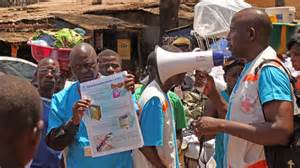
In the olden days, the basic hygiene slogan inscribed on every billboard was “prevention is better than cure.” Even during the outbreak of the HIV-AIDS in 1981 when there was no vaccine to treat the disease, “Prevention” was the slogan used to contain the spread of the epidemic.
Therefore, since there are no vaccines to treat the Ebola virus, the most effective, available weapon that can be used to substantially reduce the spread of this killer disease is “Prevention Awareness Education” characterized by the following basic facts, not fears.
Ebola Definition, Origins, and Types
The official medical name for Ebola is “Ebola Virus Disease” (EVD). It is claimed that the Virus was named after the Ebola River in the Republic of Zaire, (now Democratic Republic of Congo) where it was first discovered in 1976. Later, it was officially named Ebola-Zaire.
Ebola-Zaire was discovered in fruit bats, monkeys, and Chimpanzees in Congo. It is capable of killing 90 per cent of its victims within 21-days of the incubation period. Ebola-Zaire is the deadliest killer virus in the Ebola family, largely characterized by internal bleeding and fever, for which it is nicknamed “Ebola Hemorrhagic Fever (HF).” The World Health Organization believes it is the deadly strain of the Ebola-Zaire that is spreading in Liberia, Guinea, and Sierra Leone.
According to U.S. Center for Disease Control (CDC), the four subtypes of Ebola are described by the locations in which they were discovered. The first subtype is Ebola-Sudan, discovered in Sudan in 1976. The second is Ebola-Reston (USA), discovered in 1989 in primates. CDC says Ebola-Reston is asymptomatic and its victims are only primates. The third is Ebola Ivory Coast, discovered in 1994 in Ivory Coast. The only human victim registered on record for this virus was flown to Switzerland for treatment where he recovered. The fourth is Ebola-Bundibugyo discovered in Uganda in 2007. This strain of Ebola is also known as Ebola-Uganda.
Ebola-Sudan and Ebola-Uganda contain the strain of Ebola-Zaire Virus, which is also spreading in the Mano River Tri-State. Therefore, the focus of the remaining chapters in this article shall be on the killer Ebola-Zaire.
Means of Transmission
Ebola-Zaire is also the most contagious, infectious disease in the Ebola family. It can be transmitted from person-to-person directly and indirectly. The first direct means involves eating monkeys, fruit bats, chimpanzees, and other animals that host Ebola virus. The second direct means of transmission is through blood and bodily fluids of the symptom bearer.
The term “bodily fluids” means sweat, saliva, and semen transmitted to a healthy person through sexual contacts, kissing, and hugging by an Ebola symptom bearer. Other direct means of fluid contacts include sharing of household items such as spoons, plates, water cups, clothing, underclothes, toilet seats, bathing towels, and even bed-sharing with a symptom bearer.
Mosquito and insect bites as well as flies, mice, and cockroaches coming in contact with an Ebola symptom bearer, and also coming in contact with a healthy person have also shown to be a direct means of fluid contacts. The indirect fluid contact involves sneezing or coughing in the face of a healthy person by a symptom bearer. Contaminated equipment at health centers treating Ebola victims can also transmit virus to a healthy person.
Signs and Symptoms of Ebola-Zaire
In medical science, the term” signs” refer to a person’s strange medical condition or behavior that is visible to the public. For example, vomiting or nasal bleeding is a sign of illness. In contrast, the term “symptoms” refer to the uncomfortable inner-feeling being experienced by person, which appears to be a medical illness. For example, pains, headache, etc.
According to CDC, the primary signs and symptoms of Ebola-Zaire include but not limited to vomiting, diarrhea, headache, fever, weakness, bleeding, stomach pains, joint and muscle pains, sore throat and so on.
Precaution and Prevention
As we speak, there is no available vaccine or medication on the market to treat or cure Ebola-Zaire. Therefore, the only best medicine that will substantially contain the spread of this deadly disease is precaution and prevention. The term “precaution” means exercising the necessary care in a person’s daily interaction with the general population, especially people suspected of displaying the Ebola signs and symptoms in the family, workplace, school, and community.
In contrast, the term “prevention” means the necessary hygiene rules and measures adopted by a person or group of persons to remain safe and healthy from Ebola disease. These include but not limited to the following:
1. Family members should develop the necessary alertness required to monitor and report strange-medical related signs and behavior that resemble Ebola illness. A Suspected Ebola symptom bearer in the family should be immediately quarantined and reported to the nearby health center.
2. The household items shared by family members such as drinking cups, spoons, plates, bathrooms, bath towels, etc. should be thoroughly cleaned and sanitized weekly. Visitors should be screened and monitored for Ebola signs and symptoms before sharing family household items with them.
3. Hand-washing after shaking hands with strangers should be the basic hygiene rules of the household family.
4. School authorities should also teach students the basic hygiene rules listed above so they will remain safe from the Ebola illness.
5. The World Health Organization has recommended that every community should establish a community-based surveillance and warning systems not only to identify suspected Ebola symptom bearer but also to immediately report the incident to the nearest health authorities so the suspected person can be removed from the community and quarantined for treatment.
7. Do not touch suspected dead bodies of Ebola victims. Call health workers.
6. Governments in the Tri-State should utilize Radio/ TV Simple-English as well as vernacular language programs in order to disseminate the Ebola prevention awareness message to people in the sub-region.
7. The print media as well as webmasters should donate a space to allow the public to participate in the Ebola Prevention Awareness Education forum.
Arthur B. Dennis holds a hybrid Liberian citizenship, and also holds a naturalized U. S. Citizenship. He can be reached in New Jersey at [email protected] or 609-328-5260.
Category: Editorial, News Headlines

