Subscribe via RSS Feed

Archive for August, 2014

TV ad spending has soared 1.86%, to 2013

By Clemente Ferrer ymedia


Ymedia has published a report with all audience data, consumption, screen quotas, ranking of most popular programs and television commercials in Spain. Ad spending in the different television channels continues above the figure recorded in 2013 with a 1.86% increase over the previous year. Recovery has begun.

The first place among the most active campaigns is for the internet portal for hotel searches Trivago which accumulates during June 2563.1 Grp 20’s “. Jazztel gave the second position to the beer Estrella Damm, accumulating 1939.6 Grp 20’s “. The insurer Línea Directa takes the third place from Lidl Supermarket, with 1,662 Grp’s 20 “accumulated. Telecom companies appear prominently as the four main stay in the June ranking: Orange with 1,616.4 Grp 20’s” Jazztel with 1,490.3, Movistar with 1,383.1 and Vodafone with 1,250.1.

As for audiences, Tele 5 leads with a share of 15.8%. Antena 3 follows with 13.2%. Tele 5 and Cuatro are the brands which have increased their share of screen thanks to the World Cup in Brazil which began on June 12 with a match between Brazil and Croatia followed by 8.038 million viewers, scoring a 43 3% of audience share for Tele 5.

The World Cup in Brazil has been the most watched event, especially the games played by the Spanish team monopolized large audiences. Spain’s first match in the World Cup was followed by 10.831 million viewers with an audience share of 68.6%. As the result was not as expected, the second game against Chile was followed by 12.648 million viewers and a 67.4% audience share was recorded. After the elimination of the Spanish selection, audiences fell in its third and final match which was only seen by 5,193,000 viewers and scored an audience share of 47.5%.

Author and journalist Clemente Ferrer has led a distinguished career in Spain in the fields of advertising and public relations. He is currently President of the European Institute of Marketing.

[email protected]

A hint to the African delegates at the USA-African Summit

By Wollor E. Topor Dr. Wolor Topor


President Obama is meeting over 50 heads of state from Africa, the first of its kind by a sitting president on the American soil. USA team comprising of government officials, corporate executives, and civil society are to interact with African leaders for three days in Washington, DC in finding ways on how to make Africa catch-up with the rest of the world.

It is against this backdrop I decided to revisit my article posted on July 5, 2005 entitled “Fair Trade Is What Africa Needs And Not Much Of Aid.” I indicated in the article that Africa has to dismantle this donor-and-beneficiary relationship that is so cemented or oiled with Grants and Aids, and for the most part, the Tied aid philology (goods and services must come from the donor country). In my very acute point of view, aid to Africa from the developed world have always ended in “red marks” on development report cards. Meaning, it has little to show for the beneficiaries’ wellbeing.

Instead, most aid are always with strings attached. And of course, there is ‘no free lunch’ in the Capitalist World, and associated with corruption, and poor governance. This constant and precarious dependence on the West for decades could partially explain why Africa is the least and slowest developing Continent in the civilized world.

Here is what a World Bank’s African reviewer had to say in the early 1990s. “Sound policy prescription itself does not produce economic growth or poverty reduction. It is good governance consisting of strong leadership to carry out policies and capacity for sound development management that produces the results on the ground. Africa lacks good governance.”

The catching phrase in the reviewer’s synthesis is ‘Getting Governance Right.’ The Western education has always been used as a standard institution to drive Africa to ‘civilization’ and liberate it from ‘African indigenous wisdom’ from my perspective. But over a century of Africa’s acceptance of the Whiteman’s educational system, it still finds itself yoked in mental slavery or colonial mentality and is not ‘Getting Governance Right.’

Are we confused between these two schools of thought–western education and indigenous knowledge? It is late and no turning back to only our ‘indigenous knowledge;’ what is needy is to find a common ground where both (indigenous knowledge and western education) can reconcile with open minds in using these bodies of knowledge to work for the common good and survival of humanity.

After all, there are places like Stonehenge-prehistoric monument in Wiltshire, England found all over the West today. Can we say that these cultural heritages and their philosophies associated with them are irrational? The fact is that international conservation bodies like the United Nations Environment Program (UNEP), the International Union for the Conservation of nature (IUCN), and the Convention on Biodiversity (CBD) have acknowledged that indigenous knowledge has been playing pivotal role in the conservation of biodiversity. The truth is that indigenous conservation is far more cost-effective in preventing forest destruction and degradation as compared to the conventional Protected Areas (PAs) and Multipurpose use-Areas (MUAs) approaches.

The emancipation from the current mental slavery is in the supreme interest of Africa. Therefore, Africans (scholars, policy-makers, civil society, and traditional leaders) should foster its radicalization but with precautions.

To the African delegates at this all significant Summit, please consider this Gathering as a golden opportunity for Africa. Take note that America is a capitalist nation whose economic system holds to the Market economy. Firstly, production of goods and services are done by private ownership with certain division of labor. Secondly, these private owners are allowed to make profit but pay their employees with decent compensation for services rendered as well as everyone (corporate entities and workers) pays its rightful Taxes.

Thirdly, the commodities produced are for market, where the invisible hands of supply and demand determine the free price system for the produces and services. Fourthly, and very important, the government is responsible to improve the market such as the making sure to train its citizens in skills that match the job market demands, the provision of basic infrastructure (improved transportation systems, electricity, etc.), creating credit incentives, and established legal structures that protect individuals and their properties.

The point here is that the invitation extended to African leaders to sit around the Table with the Americans should not be seen in the context of the current geopolitical tension building up between the West and Russia, or a bipolarity situation between the USA and a world power wherein United States is looking for African allies whose leaders are to be appeased with ‘free lunch or dole-outs,’ and the promise of making them ‘little dictators’ to oppress the governable as the case was during the Cold War period.

I would think President Obama means serious business for Africa. It is left with African leaders to lead this New Market Economy. This should emancipate Africa from economic enslavement of borrowing from western institutions and forever being indebted. Meanwhile, these loans benefit corrupted leaders and their western cohorts -‘it takes two to tangle.’ Example, Tied aid accrues benefits to companies from donor countries.

There is no need to start pointing fingers as to who is responsible for Africa’s underdevelopment. Instead, let us take time and be more positive in clearly identifying Africa’s urgent needs such as functional and relevant education, improved medical services, better roads and communication networks, etc.

Progress is being made each year for economic “takeoff” despite the odds like the uncontrolled Ebola virus in West Africa, civil wars in Democratic Republic of Congo and South Sudan, hostages taking in Nigeria and Cameroon. Countries such as South Korea, Malaysia, Taiwan development models are good examples for study and possible replication of suitable aspects into Africa’s development agenda. Japan and China were worse off than most African countries in terms of development less than one hundred years ago. Their development focus was on agricultural development before industrial advancement. Today they have succeeded.

If Africa wants to grow economically, its governments need to decide to build their economy based on science and technology (committing a good percentage of their GDP in this direction), particularly in agriculture. And for that to happen, governments need to gear their educational system towards enticing young minds with mathematics and science, as well as other subjects that help youthful minds become inquisitive and trained in the analytical thought processes. Within a short period of time, Africa could be feeding itself and exporting, thereby reducing poverty.

Human capital development is Africa’s most dire need to effectively and rapidly respond to the current global economic activities. With the necessary human capacity, domestic production is to provide decent jobs and bring about Inclusive Growth. If Africans produce more goods and services, they are able to take care of themselves and improve their standard of living with respect and dignity, rather than relying on dole-outs from donors.

With the technical knowhow, Africa could be in a better position to negotiate, say, carbon trade and a Fair Price for its raw resources and/or convert them by adding value. Example Liberia’s iron ore could be turned into pellets/metal sheets as well as manufacturing and exporting of tires from its rubber. A manufacturing factory making Côte d’Ivoire’s cocoa into chocolates on its homeland would provide jobs, while petrochemical industry, when well developed in Nigeria could get more people busy, and perhaps could help reduce Boko Haram’s activities.‎

The mainstream of this New Market Economy is that the local people involvement in creating the national wealth and receiving their fair compensations. Also, better human resource should enablethe Continent to better respondtoclimate change and its vulnerabilities and other crises that are plaguing it currently.

Africans need to be well trained, capable, prepared and self-sufficient to handle outbreaks like the Ebola virus that is killing hundreds of people in West Africa before they occur; and not to depend on its international partners in a time of crisis. Often times, outside assistance come a bit late when the damage has already been done.

The Africa indigenous knowledge has within it oral traditional codes of governance which could be studied, codified and incorporated into the governance systems. Perhaps, such could help in ‘Getting Governance Right ‘ in terms of commitment, honesty, efficiency, equity and social justice.

Dr. Wollor E. Topor is a rural development specialist, assistant professor, and former Dean of the College of Science and technology at the University of Liberia. He is currently completing his Master of Marine Affairs at the University of the Philippines. He can be reached through email: [email protected].


As Ebola invades, Sirleaf administration must now develop food distribution programs and policy to prevent mass starvation

By Tewroh-Wehtoe Sungbeh Food distribution program


President Sirleaf finally – and I say finally listened.

She got her act together and did what she should have done weeks ago when the deadly Ebola virus first entered Liberia.

She closed the borders, restrict public gatherings, asked government workers to stay home for at least 30 days, and quarantined communities affected by the deadly disease.

That’s exactly what we expect our leaders to do during times of national crisis: take bold and decisive actions, and be seen as ready to lead.

It shouldn’t have taken the loss of lives, bad publicity, international pressure, opinion articles and the devastation of communities for Sirleaf to do what she took the presidential oath of office to do: protect the republic and its citizens from domestic and foreign threats.

Even though her response to the Ebola crisis came too little too late instead of the other way around, Liberians can at least breath a sigh of relief that their elected president finally listened and decided to do the right thing.

Now that Liberians and non-Liberians have been restricted from going from point A to point B in order to contain the virus, which is the medically prudent measure in the absence of a vaccine; the question now is, what next?

In the wake of this terrible virus, local businesses are obviously taking a financial hit because people are now fearful of, say, going across the street to visit a friend or relative, get a drink or a meal from the restaurant on the street corner.

International and regional airlines that once served Liberia are staying away; and also humanitarian workers are moving out of Liberia because of the Ebola virus.

If people cannot travel, go to a restaurant to eat, than of course the unsanitized open markets, market grounds and stalls that are already breeding grounds for diseases and illnesses are not to be trusted either.

Jokes aside, the proud brand we wholeheartedly embraced and know as “Liberia” is no more, for now.

Only the passing of time, and perhaps Devine intervention could bring back the glory days. Hopefully!

All we can do now is to hope and hope (and the praying folks, pray) that our country, our relatives and friends, and our cherished communities and neighborhoods will survive this latest crisis.

The Ebola crisis also offers a chance to scrutinize our government’s plans, preparation and response to future disasters that threatens the stability of Liberia and the safety of its citizens.

This is also an opportunity for the Liberian government to put people and country first, and not lead from behind as Madame Sirleaf did during this crisis.

Even though we have been constantly reminded not to play the blame game in the face of this national tragedy, what else can a helpless person whose life is also on the line do when he or she sees a relative or friend laid dead from Ebola?

Do we expect human beings who are hurting and hungry after their government dropped the ball to blame themselves for their collective tragedies?

Some of the president’s supporters even blamed the victims, the Liberian people by suggesting that they laughed and did not see the Ebola virus as serious when Madam Sirleaf first told the nation about its outbreak.

Nonsense!

Elected presidents in democratic societies take the oath of office to defend and protect their sovereign nations from both domestic and foreign threats.

Elected presidents are also expected to protect individual liberties in the process, but cannot allow a threat to national security to play second fiddle to individual liberties, especially when a nation and its citizens are being threatened.

Of course the Liberian government is right to finally ask or demand that Liberians not move around, so as not to transfer the virus to others.

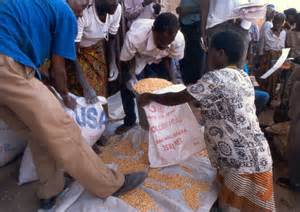
However, since Liberians are being told to stay home and not work, is the legislature and the Sirleaf administration making any plans to appropriate funds to purchase food – rice in particular, for national distribution to avoid starvation on a massive scale?

We saw or experienced the distribution of food and other supplies during the civil war, when Liberians and other nationals couldn’t get their hands on food supplies because of their collective fears of being killed or injured.

As a national crisis, the right thing for the national legislature and the Sirleaf administration to do now is to be proactive by funding and implementing a food purchasing and distribution program to feed the Liberian people during these critical times.

With the Ebola virus still not being contained, the last thing we want in Liberia now or in the future is another crisis: mass starvation.

Madame Sirleaf, are you listening?


Ebola Crisis: Prevention awareness education is the only cure

By Arthur B. Dennis Ebola prevention


In the olden days, the basic hygiene slogan inscribed on every billboard was “prevention is better than cure.” Even during the outbreak of the HIV-AIDS in 1981 when there was no vaccine to treat the disease, “Prevention” was the slogan used to contain the spread of the epidemic.

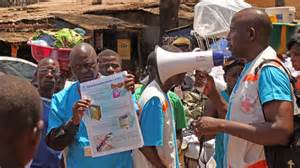
Therefore, since there are no vaccines to treat the Ebola virus, the most effective, available weapon that can be used to substantially reduce the spread of this killer disease is “Prevention Awareness Education” characterized by the following basic facts, not fears.

Ebola Definition, Origins, and Types

The official medical name for Ebola is “Ebola Virus Disease” (EVD). It is claimed that the Virus was named after the Ebola River in the Republic of Zaire, (now Democratic Republic of Congo) where it was first discovered in 1976. Later, it was officially named Ebola-Zaire.

Ebola-Zaire was discovered in fruit bats, monkeys, and Chimpanzees in Congo. It is capable of killing 90 per cent of its victims within 21-days of the incubation period. Ebola-Zaire is the deadliest killer virus in the Ebola family, largely characterized by internal bleeding and fever, for which it is nicknamed “Ebola Hemorrhagic Fever (HF).” The World Health Organization believes it is the deadly strain of the Ebola-Zaire that is spreading in Liberia, Guinea, and Sierra Leone.

According to U.S. Center for Disease Control (CDC), the four subtypes of Ebola are described by the locations in which they were discovered. The first subtype is Ebola-Sudan, discovered in Sudan in 1976. The second is Ebola-Reston (USA), discovered in 1989 in primates. CDC says Ebola-Reston is asymptomatic and its victims are only primates. The third is Ebola Ivory Coast, discovered in 1994 in Ivory Coast. The only human victim registered on record for this virus was flown to Switzerland for treatment where he recovered. The fourth is Ebola-Bundibugyo discovered in Uganda in 2007. This strain of Ebola is also known as Ebola-Uganda.

Ebola-Sudan and Ebola-Uganda contain the strain of Ebola-Zaire Virus, which is also spreading in the Mano River Tri-State. Therefore, the focus of the remaining chapters in this article shall be on the killer Ebola-Zaire.

Means of Transmission

Ebola-Zaire is also the most contagious, infectious disease in the Ebola family. It can be transmitted from person-to-person directly and indirectly. The first direct means involves eating monkeys, fruit bats, chimpanzees, and other animals that host Ebola virus. The second direct means of transmission is through blood and bodily fluids of the symptom bearer.

The term “bodily fluids” means sweat, saliva, and semen transmitted to a healthy person through sexual contacts, kissing, and hugging by an Ebola symptom bearer. Other direct means of fluid contacts include sharing of household items such as spoons, plates, water cups, clothing, underclothes, toilet seats, bathing towels, and even bed-sharing with a symptom bearer.

Mosquito and insect bites as well as flies, mice, and cockroaches coming in contact with an Ebola symptom bearer, and also coming in contact with a healthy person have also shown to be a direct means of fluid contacts. The indirect fluid contact involves sneezing or coughing in the face of a healthy person by a symptom bearer. Contaminated equipment at health centers treating Ebola victims can also transmit virus to a healthy person.

Signs and Symptoms of Ebola-Zaire

In medical science, the term” signs” refer to a person’s strange medical condition or behavior that is visible to the public. For example, vomiting or nasal bleeding is a sign of illness. In contrast, the term “symptoms” refer to the uncomfortable inner-feeling being experienced by person, which appears to be a medical illness. For example, pains, headache, etc.

According to CDC, the primary signs and symptoms of Ebola-Zaire include but not limited to vomiting, diarrhea, headache, fever, weakness, bleeding, stomach pains, joint and muscle pains, sore throat and so on.

Precaution and Prevention

As we speak, there is no available vaccine or medication on the market to treat or cure Ebola-Zaire. Therefore, the only best medicine that will substantially contain the spread of this deadly disease is precaution and prevention. The term “precaution” means exercising the necessary care in a person’s daily interaction with the general population, especially people suspected of displaying the Ebola signs and symptoms in the family, workplace, school, and community.

In contrast, the term “prevention” means the necessary hygiene rules and measures adopted by a person or group of persons to remain safe and healthy from Ebola disease. These include but not limited to the following:

1. Family members should develop the necessary alertness required to monitor and report strange-medical related signs and behavior that resemble Ebola illness. A Suspected Ebola symptom bearer in the family should be immediately quarantined and reported to the nearby health center.

2. The household items shared by family members such as drinking cups, spoons, plates, bathrooms, bath towels, etc. should be thoroughly cleaned and sanitized weekly. Visitors should be screened and monitored for Ebola signs and symptoms before sharing family household items with them.

3. Hand-washing after shaking hands with strangers should be the basic hygiene rules of the household family.

4. School authorities should also teach students the basic hygiene rules listed above so they will remain safe from the Ebola illness.

5. The World Health Organization has recommended that every community should establish a community-based surveillance and warning systems not only to identify suspected Ebola symptom bearer but also to immediately report the incident to the nearest health authorities so the suspected person can be removed from the community and quarantined for treatment.

7. Do not touch suspected dead bodies of Ebola victims. Call health workers.

6. Governments in the Tri-State should utilize Radio/ TV Simple-English as well as vernacular language programs in order to disseminate the Ebola prevention awareness message to people in the sub-region.

7. The print media as well as webmasters should donate a space to allow the public to participate in the Ebola Prevention Awareness Education forum.

Arthur B. Dennis holds a hybrid Liberian citizenship, and also holds a naturalized U. S. Citizenship. He can be reached in New Jersey at [email protected] or 609-328-5260.